 29 citations
,
May 2018 in “Clinical Endocrinology”
29 citations
,
May 2018 in “Clinical Endocrinology” This review discusses the differential diagnosis of low-renin hypertension and highlights recent genetic discoveries related to familial forms, but it presents no new clinical results.
 1 citations
,
February 2009 in “Clinical and Experimental Dermatology”
1 citations
,
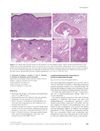
February 2009 in “Clinical and Experimental Dermatology” This study reports an improvement in lymphomatoid papulosis type A in a 52-year-old patient who concurrently used hormone-replacement therapy.
5 citations
,
May 2022 in “Diagnostics” This study found that certain lncRNA gene polymorphisms in HOTAIR and MALAT1 are associated with increased susceptibility to systemic lupus erythematosus, potentially informing clinical applications.

This study found that the Lim-homeodomain transcription factor Lhx2 regulates Sonic Hedgehog signaling during early retinal neurogenesis in mice by controlling the expression of pathway genes in retinal progenitor cells.
36 citations
,
July 1996 in “The journal of investigative dermatology/Journal of investigative dermatology” This research reports a new autosomal recessive mutation in mice, 'lanceolate hair', causing generalized alopecia and hair shaft abnormalities, which may serve as a model for Netherton's syndrome in humans.
12 citations
,
March 2012 in “JEADV. Journal of the European Academy of Dermatology and Venereology/Journal of the European Academy of Dermatology and Venereology” This study observed that some patients with homozygous c.736T>A mutation in LIPH may have mild hypotrichosis with long hairs in adulthood.
September 2017 in “Journal of Investigative Dermatology” LRIG1 protein affects hair growth by regulating skin receptors, leading to hair loss when overexpressed.
 9 citations
,
February 2018 in “The Journal of Dermatology”
9 citations
,
February 2018 in “The Journal of Dermatology” This study identified a novel splice site mutation in the LIPH gene associated with autosomal recessive woolly hair, contributing to understanding the genetic basis of this condition.
 November 2025 in “Clinical Cosmetic and Investigational Dermatology”
 LIPH mutations cause woolly hair in some Chinese people.
 October 2023 in “Pediatric blood & cancer”
 This report discusses a potentially underdiagnosed form of multisystem Langerhans cell histiocytosis in infants, demonstrating the use of thymic sonography for staging, highlighting a case where thymic and cutaneous involvement was confirmed, and suggesting thymic ultrasound may aid in better diagnosis and management of LCH.
 52 citations
,
October 1999 in “Developmental Dynamics”
52 citations
,
October 1999 in “Developmental Dynamics” This study found that the hairless gene in mice has a more extensive role in development than previously thought, as indicated by its expression in various tissues and associated abnormalities in hr/hr mutants.
 7 citations
,
September 2014 in “European Journal of Dermatology”
7 citations
,
September 2014 in “European Journal of Dermatology” This study found a significant positive correlation between hair thickness and growth rate, with a notably slower growth rate observed in men with male pattern hair loss compared to healthy controls.
22 citations
,
October 2004 in “Journal of Investigative Dermatology” This study identified the rough coat mutation in mice, but found that LOXL is not the causal gene, although its downregulation might contribute to related phenotypic changes.
 3 citations
,
May 2018 in “The American Journal of Medicine”
3 citations
,
May 2018 in “The American Journal of Medicine” This case report describes a 33-year-old woman with long-standing scalp issues and hair loss, revealing an unusual connection to past melanoma, but it presents no new research results.
 April 2016 in “Journal of Investigative Dermatology”
 This study reported that the absence of Lsh in skin led to significant epidermal hyperplasia and altered gene expression, suggesting its crucial role in regulating epidermal proliferation, differentiation, and wound healing.
 February 2016 in “Acta Medica Marisiensis”
 This case study presents what is reportedly the first association of Graham Little-Lassueur Syndrome with chronic hepatitis C, observed in a 47-year-old female patient.
126 citations
,
October 1998 in “Experimental Dermatology” This review provides an overview of the hairless gene in mice and humans, discussing its structure, expression, and implications for understanding skin physiology and human disorders related to gene disruption, but it reports no new empirical findings.
June 2026 in “British Journal of Dermatology” This case study documented the first known instance of biopsy-confirmed lichen planopilaris occurring after hairline-lowering surgery in a patient without prior history, highlighting a potential complication where surgical trauma may trigger immune-mediated hair loss.
 10 citations
,
September 2019 in “Experimental Eye Research”
10 citations
,
September 2019 in “Experimental Eye Research” This review discusses the role of RDH12 in vision, its structural and functional aspects, and related disease mechanisms, but reports no new clinical results; it aims to support therapy development for inherited retinal dystrophies.
7 citations
,
February 2011 in “Journal of dermatology” This study identified a specific LIPH gene mutation (736T>A) as common in Japanese patients with autosomal recessive woolly hair/hypotrichosis, potentially indicating its role in the condition's manifestation within this population.
 60 citations
,
December 2015 in “Clinical and experimental dermatology”
60 citations
,
December 2015 in “Clinical and experimental dermatology” This study found that while laser hair removal improves quality of life for women with facial hirsutism, emotional benefits diminish over 30 months and additional treatments may be necessary to maintain improvements.
52 citations
,
June 1998 in “British journal of dermatology/British journal of dermatology, Supplement” This study found that normal mode ruby laser treatment for hirsutism is well tolerated and results in significant hair count reduction for at least six months, with multiple treatments offering greater effects.
 April 2023 in “Journal of Investigative Dermatology”
 This case study reports an unusual presentation of primary cutaneous diffuse large B-cell lymphoma–leg type occurring on the upper lip of an 81-year-old woman, highlighting the need for timely recognition of atypical manifestations.
 1 citations
,
June 2022 in “Experimental dermatology”
1 citations
,
June 2022 in “Experimental dermatology” This study found that SHJH hr mice, with a Hairless gene mutation, exhibit accelerated skin aging potentially due to poor antioxidative protection, highlighting the Hr gene's role in skin aging.
 September 2016 in “Journal of Dermatological Science”
 This study identified that in Japanese patients with autosomal recessive woolly hair/hypotrichosis, the c.736T > A LIPH mutation is associated with a mild phenotype, while the c.742C > A mutation may lead to severe baldness.
November 2012 in “Experimental and Clinical Endocrinology & Diabetes” This case report describes a 46,XY female patient with a novel homozygous nonsense mutation in the LHCGR gene, highlighting the need for molecular analysis in disorders of sexual development.
1 citations
,
October 2024 in “Canine Medicine and Genetics” This study suggests a potential genetic component in CFA among Ridgeback dogs, but MLPH genotyping did not identify the MLPH gene as a contributing factor.

A 72-year-old man was diagnosed with a rare skin form of Rosai-Dorfman disease after years of misdiagnosis.
 May 2025 in “Frontiers in Genetics”
 This study reported discovering a novel missense variant in a case of autosomal recessive woolly hair in a 31-year-old Chinese woman, which significantly reduced secretion of the encoded protein, likely leading to disease by impairing its hydrolytic function.
232 citations
,
January 2002 in “Mechanisms of development” This study reports that the differential expression patterns of three retinaldehyde dehydrogenases suggest a regulated need for retinoic acid synthesis in various organs during late mouse organogenesis.