5 citations
,
May 2024 in “Developmental Cell” Lower GATA3 levels in mice help hair regrow by changing certain immune cells.
April 2023 in “Journal of Investigative Dermatology” RNase L suppresses regeneration in mammals.
January 2026 in “PLoS Biology” This study used developing mouse hair follicles to explore early epithelial bud formation, finding that the Rho GTPase regulator ARHGEF3 plays a crucial role in regulating cell fate and cadherin patterning, with knockouts showing disrupted morphology and increased straight hair follicle growth.
 38 citations
,
April 2017 in “PLOS Genetics”
38 citations
,
April 2017 in “PLOS Genetics” This study found that human progenitor keratinocytes form unique complements of enhancers and super-enhancers during differentiation and migration, influencing gene expression and skin disease variant enrichment.
January 2013 in “edoc (University of Basel)” This study found that TRF1 plays a crucial role in maintaining pluripotency and stem cell compartments, but it is not a suitable in vivo telomere length marker.
 May 2026 in “Scientific Reports”
 In this study, researchers overexpressed Lrig3 in mouse skin and observed hair loss linked to changes in skin protein profiles and signaling pathways, suggesting a potential role for Lrig3 in maintaining skin homeostasis.
July 2025 in “Journal of Investigative Dermatology”  55 citations
,
June 2014 in “Nature Communications”
55 citations
,
June 2014 in “Nature Communications” This study found that overexpression of the transcription factor Tcf3 accelerates keratinocyte migration and skin wound healing in mice, highlighting its potential as a therapeutic target for wound repair.
August 2009 in “Mechanisms of Development”  April 2015 in “Plastic and Reconstructive Surgery”
 This article discusses the role of the American Society of Plastic Surgeons in plastic and reconstructive surgery education but presents no new research findings.
59 citations
,
November 2011 in “Development” This study found that the transcription factor Trps1 acts as a novel regulator of the Wnt signaling pathway and early hair follicle progenitors in developing vibrissa follicles in mice.

This research observed that removing RNase L in mice enhances regenerative capacity through increased IL-36 and wound-induced hair neogenesis, highlighting RNase L as a gene that represses regeneration by moderating immune responses during viral infections.
 February 2025 in “Journal of Clinical Investigation”
 This study found that RNase L acts as a regeneration repressor gene in mammals, as seen in Rnasel-/- mice which showed increased regenerative capacity and elevated Wound Induced Hair Neogenesis through enhanced IL-36α signaling, suggesting a tradeoff between regeneration and immune regulation.
 19 citations
,
May 2012 in “The journal of investigative dermatology/Journal of investigative dermatology”
19 citations
,
May 2012 in “The journal of investigative dermatology/Journal of investigative dermatology” This study found that mice lacking the type 3 IP(3) receptor in their hair follicles experienced repetitive hair loss and regrowth, indicating disrupted hair-cycle regulation potentially linked to specific signaling pathways.
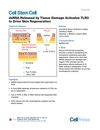 128 citations
,
August 2015 in “Cell Stem Cell”
128 citations
,
August 2015 in “Cell Stem Cell” The researchers reported that dsRNA from damaged skin activates TLR3, promoting hair follicle regeneration, while TLR3-deficient animals fail to initiate this process, suggesting potential therapeutic approaches for hair neogenesis.
 December 2013 in “Appetite”
 This study identified a nonfunctional Itpr3 gene in BTBR mice, attributed to a 12-bp deletion, which likely causes their simultaneous hair loss and taste perception deficits.
 59 citations
,
September 2007 in “Biochemical and Biophysical Research Communications”
59 citations
,
September 2007 in “Biochemical and Biophysical Research Communications” This study found that a gain-of-function mutation in the TRPV3 channel leads to altered hair development in DS-Nh mice by affecting the anagen and telogen phases, highlighting TRPV3's role in hair growth regulation.
This study identified a high proportion of dual TCR Treg cells in both lymphoid and non-lymphoid tissues of mice, revealing their tissue specificity, TCR repertoire characteristics, and functional phenotypes.
This study found that IL18 signaling plays a crucial role in the homing and retention of mature regulatory T cells in the mouse thymus, primarily by upregulating the chemokine receptor CCR6.
 15 citations
,
December 2014 in “PLoS ONE”
15 citations
,
December 2014 in “PLoS ONE” This study identifies iRhom2 as a crucial regulator of hair follicle differentiation, showing that the iRhom2Uncv mutation leads to dysplasia and reduced TACE maturation, resulting in a hairless phenotype in mice.
 April 2023 in “The journal of investigative dermatology/Journal of investigative dermatology”
 This study found that TLR3 activation in human keratinocytes enhances exosome biosynthesis and expression of hair follicle stem cell markers, suggesting a potential mechanism for tissue regeneration.
In this study, Sox13 was identified as a novel marker for early hair follicle development and differentiation in mice, though it appears to be dispensable for overall epidermal and adnexal development.
88 citations
,
April 2012 in “Journal of Investigative Dermatology” This study suggests that TRPV3 may play a key role in dry skin-related itch, indicating potential for TRPV3 antagonists in treating pruritus resistant to histamine H1R antagonists.
 47 citations
,
June 2019 in “Nature Communications”
47 citations
,
June 2019 in “Nature Communications” This study found that self-noncoding dsRNA activates TLR3 to stimulate intrinsic retinoic acid synthesis, promoting new hair follicle formation in wounded mice and showing similar gene expression changes in humans treated with rejuvenation lasers.
77 citations
,
September 2017 in “Journal of Investigative Dermatology” This study found that TRPV3 ion channels on human epidermal keratinocytes suppress cell proliferation, induce cell death, and trigger a proinflammatory response, suggesting a role in cutaneous inflammatory processes.
 February 2016 in “The journal of allergy and clinical immunology/Journal of allergy and clinical immunology/The journal of allergy and clinical immunology”
 This study reports a novel mutation in the TP63 gene associated with T and B cell lymphopenia in an EEC patient, suggesting that EEC diagnosis should include TREC assay and evaluation for immunodeficiency.
 5 citations
,
March 2019 in “Experimental dermatology”
5 citations
,
March 2019 in “Experimental dermatology” In this study involving adult mice, the researchers identified that double-stranded RNA-mediated activation of toll-like receptor 3 stimulates wound-induced hair neogenesis, potentially reflecting mechanisms used in facial rejuvenation treatments.
24 citations
,
December 2013 in “Archives of Dermatological Research” March 2014 in “Institutional Repositories DataBase (IRDB)” In this study, researchers identified IL18R+ thymus-resident regulatory T cells in mice, demonstrating their unique molecular features and resistance to age- and stress-induced thymus involution, highlighting IL18 signaling's role in Treg migration and retention.