November 2025 in “Cosmetics” In this exploratory randomized controlled trial, participants using a combination of Centella asiatica-derived extracellular vesicles with recombinant growth factors showed significant improvements in hair thickness, density, length, and reduced hair loss and scalp sebum content after 56 days, compared to placebo.
 September 2025 in “medRxiv (Cold Spring Harbor Laboratory)”
 This study found that applying a topical scalp essence with Centella asiatica extracellular vesicles and growth factors significantly improved scalp health and hair growth compared to a placebo after 56 days.
263 citations
,
February 2020 in “International journal of molecular sciences” This paper discusses the potential roles of adipose tissue derived stem cells in skin regeneration and wound healing but emphasizes the need for further research on their effectiveness in clinical settings.
 134 citations
,
January 2010 in “Biomedical research”
134 citations
,
January 2010 in “Biomedical research” This study found that subcutaneous administration of conditioned medium from adipose-derived stem cells promoted hair growth in mice, and hypoxia enhanced this effect by altering growth factor secretion.
February 2026 in “Cosmetics”  January 2026 in “Current Issues in Molecular Biology”
 This paper reviews the emerging role of FGF-7 signaling in hair regeneration, highlighting its potential as a target for new therapies despite limited clinical trial data.
 24 citations
,
July 1994 in “Molecular Endocrinology”
24 citations
,
July 1994 in “Molecular Endocrinology” Researchers found an RNA transcript that might help control a growth factor linked to tumor development.
6 citations
,
October 2023 in “Animal Biotechnology” This study found that a 22-bp InDel polymorphism in the FGF7 gene was significantly associated with growth traits in goats, with genotypes ID and/or II linked to better growth compared to genotype DD, indicating its potential as a molecular marker in breeding programs.
July 2024 in “Journal of Investigative Dermatology” CRISPR/Cas9 and prime editing can potentially fix skin disorder genes safely and effectively.
 July 2025 in “bioRxiv (Cold Spring Harbor Laboratory)”
 This study developed a potent Wnt surrogate with high specificity for the Fzd7 receptor in mice, promoting full hair follicle regeneration and robust hair growth, suggesting potential applications in tissue development and targeted regeneration.
5 citations
,
April 2017 in “The journal of investigative dermatology/Journal of investigative dermatology” This study reports on an ongoing Phase I/IIa clinical trial of ex vivo gene therapy for treating severe Recessive Dystrophic Epidermolysis Bullosa, involving six adult participants with COL7A1 mutations resulting in deficient type VII collagen production.
 103 citations
,
June 2018 in “International Journal of Molecular Sciences”
103 citations
,
June 2018 in “International Journal of Molecular Sciences” This review discusses the applications and research on fibroblast growth factors, including their use in wound healing, diabetes, and cancer, but it reports no new clinical results.
 April 2019 in “Journal of Investigative Dermatology”
 This study demonstrated that gene-corrected 3D skin constructs from RDEB patient-derived iPSCs, grafted onto immunocompetent mice, showed normal collagen VII expression after two months.
 24 citations
,
July 2017 in “Structure”
24 citations
,
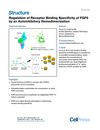
July 2017 in “Structure” In this study, researchers found that ligand homodimerization controls the receptor binding specificity of the FGF9 subfamily, preventing off-target activation of FGFR "b" isoforms.
 46 citations
,
December 2001 in “Journal of Endocrinology/Journal of endocrinology”
46 citations
,
December 2001 in “Journal of Endocrinology/Journal of endocrinology” This study found that mouse FLRG protein, a secreted glycoprotein, is expressed in certain tissues and plays a role distinct from follistatin during wound healing, suggesting different functions in vivo.
 45 citations
,
January 2010 in “Journal of Veterinary Medical Science”
45 citations
,
January 2010 in “Journal of Veterinary Medical Science” This study identified a mutation in the keratin 71 gene that causes curly hair in certain rats, advancing our understanding of hair formation.
 66 citations
,
April 1995 in “The journal of cell biology/The Journal of cell biology”
66 citations
,
April 1995 in “The journal of cell biology/The Journal of cell biology” In this study, researchers reported that a keratinocyte growth factor-Ig fusion protein could specifically detect and localize KGFRs in epithelial tissues, suggesting a method for histochemical detection of growth factor receptors.
 September 2024 in “Journal of Medicine and Life”
 In this study, researchers identified a recurrent nonsense mutation, c.409C>T (p.Arg137*), in the COL7A1 gene through whole exome sequencing in a family with autosomal recessive dystrophic epidermolysis bullosa, demonstrating the importance of this method for diagnosing genetically complex conditions.
66 citations
,
June 2004 in “Development” This study found that FGF signaling is necessary for the initiation of feather placode development in chicken embryos, with FGF10 being implicated as an early dermal signal in the process.
 1 citations
,
September 2019 in “Journal of Investigative Dermatology”
1 citations
,
September 2019 in “Journal of Investigative Dermatology” In this study, researchers used a CRISPR-based method to correct mutations in the COL7A1 gene in stem cells from RDEB patients, restoring normal collagen expression in engineered skin grafts in mice.
 November 2023 in “The journal of investigative dermatology/Journal of investigative dermatology”
 This study found that engineered high-affinity soluble CD200R agonists, including ARQ-234, showed superior efficacy in reducing immune responses in various preclinical models of inflammatory conditions, suggesting potential as a therapeutic for atopic dermatitis and other related diseases.
3 citations
,
May 2025 in “Lasers in Surgery and Medicine” This study suggested that MRF may support skin regeneration and rejuvenation by promoting collagen synthesis and regulating factors involved in fibroblast activation and ECM remodeling, with preliminary findings indicating ADSCs might aid these processes.
 2 citations
,
June 2024 in “Frontiers in Plant Science”
2 citations
,
June 2024 in “Frontiers in Plant Science” This study found that RALF peptides, through liquid-liquid phase separation, form condensates with pectin and other proteins, playing a pivotal role in plant development and stress response regulation.
 April 2018 in “Journal of Investigative Dermatology”
 This study found that treating human dermal fibroblast cells with ginsenoside Rd increased the expression of mRNA associated with the dermal-epidermal junction, suggesting potential as an anti-aging cosmetic ingredient.
 119 citations
,
November 2014 in “Trends in Cell Biology”
119 citations
,
November 2014 in “Trends in Cell Biology” This review discusses the mechanisms and pathways of FGFR signalling and its roles in development, disorders, and therapeutic targeting, but reports no new clinical results.
 1 citations
,
January 2025 in “Frontiers in Oncology”
1 citations
,
January 2025 in “Frontiers in Oncology” This review highlights REV7's crucial roles in maintaining genome stability, its implication in several cancers, and its association with poor prognoses and treatment resistance, while also noting that REV7 suppression may improve chemotherapy sensitivity.
46 citations
,
November 2019 in “Journal of Integrative Plant Biology” This study found that calmodulin 7 (CaM7) inhibits the calcium channel CNGC14 in root hairs, affecting their polar growth by controlling calcium signaling.
 January 2010 in “프로그램북(구 초록집)”
 Fgf9 helps create new hair follicles after injury through skin T cells.
35 citations
,
October 2002 in “Biochemical and Biophysical Research Communications” This study reports that K7 expression patterns observed in mice are similar to those in humans, revealing previously unreported expression in the gastrointestinal tract, tongue, and various "hard" epithelial tissues.
66 citations
,
February 2007 in “The journal of investigative dermatology/Journal of investigative dermatology” The researchers reported that adenosine increases FGF-7 expression in dermal papilla cells, which may stimulate hair growth via the A2b adenosine receptor and cAMP pathway.