 June 2020 in “Journal of Investigative Dermatology”
 This study reported that a treatment serum containing ingredient blends with panthenol, licorice extract, and red clover extract significantly improved hair volume, scalp coverage, and reduced hair breakage over 6 months in individuals with thinning or damaged hair.
 8 citations
,
March 2015 in “Facial Plastic Surgery”
8 citations
,
March 2015 in “Facial Plastic Surgery” This article discusses aesthetic concepts in facial volume restoration but reports no new clinical results, highlighting strategies for mimicking natural facial shapes and the importance of highlights and shadows in aging.
November 2022 in “Journal of Investigative Dermatology” This study suggests that vellus to terminal hair follicle reconversion can occur in male pattern androgenetic alopecia using an in vivo model with minoxidil and platelet-rich plasma treatment.
This study introduced ElixirSeeker2, a computational framework for designing anti-aging peptides, and found that some newly identified peptides significantly delayed cellular senescence and enhanced cellular and locomotor functions in aged Caenorhabditis elegans.
4 citations
,
April 2011 in “Plastic & Reconstructive Surgery” This review discusses a book on lasers and non-surgical rejuvenation techniques, providing an organized reference for practitioners entering the field but reports no new clinical results.
1 citations
,
July 2025 in “Clinical and Experimental Dermatology” In a case report, complete hair regrowth was observed in a patient with severe alopecia areata after treatment with deucravacitinib, a TYK2 inhibitor, suggesting new therapeutic avenues for alopecia areata despite TYK2 not being traditionally linked to this condition.
March 2026 in “Journal of the European Academy of Dermatology and Venereology” This study introduced and validated the VESALT, a visual extension of the Severity of Alopecia Tool, finding it offers improved reliability and user-friendliness over SALT by incorporating pattern recognition and broader coverage, including non-scalp regions, in assessing alopecia areata severity.
 12 citations
,
June 2019 in “Clinics in dermatology”
12 citations
,
June 2019 in “Clinics in dermatology” This review highlights the use of platelet-rich plasma in dermatology for skin and hair treatments but reports no new clinical results, emphasizing the need for larger studies to validate its effectiveness.
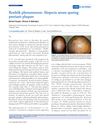 July 2018 in “Our Dermatology Online”
 In this study, researchers examined the under-studied mechanisms behind specific dermatological phenomena such as co-localization, Wolf's isotopic phenomenon, Koebner's isomorphic phenomenon, and the recently described Renbök phenomenon, noting that only a few cases have been reported so far.
 March 2026 in “Mendeley Data”
 In this study, researchers developed an open-source browser-based tool to enhance the reproducibility and accuracy of SALT score calculations from scalp photos, aimed particularly at assessing partial regrowth in alopecia areata patients on JAK inhibitor therapy.
 11 citations
,
July 1999 in “Dermatologic Surgery”
11 citations
,
July 1999 in “Dermatologic Surgery” This article reviews corrective repair methods for unsatisfactory hair transplant outcomes, including strategies for improving recipient and donor sites, but reports no new clinical results.
 February 2026 in “Trials”
 The Exfoliate-Dissolve-Repair skincare approach may effectively treat keratosis pilaris and reduce the need for corticosteroids.
 28 citations
,
March 2017 in “Endocrinology”
28 citations
,
March 2017 in “Endocrinology” In this study, the researchers found that vitamin D and calcium signaling in keratinocytes are essential for normal skin regeneration after wounding, with deficiencies significantly delaying wound closure and re-epithelialization in mice.
 August 2016 in “Regenerative Medicine”
 This review discusses various significant research articles in the field of regenerative medicine, but it does not report any new clinical findings.
13 citations
,
April 2024 in “JAAD Case Reports” This review discusses current treatments for discoid lupus erythematosus and highlights anifrolumab as a promising option for difficult cases, but no new clinical results are reported.
 26 citations
,
June 2019 in “The journal of investigative dermatology/Journal of investigative dermatology”
26 citations
,
June 2019 in “The journal of investigative dermatology/Journal of investigative dermatology” This review explores regenerative medicine approaches for vitiligo and alopecia areata, focusing on pathways for repopulating melanocytes and regrowing hair follicles, and summarizes potential treatments without reporting new clinical results.
 March 2026 in “Research Square”
 This study developed a novel regenerative platform using nanozyme-enabled materials combined with exosomes and laser stimulation to enhance wound healing in a mouse model, which more effectively regulated reactive oxygen species and improved early angiogenesis and collagen organization compared to conventional methods.
July 2025 in “Journal of Investigative Dermatology” TRIV-509 quickly improves skin barrier and cell health in atopic dermatitis.
 June 2024 in “International Journal of Dermatology”
 This study found that unsatisfactory scalp micropigmentation outcomes can be effectively corrected with interventions such as tattoo removal, repeated SMP, or hair transplant surgery, leading to high patient and physician satisfaction.
8 citations
,
January 2012 in “General and Comparative Endocrinology” 5α-Reductase helps regulate hormone action in toad testes, especially during breeding season.
 April 2023 in “Dermatology practical & conceptual”
 This study concluded that lenalidomide significantly induces the proliferation and migration of melanocyte stem cells, enhancing their differentiation into functional melanocytes in a mouse model.
 October 2024 in “Plastic & Reconstructive Surgery Global Open”
 This study found that using overexpanded tissue expanders effectively restored the hairy scalp in 25 patients with scalp alopecia, resulting in high satisfaction and minimal complications, emphasizing the importance of careful patient selection and follow-up.
 March 2026 in “Quality in Sport”
 This review evaluates photobiomodulation's diverse clinical uses in sports and medicine, reporting physiological modulation and potential therapeutic benefits, but emphasizes the importance of precise dosimetry for success.
6 citations
,
June 2021 in “EClinicalMedicine” In this study, ALRV5XR significantly increased hair regrowth in women with androgenetic alopecia or telogen effluvium, with no adverse events reported.
October 2021 in “The journal of investigative dermatology/Journal of investigative dermatology” This study observed that recognizing herpetic infection in pemphigus patients can help avoid unnecessary changes in immunosuppressive treatments for lesions wrongly presumed treatment-resistant.
3 citations
,
October 2024 in “International Journal of Molecular Sciences” This review highlights the regenerative abilities of *Xenopus laevis*, focusing on how tadpoles regrow complex tail structures and the cellular and molecular mechanisms behind this. It underscores *X. laevis* as a valuable model for understanding regeneration, with insights potentially advancing regenerative medicine.
12 citations
,
March 2023 in “The FASEB Journal” This study found that platelet-rich plasma treatment significantly improved erectile function and restored neural structures in aged rats with erectile dysfunction, suggesting potential benefits for geriatric patients.
 20 citations
,
September 2019 in “Epidemiology and Psychiatric Sciences”
20 citations
,
September 2019 in “Epidemiology and Psychiatric Sciences” This review discusses post-SSRI sexual dysfunction syndrome and highlights its significant clinical and regulatory implications, but reports no new findings.

In this randomized controlled trial, PRP combined with redensyl, saw palmetto, and biotin showed superior efficacy in improving androgenetic alopecia grading scores in male patients when compared to PRP with Procapil.
January 2026 in “Annals of Medicine and Surgery” This article corrects an author name in a previously published study on the application of retinoids for androgenic alopecia, without presenting new research findings.