3 citations
,
April 2025 in “American Journal of Clinical Dermatology” Baricitinib is generally safe for long-term use in treating severe alopecia areata.
3 citations
,
January 2022 in “Russian Medical Inquiry” This review analyzes the interplay between atopic dermatitis and alopecia areata, suggesting that epidermal barrier dysfunction and genetic predispositions exacerbate both conditions through immune responses.
3 citations
,
June 2020 in “Journal of Dermatological Treatment” In this study, researchers found that triamcinolone acetonide provided earlier visual improvement in alopecia areata treatment, but by 12 weeks, both triamcinolone acetonide and betamethasone 1.75 mg/ml showed similar effectiveness compared to lower-dose betamethasone and placebo.
 3 citations
,
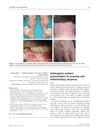
January 2010 in “Journal of The European Academy of Dermatology and Venereology”
3 citations
,
January 2010 in “Journal of The European Academy of Dermatology and Venereology” This article provides no abstract or new research findings on the androgenic pattern presentation of scarring and inflammatory alopecia.

This study found that a combination of betulin and cytostatic Namitecan had a statistically significant synergistic effect on solid Ehrlich adenocarcinoma tumors in NMRI mice, and suggests a promising method for administering betulin in in vivo experiments despite its water insolubility.
 2 citations
,
January 2024 in “Wiadomości Lekarskie”
2 citations
,
January 2024 in “Wiadomości Lekarskie” This study suggests that artificial intelligence could significantly enhance histology education for medical and dental students, but its implementation faces challenges like cost, accuracy, and ethical considerations.
2 citations
,
July 2012 in “BMJ” In this case report, a woman initially misdiagnosed with rosacea was later correctly diagnosed with frontal fibrosing alopecia after further examination and treated with oral finasteride and hydroxychloroquine to stabilize her condition.
 2 citations
,
January 2011
2 citations
,
January 2011 This study developed and validated a UV spectrophotometric method for accurately measuring finasteride and tamsulosin in solutions and tablets, demonstrating good sensitivity and precision.
2 citations
,
August 2010 in “The Open Dermatology Journal” In this study, women with female pattern hair loss reported poorer quality of life compared to unaffected women, and initial treatment did not improve their quality of life within two months.
 2 citations
,
February 2009 in “Journal of the American Academy of Dermatology”
2 citations
,
February 2009 in “Journal of the American Academy of Dermatology” This study found that many paper titles, especially in the Archives of Dermatology and British Journal of Dermatology, had scientific imprecisions, with "minimization" being the most common.
2 citations
,
January 2009 This study found that the hair cortisol measurement procedure was reliable, unaffected by the choice of tubes, and that hair cortisol concentration correlated moderately with the number of intense aggressions experienced.
1 citations
,
January 2026 in “International Journal of Dermatology” The BEARD Score helps assess beard hair loss in alopecia areata for better treatment.
 1 citations
,
September 2025 in “Cureus”
1 citations
,
September 2025 in “Cureus” In this study, the ChatGPT-5 model accurately answered 76.47% of questions on the Polish endocrinology specialty exam, surpassing the 60% passing threshold, yet its role in clinical decision-making remains uncertain, highlighting the need for further research.
1 citations
,
June 2025 in “Journal of Cellular and Molecular Medicine” This study explored the role of plant-derived monomers in reversing grey hair, finding that compounds like fraxinol and morin may stimulate melanin production and tyrosinase activity, suggesting potential therapeutic benefits, although further evaluation of their safety and efficacy is needed.
1 citations
,
January 2025 in “Head & Neck” In this report, researchers highlighted the snail flap as a highly reliable and minimally invasive reconstructive technique that preserves hair and requires minimal hospitalization, making it suitable for elderly or frail patients with moderate scalp defects.
1 citations
,
January 2025 in “Molecules” This review reported that while glycyl-L-histidyl-L-lysine tripeptide copper complex (GHK–Cu) has limited skin permeation when used alone, liposomes may enhance its absorption, but there is limited research on this aspect, highlighting a need for further studies.
1 citations
,
October 2023 in “PloS one” This study found that testosterone concentrations in hair samples were moderately stable over three months, with cosmetic treatments like coloring increasing testosterone levels, while natural hair color in untreated hair did not affect testosterone measurements.
1 citations
,
March 2023 in “International Wound Journal” This article reviewed a study suggesting that CCN1 secreted by human adipose-derived stem cells may enhance wound healing, although the authors note limitations such as small sample size and incomplete evaluation of wound healing processes.
1 citations
,
March 2022 in “British Journal of Clinical Pharmacology” In this study, the use of 5-α reductase inhibitors was not associated with an increased risk of anaemia compared to α-blockers in men with benign prostatic hyperplasia.
1 citations
,
January 2022 in “Contrast Media & Molecular Imaging” Levofloxacin and metronidazole reduce inflammation and speed up healing in gingival wounds.

This letter references a previous systematic review and meta-analysis on how nocturia may impact mortality but does not present new findings itself.
 1 citations
,
January 2020 in “Research Square (Research Square)”
1 citations
,
January 2020 in “Research Square (Research Square)” This study found that inherited color dilution in Rex rabbit hair follicles is associated with DNA methylation changes, contributing to understanding the epigenetic regulation of rabbit pigmentation.
 1 citations
,
January 2020 in “Elsevier eBooks”
1 citations
,
January 2020 in “Elsevier eBooks” Forensic medicine is crucial for justice and needs continuous innovation and technology integration.
 1 citations
,
May 2019 in “Journal of The American Academy of Dermatology”
1 citations
,
May 2019 in “Journal of The American Academy of Dermatology” This article discusses using the ImageMeter mobile app to calculate scalp area for PRP treatment in androgenetic alopecia, reporting no new clinical results.
 1 citations
,
August 2018 in “Journal of The American Academy of Dermatology”
1 citations
,
August 2018 in “Journal of The American Academy of Dermatology” In this study, teledermatology did not significantly differ from in-person visits in complete response rates for actinic keratosis treatment, but it showed higher treatment failures and more frequent local reactions.
 1 citations
,
May 2016 in “Dermatologic Surgery”
1 citations
,
May 2016 in “Dermatologic Surgery” The document concludes that using a phototrichogram with a protractor and tapeline is a reliable and noninvasive way to measure hair loss.
 1 citations
,
March 2016 in “Current Dermatology Reports”
1 citations
,
March 2016 in “Current Dermatology Reports” This article reviews the evolution of dermatology surgery training, emphasizing the need for standardized and objective assessment tools for residents, and reports no new clinical results.
1 citations
,
August 2013 in “Journal of Clinical Epidemiology” This narrative review discusses various epidemiological study designs, the importance of reliable bias assessment tools, and the implications of database use for hypothesis testing in different research areas; it reports no new results.
1 citations
,
February 2013 in “Steroids” In this study, a deproteinized bone mineral showed potential to increase DHT production, suggesting an anabolic effect on human periosteal fibroblasts with possible implications for wound healing.
1 citations
,
May 2011 in “Hair transplant forum international” This article discusses the potential of platelet rich plasma injections for treating hair loss but reports no new clinical results, emphasizing the need for further research.