November 2024 in “Skin Appendage Disorders” This review provides insights and guidelines for clinicians and patients on assessing the risks and benefits of ritlecitinib for adolescents with alopecia areata, emphasizing shared decision-making and management strategies.
5 citations
,
January 2017 in “Arquivos Brasileiros de Oftalmologia” This report describes a novel mutation in the CDH3 gene in an 11-year-old Iranian boy with hypotrichosis and juvenile macular dystrophy, indicating a new genetic variant associated with the disorder.
8 citations
,
July 2024 in “Journal of Advanced Research” In this study, researchers report that CDK inhibitors like palbociclib and ribociclib, initially developed for cancer therapy, show potential in treating neutrophilic inflammation-related conditions such as ARDS and psoriasis, although their clinical repurposing requires further research on safety and dose adjustments.
 119 citations
,
October 2011 in “Journal of Veterinary Internal Medicine”
119 citations
,
October 2011 in “Journal of Veterinary Internal Medicine” This review discusses the clinical manifestations and immune response to Rhodococcus equi infection in foals but reports no new clinical results.
 March 2025 in “OncoTargets and Therapy”
 This study found that in circulating tumor cells from non-invasive liquid biopsies, the GG genotype of the CYP3A5 A6986G affects longer disease-free survival in DLBCL patients, highlighting the significance of circulating biomarkers for prognostic evaluation.
 6 citations
,
November 2023 in “Clinical Pharmacokinetics”
6 citations
,
November 2023 in “Clinical Pharmacokinetics” This research discusses the parallel clinical development of ritlecitinib, an oral Janus kinase 3/tyrosine kinase inhibitor, for treating conditions such as alopecia areata, vitiligo, ulcerative colitis, Crohn's disease, and rheumatoid arthritis. Results are not reported in the abstract.
2 citations
,
September 2024 in “Asian Journal of Andrology” In a retrospective cohort of patients with steroid 5 α-reductase 2 deficiency, this study identified seven novel genetic variants in the SRD5A2 gene, expanding the variant database and contributing to improved diagnostic and therapeutic approaches for the condition.
July 2025 in “SVU-International Journal of Medical Sciences” This case report presents the dental challenges faced by a child with vitamin D-dependent rickets type II, including early onset rickets, alopecia, and specific dental abnormalities, emphasizing the need for comprehensive, multidisciplinary management.
 108 citations
,
October 2009 in “Javma-journal of The American Veterinary Medical Association”
108 citations
,
October 2009 in “Javma-journal of The American Veterinary Medical Association” Foals with Rhodococcus equi infection often have other health problems that lower their chances of survival.
87 citations
,
March 2007 in “Biological Chemistry” In this study, targeted deletion of the stearoyl-CoA desaturase 1 gene in mice disrupted the epidermal lipid barrier, leading to increased water loss, impaired thermoregulation, and metabolic issues.
 November 2022 in “Journal of the Endocrine Society”
 This case report highlights a novel NR5A1 gene variant associated with a severe 46,XY disorder of sex development, stressing the importance of genetic screening in similar cases.
 50 citations
,
October 1986 in “European journal of pediatrics”
50 citations
,
October 1986 in “European journal of pediatrics” This case study reported that absence of alopecia does not reliably predict responsiveness to vitamin D treatment in Vitamin D-dependent rickets type II, as demonstrated by a patient with normal hair growth who showed extreme resistance.
13 citations
,
March 2021 in “Frontiers in oncology” This review discusses the strong correlation between reflectance confocal microscopy images and horizontal histopathology in diagnosing skin tumors, highlighting the reliability of this non-invasive technique; no new clinical results are reported.
 November 2024 in “SKIN The Journal of Cutaneous Medicine”
 This study reports that ritlecitinib was prescribed to a diverse group of patients, including adolescents and adults with and without prior treatment for Alopecia Areata, in the first three months after FDA approval, potentially expanding care options for this condition.
 April 2018 in “The journal of investigative dermatology/Journal of investigative dermatology”
 This study found that in a mouse model of Focal Dermal Hypoplasia, treatment with lithium carbonate improved skin disease symptoms compared to controls, though disease severity varied and posed interpretation challenges.
 October 2023 in “The American Journal of Gastroenterology”
 This case report describes chronic iron deficiency anemia in a patient with Cronkhite-Canada syndrome, highlighting the need for more data to guide treatment and cancer surveillance due to its rarity and mortality risk.
5 citations
,
September 2023 in “Molecules” This review examines physical methods like electron paramagnetic resonance spectroscopy, Raman spectroscopy, and differential scanning calorimetry, highlighting their complementary capabilities in analyzing biomolecular structures and mycobacterial interactions with reactive oxygen species and antioxidants.
 5 citations
,
September 2015 in “Nepalese journal of ophthalmology”
5 citations
,
September 2015 in “Nepalese journal of ophthalmology” This case report highlights an 11-year-old girl with dermatopathia pigmentosa reticularis, identifying associated Salzmann's nodular degeneration of the cornea and emphasizing the need for a multidisciplinary management approach.
3 citations
,
October 2020 in “Journal of Investigative Dermatology” This study established that the Dct::CreERT2 mouse line is effective for targeting and studying adult melanocyte stem cells, contributing to the understanding of melanocyte biology and hair pigmentation.
 January 2022 in “International Journal of Medical Sciences”
 This study investigated the effects of cedrol on colorectal cancer and found that it inhibited cell proliferation and induced cell cycle arrest and apoptosis in cell models, while in vivo, it suppressed cancer progression and improved survival at a well-tolerated dose.
53 citations
,
May 1996 in “The Journal of Clinical Endocrinology & Metabolism” This study identified multiple mutations in the 5 alpha-reductase-2 gene among male pseudohermaphrodites in the Dominican Republic, suggesting they do not share a common ancestry.
 May 2024 in “Animal genetics”
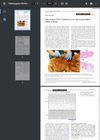
 The researchers investigated a Maine Coon cat with suspected classical Ehlers-Danlos Syndrome and discovered a heterozygous deletion in the COL5A1 gene, underscoring the value of whole-genome sequencing for precise veterinary diagnostics.
This study found that the Arabidopsis cation chloride cotransporter (CCC1) is crucial for regulating pH and processes in the trans-Golgi-network/early endosome, impacting plant growth and stress responses.
3 citations
,
May 2024 in “BMC Medical Genomics” This study is the first to identify a de novo heterozygous frameshift insertion variant in the ARID1B gene as a cause of Coffin-Siris syndrome with an association to excessive early-onset high myopia.
34 citations
,
January 2016 in “Analytical Chemistry” This study reports that a new DART-HRMS method can effectively analyze intact hair for drug use timelines, with cocaine detection aligning with forensic standards and identifying multiple drugs from high-resolution data.
5 citations
,
August 2021 in “Journal of biological chemistry/The Journal of biological chemistry” This study observed sexually dimorphic effects of reduced Rdh10 on energy metabolism and muscle function in mice, with males experiencing decreased endurance and females showing increased endurance on a high-fat diet.
13 citations
,
July 2016 in “Indian Journal of Dermatology” This report describes two Saudi brothers with dermatopathia pigmentosa reticularis who exhibited normal hair shafts despite their condition.
June 2018 in “Chinese Journal of Dermatology” This study reported that connective tissue nevi show distinctive dermoscopic and RCM features, with RCM being particularly helpful for diagnosing lesions of less than one year in duration.
July 2023 in “Media Dermato Venereologica Indonesiana” This case study highlights that RDEB-mitis can be misdiagnosed in older adults, emphasizing the importance of accurate diagnosis as it does not require immunosuppressive treatment.
 1 citations
,
January 2024 in “Wiadomości Lekarskie”
1 citations
,
January 2024 in “Wiadomości Lekarskie” This study evaluated a new computer-aided detection system for identifying Breast Arterial Calcification in mammograms, achieving 70% accuracy, but highlighted the need for a larger dataset to explore its relationship with cardiovascular diseases.