 12 citations
,
June 2020 in “Frontiers in Cell and Developmental Biology”
12 citations
,
June 2020 in “Frontiers in Cell and Developmental Biology” This study found that the PP2A-B55α regulatory subunit is crucial for ectodermal development in mice, with knockout embryos displaying severe neural and epidermal defects and failing to survive to birth.
 31 citations
,
February 2014 in “Inflammation Research”
31 citations
,
February 2014 in “Inflammation Research” This study found that reduced expression of CD200R1 on monocyte-derived macrophages in rheumatoid arthritis patients was significantly associated with higher disease severity and an imbalance in Th17/Treg cells.
This study suggests that the ANE syndrome mutation in yeast Nop4, analogous to human RBM28, disrupts protein folding and protein-protein interactions, contributing to ribosomal dysfunction.

CaBP1 and CaBP2 are important for continuous hearing by preventing inactivation of calcium currents in ear cells, with CaBP2 also able to restore hearing when reintroduced.
 July 2024 in “New Phytologist”
 This study suggests that the transcription factor PDF2 in Arabidopsis may link lipid sensing with growth responses to phosphate starvation by acting as a sensor for lyso-PCs through its START domain.
9 citations
,
January 2015 in “Medical hypotheses” This report suggests that TCDD may alter human epidermal stem cell populations by upregulating c-Myc, potentially leading to increased stem cell turnover during chloracne development.
56 citations
,
November 2007 in “Molecular and cellular endocrinology” This study identified enzymes responsible for regulating androgen action in the human prostate, suggesting that inhibiting AKR1C2 or RL-HSD may have therapeutic potential in androgen insufficiency or benign prostatic hyperplasia, respectively.
July 2026 in “Journal of Enzyme Inhibition and Medicinal Chemistry” This review discusses the evolution of Cereblon ligands in PROTAC technology, highlighting chemical innovations that may enhance drug-likeness and applicability in protein degradation, while noting challenges and future research directions.
 February 2025 in “Biomolecules”
 This study found that activation of RORA significantly promotes the level of autophagy in rat hair follicle stem cells, suggesting a potential target for research on hair follicle development and treatments for conditions like alopecia.
October 2014 in “Dialnet (Universidad de la Rioja)” This research concluded that Snail2's absence in myeloid progenitors promotes tumor progression in mice, and specific zinc fingers are crucial for Snail1 and Snail2's roles in establishing epithelial-to-mesenchymal transition.
21 citations
,
December 1994 in “Journal of Investigative Dermatology” 1 citations
,
July 2019 in “Small ruminant research” This study suggests that the NGF/TrkA/CREB system plays a crucial role in promoting outer root sheath cell proliferation in cashmere goats, which may aid in marker-assisted breeding.
 5 citations
,
September 2022 in “Antioxidants”
5 citations
,
September 2022 in “Antioxidants” This study found that the clionasterol-rich hexane fraction of Caulerpa racemosa may protect against particulate matter-induced skin damage by reducing oxidative stress and mitochondrial-mediated apoptosis in human keratinocytes and zebrafish.
17 citations
,
July 2018 in “Environmental and Experimental Botany” The researchers reported that silencing the NtNCED3-2 gene in tobacco reduced ABA content and drought tolerance, inhibited root and leaf development, and decreased photosynthetic ability due to altered isoprenoid metabolism.
 76 citations
,
September 1992 in “Endocrinology”
76 citations
,
September 1992 in “Endocrinology” This study details the isolation and characterization of the human type II 5 alpha-reductase gene, which may play a role in male pseudohermaphroditism, prostate cancer, and benign prostatic hyperplasia.
 30 citations
,
October 2020 in “Nature Communications”
30 citations
,
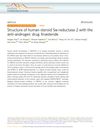
October 2020 in “Nature Communications” This study provides the first crystal structure of the human SRD5A2 enzyme, revealing key insights into its function and inhibition which may aid future drug development.
16 citations
,
August 2021 in “Tumor Biology” This review discusses the dual role of the TMPRSS2 gene in coronaviral lung infection and prostate cancer, cautioning against TMPRSS2 inhibitors for early prostate cancer due to potential pro-inflammatory effects.
 February 2024 in “Plant Cell Reports”
 This study found that the retromer protein AtVPS29 in Arabidopsis plants modulates gibberellin signaling by upregulating the SLY1 protein and downregulating the RGA protein, ultimately enhancing the development of the root meristematic zone.
62 citations
,
January 2009 in “Biochemistry” This study found that both the natural ligand 1alpha,25(OH)(2)D(3) and the synthetic agonist LG190178 bind similarly to the vitamin D receptor's coregulator motifs, suggesting similar biological functions.
1 citations
,
May 2024 in “Communications Biology” This study found that Dab2 conditional knockout mice experienced delayed hair follicle cycles and reduced hair follicle stem cell activity, suggesting Dab2's crucial role in regulating stem cell activation and anti-aging process in hair follicles.
 January 2022 in “Figshare”
 Melatonin affects when and how certain genes work during the different stages of goat hair growth.
 14 citations
,
March 2019 in “Plant methods”
14 citations
,
March 2019 in “Plant methods” This study introduced a new adaptive microrhizotron for non-destructive observation of pepper root traits, finding that specific installation patterns significantly enhanced root interception probability while effectively measuring root architecture for plant research.
 1 citations
,
January 2025 in “Frontiers in Oncology”
1 citations
,
January 2025 in “Frontiers in Oncology” This review highlights REV7's crucial roles in maintaining genome stability, its implication in several cancers, and its association with poor prognoses and treatment resistance, while also noting that REV7 suppression may improve chemotherapy sensitivity.
37 citations
,
September 2008 in “Plant Signaling & Behavior” In this study, overexpression of the gene OsPHR2 in rice led to increased root growth and phosphate accumulation in shoots, suggesting its role in phosphate signaling and homeostasis.
84 citations
,
September 2008 in “Developmental biology” This study found that cellular retinoic acid-binding proteins and fatty acid-binding proteins are dynamically expressed in skin development and respond differently to retinoic acid, β-catenin, and Notch signaling.
56 citations
,
January 2014 in “Journal of Investigative Dermatology” Olmsted syndrome can be inherited as an autosomal recessive trait due to a rare TRPV3 gene mutation.
77 citations
,
April 2005 in “Journal of Investigative Dermatology” Repetin is a protein involved in skin and hair development, binding calcium and compensating for other proteins when needed.
13 citations
,
November 2018 in “Animal Genetics” This study suggests that a newly identified KRT 71 gene variant may be responsible for curly hair in Curly Coated Retrievers and potentially contributes to follicular dysplasia.
 21 citations
,
February 2017 in “PLoS ONE”
21 citations
,
February 2017 in “PLoS ONE” This study found that RhoA influences embryonic stem cell proliferation through the PKN1-cyclin D1 pathway in vitro, suggesting RhoA as a potential target for wound healing therapies.
 June 2023 in “British Journal of Dermatology”
 This study reports a unique case of coinheritance of BRCA2 and CYLD pathogenic variants in a man with metastatic malignant cylindroma, suggesting that recognizing such genetic profiles in rare conditions can provide new treatment options, including the potential use of therapies targeting BRCA deficiency.