January 2015 in “Traditional Chinese Medicine” This review discusses recent advances in Traditional Chinese Medicine treatments for androgenic alopecia, highlighting approaches such as syndrome differentiation, specialized formulas, and acupuncture, but reports no new clinical results.
 September 2022 in “PubMed”
 Entadfi, a mix of finasteride and tadalafil, is used for BPH.
37 citations
,
November 2007 in “Journal of Biological Chemistry” This study found that increased intracellular expression of thymosin β4 is necessary and sufficient to induce PAI-1 gene expression in endothelial cells, potentially mediated through Ku80 as a novel receptor.
 1 citations
,
May 2017 in “Urologe A”
1 citations
,
May 2017 in “Urologe A” This study reports an increase in the use of tamsulosin/finasteride for benign prostatic syndrome in Germany but highlights that reliable comparisons with monotherapies are lacking due to study design deficiencies.
July 2021 in “British Journal of Dermatology” This report describes a boy with ectodermal dysplasias who was genetically diagnosed due to newly discovered TSPEAR gene variants, which have now been associated with this condition.
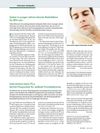
Men with early balding may have a higher risk of prostate issues, and surgery for prostate cancer has a slight survival benefit over radiation.
 37 citations
,
January 2011 in “Annals of Dermatology”
37 citations
,
January 2011 in “Annals of Dermatology” In this study, photodynamic therapy significantly reduced inflammatory acne lesions and sebum secretion, possibly by inducing apoptosis in sebaceous glands and down-regulating TLR-2 and TLR-4 expression.
February 2023 in “Materials today bio” In this study, researchers developed a promising transdermal agent using Triton X-100-modified polyethyleneimine that successfully delivered genetic material to hair follicle cells in mice, potentially alleviating hair loss due to androgenetic alopecia by promoting cell proliferation and inhibiting apoptosis.
January 1985 in “Clinical research” This study found that topical alpha-terthienyl combined with UVA radiation rapidly induced dose-dependent cutaneous photosensitization in guinea pigs, suggesting potential for photochemotherapy in skin disorders without future carcinogenic risks.
 1 citations
,
July 2024 in “Cutis”
1 citations
,
July 2024 in “Cutis” This paper highlights that traction alopecia is common among certain ethnic groups and occupations due to tight hairstyling practices, but early-stage hair loss can often be reversed with treatment and by avoiding these styling habits, as observed in Hispanic and Black women.
9 citations
,
April 2013 in “Journal of Chromatography B” This study developed and validated a sensitive LC-MS/MS method for quantifying tamsulosin in human serum, achieving high analyte recovery and demonstrating applicability in clinical research for benign prostatic hyperplasia.
 March 2026 in “Cosmetics”
 This observational study found that endoscopic subcutaneous midface elevation with vertical SMAS plication safely and effectively rejuvenates the mid and lower face in patients under 45 with early facial soft-tissue ptosis, reporting no facial nerve injuries and minor complications like localized cicatricial alopecia and hematomas.
May 1966 in “Zhurnal Tekhnicheskoi Fiziki (U.S.S.R.) For English translation see Sov. Phys. - Tech. Phys. (Engl. Transl.)” In this study, researchers found that progesterone promotes breast tumor growth in mice through its metabolite 5αP, which can be blocked by the 5α-reductase inhibitor finasteride.
 2 citations
,
November 2023 in “International Journal of Preventive Medicine and Health (IJPMH)”
2 citations
,
November 2023 in “International Journal of Preventive Medicine and Health (IJPMH)” This study explored the effects of a 50% hydroalcoholic UPBF extract on BPH in testosterone propionate-induced rats, finding significant improvements in prostate-related parameters and lower urinary tract symptoms at a 200 mg/kg dose, suggesting potential use in BPH management.

This study observed that combining PRP and Tressfix Serum significantly improved hair regrowth and reduced microRNA expression linked to Chronic Telogen Effluvium compared to using either treatment alone.
 January 2022 in “Social Science Research Network”
 In this study, researchers developed a long-lasting antibacterial coating for medical implants by anchoring silver nanoparticles onto polyamide surfaces, demonstrating potential to improve implant safety and effectiveness by reducing infection and inflammation.
April 2026 in “Human Genome Variation” This study identified a specific hemizygous intronic variant in the MBTPS2 gene associated with IFAP syndrome in a patient, revealing exon skipping and reduced normal transcript expression through long-read RNA sequencing.
70 citations
,
February 2009 in “Biological Trace Element Research” May 2021 in “Indian journal of forensic medicine and toxicology” This study reports that teflonpledget-reinforced suturing of coronary fistula, combined with coronary artery bypass grafting, improved symptoms in patients with LAD-to-MPA fistula and triple vessel disease, though larger studies are needed for confirmation.
 September 2025 in “PubMed”
 In this study, researchers observed significant clinical improvement and patient satisfaction in the treatment of androgenic alopecia with a 1927-nm thulium laser, noting no adverse events and minimal pain across a short-term evaluation of ten patients.
 December 2022 in “Biological and Clinical Sciences Research Journal”
 This study found that among mixed connective tissue disease patients in a tertiary care hospital in Pakistan, Raynaud phenomenon was the most common clinical feature, present in 80% of patients.
 4 citations
,
August 2021 in “Annals of Translational Medicine”
4 citations
,
August 2021 in “Annals of Translational Medicine” In this study, dihydroartemisinin reduced prostate enlargement and related markers in a rat model of benign prostatic hyperplasia, suggesting its potential as a therapeutic agent.
 January 2019 in “Chulalongkorn Medical Journal”
 This study found that combining a 1,927 nm fractional Thulium-doped fiber laser with platelet-rich plasma significantly increased hair density and mass in men with androgenetic alopecia, suggesting it is an effective treatment.
 7 citations
,
January 2021 in “The Journal of Sexual Medicine”
7 citations
,
January 2021 in “The Journal of Sexual Medicine” This study demonstrated that testosterone treatment increases muscle strength and alters body composition in transmen, and the addition of dutasteride does not impair these anabolic effects.
 8 citations
,
February 2019 in “Scientific Reports”
8 citations
,
February 2019 in “Scientific Reports” This article describes the immunofluorescence tomography method to achieve high-resolution 3-D reconstruction of epithelial tissues and reports no clinical results.
2 citations
,
January 1989 This article discusses the history and understanding of Tay syndrome, recognizing it as a distinct condition related to ichthyotic erythroderma, mental retardation, and brittle hair but reports no new clinical results.
December 2011 in “Journal of the Turkish Academy of Dermatology” This case study describes a patient with myasthenia gravis associated with pityriasis rubra pilaris, suggesting a rare coexistence of these conditions.
3 citations
,
October 2021 in “Dermatologic Therapy” This study demonstrated that PRP treatment improved hair metrics in androgenetic alopecia, with the dermapen method proving more effective than the point-by-point technique for specific hair growth indicators.
 3 citations
,
April 2021 in “Journal of Medicinal Chemistry”
3 citations
,
April 2021 in “Journal of Medicinal Chemistry” This study suggests that finasteride may inhibit the enzyme PNMT, potentially contributing to its sexual and psychological side effects.
 9 citations
,
October 2013 in “PLOS ONE”
9 citations
,
October 2013 in “PLOS ONE” This study suggests that dutasteride may be more beneficial than finasteride for therapeutic or preventive use.