September 2017 in “Journal of Evidence Based Medicine and Healthcare” Among pediatric patients in this study, eczema was identified as the most prevalent noninfectious skin condition across all age groups, but more research is needed for comprehensive understanding.
 19 citations
,
October 2019 in “Dermatology Practical & Conceptual”
19 citations
,
October 2019 in “Dermatology Practical & Conceptual” This review discusses the expanding applications of dermoscopy in dermatological diagnosis beyond its initial use for detecting dysplastic nevi and reports no new clinical results.
 January 2018 in “Springer eBooks”
 This study discusses how dermatological issues in athletes can arise from or be exacerbated by mechanical trauma, infections, and environmental factors, highlighting the importance of thorough history and examination to differentiate these from other skin conditions.
 April 2012 in “Journal of the American Academy of Dermatology”
 Clofazimine may be effective for treating ashy dermatosis.
 59 citations
,
June 2022 in “Frontiers in medicine”
59 citations
,
June 2022 in “Frontiers in medicine” This review discusses the complex causes and treatment challenges of chronic inflammatory skin diseases, emphasizing the need for biomarkers to predict treatment responses; it reports no new clinical results.
 10 citations
,
May 1978 in “Acta Dermato Venereologica”
10 citations
,
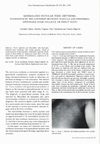
May 1978 in “Acta Dermato Venereologica” In this study, seven patients with generalized toxic erythema developed sterile pustules localized to hair follicles or sweat ducts, with most having a history of medication, solvent exposure, or infection.
November 2025 in “Indian Journal of Dermatology” This study reports a rare cluster of four patients with ectodermal dysplasia, highlighting its typical dental and dermatological manifestations and the necessity of multidisciplinary management.
 June 2015 in “Journal of the turkish academy of dermatology”
 This review revisits the principles regarding the critical role of diet and nutrition in managing certain skin diseases but reports no new findings.
 7 citations
,
September 2013 in “Current Dermatology Reports”
7 citations
,
September 2013 in “Current Dermatology Reports” This review summarizes existing literature on the safety of commonly used dermatologic medications during pregnancy but does not present new clinical findings, aiming to assist physicians with prescribing decisions.
 November 1999 in “Australasian Journal of Dermatology”
 This article discusses various dermatological topics from different journals but does not present any new clinical findings.
4 citations
,
January 2024 in “Allergy” This study indicates that individuals exposed to PPD mount varying immune responses, with either tolerance, subclinical inflammation, or allergy, suggesting no true non-responders to PPD.
This review outlines common dermatological disorders in transgender patients related to hormone therapy and surgeries but presents no new clinical findings; the authors emphasize the need for inclusive healthcare training.
 1 citations
,
January 2021 in “Journal of the Dermatology Nurses’ Association”
1 citations
,
January 2021 in “Journal of the Dermatology Nurses’ Association” This article discusses various dermatological topics from the 2020 Dermatology Nurses' Association annual meeting held online, highlighting updates on skin conditions and treatments without reporting new clinical results.
 January 2026 in “Frontiers in Drug Discovery”
 This study highlights that while advances in dermatology, such as biologics and JAK inhibitors, have improved treatments for conditions like atopic dermatitis and psoriasis, challenges remain, including issues with lasting efficacy and the need for more personalized therapies.
April 2025 in “Current Pediatrics Reports” Transgender and gender-diverse teens need specialized skin and mental health care.
 October 2021 in “Nepal journal of dermatology, venereology & leprology”
 This article discusses the dermatological challenges posed by COVID-19, including skin conditions linked to infection and protective equipment use, and reports no new clinical findings.
 January 2024 in “Rheumatology quarterly”
 This research highlights the essential role of skin findings in diagnosing and managing rheumatic diseases, emphasizing their importance in early recognition, classification, and treatment planning, which requires collaboration between rheumatologists and dermatologists.
 10 citations
,
January 2016 in “Global Dermatology”
10 citations
,
January 2016 in “Global Dermatology” This study observed that zinc deficiency in humans and mice was associated with diminished allergic contact dermatitis but increased severity and duration of irritant contact dermatitis.
37 citations
,
January 2019 in “BioMed Research International” This review highlights that scalp pruritus is a complex condition with various underlying causes, making it a challenge to diagnose and manage effectively. It emphasizes the need for comprehensive patient evaluation, history-taking, and personalized treatment strategies to address quality of life impacts.
28 citations
,
October 2000 in “International Journal of Dermatology” This case report details a 37-year-old man who developed eosinophilic pustular dermatosis after previously resolving herpes zoster, with successful treatment using itraconazole and cycloproxolamine.
18 citations
,
February 2021 in “Dermatologic therapy” This study found that the COVID-19 pandemic significantly altered public interest in dermatologic conditions and treatments, with decreased interest in skin cancers but increased interest in issues like dry skin and hand eczema.
 October 2023 in “Journal of the Endocrine Society”
 This observational study in Bogotá found that skin issues like acne and androgenetic alopecia are common among adults with gender dysphoria on hormone therapy, emphasizing the need for dermatological care as part of comprehensive treatment.
 July 2011 in “British Journal of Dermatology”
 Dermatologists give better information on pathology forms, hypersensitivity vasculitis is a common skin issue, misdiagnoses can occur, and various skin conditions are linked to loss of elastin or genetic factors.
 1 citations
,
September 2010 in “The journal of investigative dermatology/Journal of investigative dermatology”
1 citations
,
September 2010 in “The journal of investigative dermatology/Journal of investigative dermatology” This article reviews a variety of research presentations from the Society for Investigative Dermatology's annual meeting, highlighting advances in dermatological research without reporting new clinical results.
April 2025 in “JAAD reviews.” This review provides an overview of skin manifestations associated with substance use disorder but reports no new clinical findings; the authors emphasize the importance of dermatological evaluation and multidisciplinary care in managing these cases.
 1 citations
,
April 2017 in “Journal of Investigative Dermatology”
1 citations
,
April 2017 in “Journal of Investigative Dermatology” This study evaluated the effects of topical glucocorticoids on human skin using non-invasive imaging methods and observed changes such as alterations in skin layer thickness, keratinocyte size, and collagen and elastin signal intensity.
 7 citations
,
November 2021 in “Anais Brasileiros de Dermatologia”
7 citations
,
November 2021 in “Anais Brasileiros de Dermatologia” This retrospective study found a variety of dermatological adverse events associated with antineoplastic treatments, often leading to changes or suspension of cancer therapies in affected patients.
 43 citations
,
July 2020 in “Dermatologic Therapy”
43 citations
,
July 2020 in “Dermatologic Therapy” This study observed a significant increase in certain dermatologic conditions a month and two months after the onset of the COVID-19 pandemic in Turkey, which may suggest a link with asymptomatic COVID-19 infection.
 September 1998 in “Journal of The European Academy of Dermatology and Venereology”
 This review summarizes major surveys on Behcet's disease, highlighting its systemic manifestations, with primary morbidity linked to ocular involvement causing severe vision loss or blindness.