 12 citations
,
March 2013
12 citations
,
March 2013 This report describes a case where a 4-year-old boy with congenital alopecia due to hypohidrotic ectodermal dysplasia experienced significant hair growth after using topical minoxidil.
 20 citations
,
January 2013 in “Annals of Dermatology”
20 citations
,
January 2013 in “Annals of Dermatology” Topical minoxidil successfully treated temporal triangular alopecia.
 58 citations
,
September 2012 in “Dermatologic Clinics”
58 citations
,
September 2012 in “Dermatologic Clinics” This article reviews current knowledge on the causes, diagnosis, and medical treatments for androgenetic alopecia, particularly in men, and reports no new findings.
 12 citations
,
November 2011 in “International Journal of Dermatology”
12 citations
,
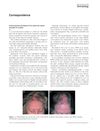
November 2011 in “International Journal of Dermatology” A woman developed a scalp condition from using minoxidil, which improved with a different treatment but left scarring.
 9 citations
,
September 2011 in “Cutaneous and Ocular Toxicology”
9 citations
,
September 2011 in “Cutaneous and Ocular Toxicology” This article presents a case of central serous chorioretinopathy occurring after the use of topical minoxidil solution, but reports no clinical study findings.
 64 citations
,
July 2011 in “Dermatologic Therapy”
64 citations
,
July 2011 in “Dermatologic Therapy” This review discusses treatments for chemotherapy-induced alopecia, highlighting scalp cooling for hair loss prevention and 2% topical minoxidil for regrowth acceleration as effective options, but reports a need for more rigorous trials to validate promising new therapies.
 20 citations
,
January 2009 in “International Journal of Dermatology”
20 citations
,
January 2009 in “International Journal of Dermatology” This case report describes a patient with Clouston's syndrome and alopecia who responded positively to topical treatment with minoxidil and tretinoin.
 43 citations
,
January 2007 in “American Journal of Clinical Dermatology”
43 citations
,
January 2007 in “American Journal of Clinical Dermatology” This study concluded that a combined once-daily solution of 5% minoxidil and 0.01% tretinoin is as effective and safe as the conventional twice-daily 5% minoxidil application for treating androgenetic alopecia in men.
 57 citations
,
August 2003 in “British Journal of Dermatology”
57 citations
,
August 2003 in “British Journal of Dermatology” This study found that daily use of 1% pyrithione zinc shampoo modestly improved hair growth over 26 weeks, although these effects were less than those of 5% minoxidil.
 269 citations
,
August 2002 in “Journal of The American Academy of Dermatology”
269 citations
,
August 2002 in “Journal of The American Academy of Dermatology” This study found that 5% topical minoxidil significantly increased hair regrowth and improved psychosocial perceptions of hair loss in men with androgenetic alopecia compared to 2% topical minoxidil and placebo over 48 weeks.
 83 citations
,
December 2001 in “Journal of Investigative Dermatology”
83 citations
,
December 2001 in “Journal of Investigative Dermatology” Minoxidil boosts hair growth by targeting adenosine and possibly sulfonylurea receptor 2B.
 115 citations
,
November 1999 in “Journal of The American Academy of Dermatology”
115 citations
,
November 1999 in “Journal of The American Academy of Dermatology” In this study, men using 2% and 5% minoxidil solutions experienced a significant increase in hair weight for 96 weeks compared to placebo, with effects diminishing after treatment cessation.
 127 citations
,
July 1996 in “Journal of The American Academy of Dermatology”
127 citations
,
July 1996 in “Journal of The American Academy of Dermatology” This study found that in women undergoing chemotherapy after breast surgery, topical minoxidil significantly shortened the duration of hair loss compared to a placebo without significant side effects.
 33 citations
,
July 1992 in “Journal of Investigative Dermatology”
33 citations
,
July 1992 in “Journal of Investigative Dermatology” Minoxidil doesn't affect perifollicular lymphoid infiltration in alopecia areata patients.
46 citations
,
June 1990 in “Archives of dermatology” In this study, combination therapy with 5% minoxidil and 0.5% anthralin showed some cosmetic improvement in 11% of patients with severe treatment-resistant alopecia areata, with hair regrowth starting by week 12.
 70 citations
,
April 1990 in “Journal of The American Academy of Dermatology”
70 citations
,
April 1990 in “Journal of The American Academy of Dermatology” Minoxidil treatment increased hair growth for up to 5 years, requiring twice daily application.
 101 citations
,
March 1987 in “Journal of The American Academy of Dermatology”
101 citations
,
March 1987 in “Journal of The American Academy of Dermatology” Minoxidil solution helps hair regrowth in alopecia areata, with 5% being more effective.



