 8 citations
,
July 2018 in “Analytical sciences”
8 citations
,
July 2018 in “Analytical sciences” This study reported that derivatization with 5-butylpicolinic acid improved the sensitivity for detecting testosterone and DHT in saliva using LC-ESI-MS/MS, with minimal interference from the saliva matrix.
 3 citations
,
January 2015 in “Evidence-based Complementary and Alternative Medicine”
3 citations
,
January 2015 in “Evidence-based Complementary and Alternative Medicine” This review discusses pumpkin seed oil as a potential treatment for androgenetic alopecia but reports no clinical results on its effects on frontal hair loss; it emphasizes the need for further research.
May 2024 in “International journal of medicine and psychology.” This review discusses Ganser syndrome as a rare and misunderstood disorder within psychiatric practice, noting its exclusion from the DSM-5 and potential dual origins as organic or psychogenic.
513 citations
,
February 2022 in “Advanced Science” This study demonstrated that incorporating PDA@Ag nanoparticles into a cationic guar gum hydrogel significantly enhanced photothermal conversion efficiency, achieving superior antibacterial efficacy both in vitro and in vivo, advancing the potential of PDA as a photothermal antibacterial agent.
 12 citations
,
March 2013 in “Gynecological Endocrinology”
12 citations
,
March 2013 in “Gynecological Endocrinology” This study found that women with PCOS had significantly higher angiotensin converting enzyme activity and insulin resistance compared to controls, suggesting a correlation between these factors.
October 2006 in “Urology” The study found that different criteria led to different patient groups in the CombAT study compared to the MTOPS study.
 4 citations
,
May 2011 in “Movement Disorders”
4 citations
,
May 2011 in “Movement Disorders” A woman's unique dementia was misdiagnosed, a genetic mutation increases Parkinson's risk with age, and finasteride may help with Tourette syndrome.
 March 2021 in “Research Square (Research Square)”
 This study found that patients with RASopathies demonstrated lower levels of serum IgA and CD8 T cells compared to controls, potentially indicating an increased risk of developing autoimmune disorders.
 13 citations
,
December 2012 in “Canadian Urological Association Journal”
13 citations
,
December 2012 in “Canadian Urological Association Journal” This report from a consensus meeting concluded that while 5-alpha reductase inhibitors are beneficial for BPH treatment and prostate cancer risk reduction, their role in clinical practice should be more widely integrated into prostate management guidelines.
3 citations
,
November 2023 in “American Journal of Men s Health” This study found that lower urinary tract symptoms in older men with benign prostatic hyperplasia negatively impact sexual function and mental health, suggesting the importance of early intervention to improve quality of life.
30 citations
,
January 2020 in “Fertility and Sterility” This review discusses the evidence for post-finasteride syndrome as a condition potentially induced by finasteride and dutasteride, associating them with sexual dysfunction, depression, anxiety, and suicidal ideation in a subset of men, and reports no new clinical results.
 April 2016 in “The Journal of Sexual Medicine”
 This report analyzed an FDA adverse event database and aimed to evaluate and describe post-finasteride syndrome potentially related to dutasteride, but it does not report new clinical findings.
 January 2016 in “Hair transplant forum international”
 Finasteride's link to health issues like male breast cancer, infertility, and prostate cancer needs more research through placebo-controlled trials to confirm.
2 citations
,
December 2024 in “Clinical Endocrinology” This study suggests that persistent symptoms in patients with controlled functioning adenomas may indicate a coexisting PCOS diagnosis, highlighting the need for precise differentiation and timely management of these conditions.
 31 citations
,
September 2015 in “BJUI”
31 citations
,
September 2015 in “BJUI” This study found that men aged 50 and older with clinical benign prostatic hyperplasia have a significantly higher prevalence of metabolic syndrome than those without the condition in the UK primary care population.
3 citations
,
February 2019 in “Molecular genetics and metabolism” This study found that coadministration of tadalafil and finasteride improved lower urinary tract symptoms and erectile function in men with benign prostatic hyperplasia better than finasteride alone over 26 weeks.
 April 2016 in “Plastic and reconstructive surgery. Global open”
 This article from the PRS Global Open and ASPS Education Network does not present any new research findings; it likely serves as an introductory or descriptive overview.
 19 citations
,
October 2018 in “PLOS ONE”
19 citations
,
October 2018 in “PLOS ONE” This study found that 5-alpha-reductase inhibitor monotherapy for symptomatic benign prostatic hyperplasia showed some clinical benefit over placebo but was linked to a higher incidence of sexual side effects.
4 citations
,
October 2022 in “Current Urology” Platelet-rich plasma shows promise in reducing pain for bladder pain syndrome.
 105 citations
,
January 2004 in “The Journal of Urology”
105 citations
,
January 2004 in “The Journal of Urology” This study found that finasteride significantly improved symptoms in CP/CPPS patients, except for voiding, unlike saw palmetto which showed no long-term benefits.
 October 2024 in “Journal of the Endocrine Society”
 This case study describes a 45-year-old man who developed post-finasteride syndrome with various symptoms after stopping Finasteride, highlighting the condition's rarity and poorly understood pathophysiology.

This study identified distinct and significant adverse event patterns across different drug classes used to treat benign prostatic hyperplasia, confirming known risks and suggesting novel safety signals for further investigation.
 December 2024 in “Journal of Cancer Therapy and Research”
 In this study, researchers investigated the effects of Aqueous Artocarpus heterophyllus seed extract on testosterone enanthate-induced benign prostatic hyperplasia in adult Wistar rats, using three different dosages to assess its potential as an alternative therapy. Results are not reported in this abstract.

This study analyzed the FDA Adverse Event Reporting System and found distinct safety signals and adverse event patterns among α1-blockers, 5α-reductase inhibitors, and tadalafil used in treating benign prostatic hyperplasia, emphasizing known risks and identifying potential new ones that require further study.
 54 citations
,
October 2019 in “Cochrane library”
54 citations
,
October 2019 in “Cochrane library” This study found low- to very low-quality evidence suggesting that several pharmacological treatments, including alpha blockers and antibiotics, may reduce prostatitis symptoms without significantly increasing adverse events in the short term, although more rigorous trials are needed.

This study identified 193 plasma proteins associated with prostate cancer risk, validating 20 high-risk proteins including KLK3, and pinpointed potential drug targets like HSPB1, RRM2B, and PSCA through genetic analysis, offering new insights for biomarkers and treatments.
 October 2021 in “Dermatology reports”
 The care model improved timely diagnosis and treatment for psoriasis and psoriatic arthritis.
January 2009 in “Acta urologica Belgica” In this placebo-controlled study, finasteride significantly improved symptoms, reduced prostate size, and increased urine flow rate in patients with moderately symptomatic BPH over two years.
 1 citations
,
January 2023 in “Annals of Dermatology”
1 citations
,
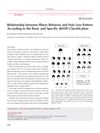
January 2023 in “Annals of Dermatology” The BASP classification helps predict patient behavior and improve treatment for hair loss.
 May 2025 in “The Journal of Rheumatology”
 This case report describes a 47-year-old woman with dilated cardiomyopathy as the first sign of primary antiphospholipid syndrome, highlighting the need for APS screening in similar patient presentations.