49 citations
,
August 2022 in “Frontiers in Immunology” This paper discusses the evolving understanding of psoriasis pathogenesis with no new clinical findings; the authors highlight the role of T-cell plasticity and regulatory cells, calling for further clinical applications using single-cell technologies.
 49 citations
,
January 2018 in “Immunology”
49 citations
,
January 2018 in “Immunology” This review discusses the relationship between psoriasis and autoimmunity, focusing on autoimmune co-morbidities, but reports no new research findings.
 49 citations
,
March 2014 in “Dermatologic clinics”
49 citations
,
March 2014 in “Dermatologic clinics” This article discusses the causes, development, treatment, and prevention strategies for pseudofolliculitis barbae and folliculitis keloidalis nuchae, but reports no new clinical results.
49 citations
,
January 2012 in “Dermatology” In this study, only 1 out of 5 patients with anti-TNF-α induced psoriasiform eruptions showed good response to topical treatment, while systemic therapy and discontinuation of anti-TNF-α may prevent scarring alopecia in severe cases.
47 citations
,
November 2000 in “Archives of dermatology” In this observational study, the effectiveness of a diode laser was evaluated for treating pseudofolliculitis barbae at the Laser and Skin Surgery Center of New York, but it reports no new clinical results.
 46 citations
,
August 2019 in “Journal of the European Academy of Dermatology and Venereology”
46 citations
,
August 2019 in “Journal of the European Academy of Dermatology and Venereology” This study found that patients with alopecia areata reported worse quality of life and higher anxiety and depression levels compared to those with androgenetic alopecia and healthy controls.
46 citations
,
May 2013 in “The journal of investigative dermatology/Journal of investigative dermatology” This review discusses the state-of-the-art knowledge on pseudoxanthoma elasticum, summarizing recent advancements in genetics, pathomechanisms, and potential treatments but reports no new clinical findings.
46 citations
,
September 2002 in “Journal of the European Academy of Dermatology and Venereology” In this study, depression was more common among women with androgenetic alopecia, while men showed higher levels of anxiety, aggressiveness, and a lack of adherence to treatment.
 45 citations
,
July 2009 in “Journal of Investigative Dermatology”
45 citations
,
July 2009 in “Journal of Investigative Dermatology” This study reported significant upregulation and release of S100A4 in psoriatic skin, which may actively contribute to psoriasis pathogenesis.
 43 citations
,
July 1994 in “Archives of Dermatology”
43 citations
,
July 1994 in “Archives of Dermatology” This study found that the prevalence of personality disorders in individuals with androgenetic alopecia was significantly higher than in the general population, irrespective of gender.
42 citations
,
January 2003 in “International Journal of Gynecological Pathology” This research observed that multifocal pseudoepitheliomatous hyperplasia may explain some cases of squamous nests in vulvar lichen sclerosus with lichen simplex chronicus, potentially as a reaction to tissue damage rather than squamous cell carcinoma.
42 citations
,
August 1995 in “British journal of dermatology/British journal of dermatology, Supplement” This study found that RXR-alpha is strongly expressed in both normal and psoriatic human skin, suggesting it may play a role in the transition from proliferation to differentiation in epidermal keratinocytes.
 41 citations
,
July 2015 in “Clinical and Experimental Dermatology”
41 citations
,
July 2015 in “Clinical and Experimental Dermatology” This review explores the connection between psoriasis and hair loss, noting that both the disease and its treatments can contribute to alopecia, and reports no new clinical results.
 41 citations
,
March 2010 in “Psychology Research and Behavior Management”
41 citations
,
March 2010 in “Psychology Research and Behavior Management” This review discusses the complex interplay between the nervous system and skin conditions, highlighting various treatment strategies, but reports no new research findings.
 41 citations
,
June 2003 in “Journal of The American Academy of Dermatology”
41 citations
,
June 2003 in “Journal of The American Academy of Dermatology” This case report describes a patient who developed pseudoacromegaly from long-term use of high-dose minoxidil, marking the first such documented case.
 41 citations
,
June 1999 in “The Prostate”
41 citations
,
June 1999 in “The Prostate” In this study, finasteride alone or combined with terazosin significantly reduced PSA levels in men with BPH, while terazosin alone did not affect PSA levels.
 41 citations
,
March 1992 in “Archives of Dermatology”
41 citations
,
March 1992 in “Archives of Dermatology” This review provides practical guidelines for managing psychodermatologic disorders and concludes that psychopharmacologic agents offer a useful option for treatment, considering the underlying psychopathologic condition.
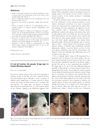 39 citations
,
July 2015 in “British Journal of Dermatology”
39 citations
,
July 2015 in “British Journal of Dermatology” This article discusses the pseudo 'fringe sign' in frontal fibrosing alopecia, highlighting that it is not solely related to traction, and it reports no new clinical results.
 39 citations
,
July 2008 in “Dermatologic Therapy”
39 citations
,
July 2008 in “Dermatologic Therapy” This review provides a practical approach to diagnosing pseudopelade of Brocq and updates on treatment options but reports no new clinical results.
39 citations
,
January 2006 in “Journal of Cosmetic and Laser Therapy” This study found that pneumatic skin flattening (PSF) significantly reduces pain and post-treatment erythema during high-energy IPL and laser hair removal while enhancing treatment efficacy.
39 citations
,
January 1977 in “Dermatology” This study found that the retinoic acid derivative Ro 10-9359 cleared psoriasis lesions in over half of the patients, but most experienced side effects, including skin issues and altered liver enzyme levels.
 38 citations
,
April 2017 in “Journal of The American Academy of Dermatology”
38 citations
,
April 2017 in “Journal of The American Academy of Dermatology” This review discusses psychocutaneous syndromes, detailing their classifications and management strategies, but reports no new clinical findings; it underscores dermatologists' role in these cases.
38 citations
,
January 1991 in “International Journal of Dermatology” In this study, men with androgenic alopecia taking minoxidil gel generally showed no evidence of psychological malfunction, but those over 35 experienced greater psychological improvement when they had cosmetic success with the treatment.
37 citations
,
May 1999 in “Annals of pharmacotherapy/The annals of pharmacotherapy” This review describes psychotropic drug-related hair loss as a possible but uncommon side effect, with resolution typically achieved by discontinuing the medication, and emphasizes clinician-patient discussions for managing the condition.
37 citations
,
June 2004 in “Human molecular genetics online/Human molecular genetics” This study suggests that the HCR risk allele within the PSORS1 locus may contribute to psoriasis susceptibility by altering gene expression related to skin structure and differentiation, although these changes alone might not result in clinical symptoms.
37 citations
,
January 2003 in “Journal of the European Academy of Dermatology and Venereology” This case report describes the co-occurrence of alopecia areata and psoriasis in an 18-year-old girl with Turner's syndrome, suggesting a potential genetic link to immunological diseases in these patients.
 34 citations
,
August 2005 in “Dermatologic Clinics”
34 citations
,
August 2005 in “Dermatologic Clinics” This review discusses how the brain can influence skin biology, suggesting a link between psychological factors and skin health, but it reports no new scientific findings.
 32 citations
,
April 2014 in “American Journal of Clinical Dermatology”
32 citations
,
April 2014 in “American Journal of Clinical Dermatology” People with psoriasis are more likely to have Metabolic Syndrome than those without psoriasis.
 31 citations
,
May 2020 in “Dermatologic Therapy”
31 citations
,
May 2020 in “Dermatologic Therapy” Quarantine stress likely worsened hair loss in women, but video consultations helped manage their condition and reduce anxiety.
 31 citations
,
October 2013 in “Psychosomatics”
31 citations
,
October 2013 in “Psychosomatics” This review discusses cutaneous adverse effects of psychotropic medications and reports no new findings, emphasizing the importance of psychiatrists being aware of these potential skin reactions.