 75 citations
,
October 2010 in “Mammalian genome”
75 citations
,
October 2010 in “Mammalian genome” In this study, specific genetic polymorphisms in the KRT71 gene were associated with hairless and curly phenotypes in Sphynx and Devon Rex cats.
 3 citations
,
May 2018 in “Reproductive Sciences”
3 citations
,
May 2018 in “Reproductive Sciences” In this randomized study, BAY 1158061, a prolactin receptor antibody, was found to be safe, well-tolerated, and exhibited low immunogenicity in healthy postmenopausal women, but had no effect on serum prolactin levels compared to placebo.
49 citations
,
October 1989 in “Genomics” Type I keratin genes are closely linked to the rex locus on mouse chromosome 11, affecting hair development.
 38 citations
,
June 2015 in “Expert Opinion on Therapeutic Targets”
38 citations
,
June 2015 in “Expert Opinion on Therapeutic Targets” This review explores potential indications for prolactin receptor inhibitors beyond breast and prostate cancers, emphasizing the need for potent antibodies to further research prolactin receptor expression.
151 citations
,
December 2004 in “Neuropharmacology” Progesterone reduces anxiety without needing progesterone receptors.
 April 2018 in “Journal of Investigative Dermatology”
 This study found that the RNA helicase DDX6 is essential for maintaining self-renewal in epidermal progenitor cells by promoting the translation of proliferation regulators and degrading differentiation-inducing mRNAs.
 November 2022 in “Journal of Investigative Dermatology”
 This study developed a novel method to analyze the effects of COL7A1 mutations using mRNA from peripheral blood mononuclear cells, aiding genetic diagnosis and potential therapies for dystrophic epidermolysis bullosa.
 February 2023 in “Research Square (Research Square)”
 This study reports that a new mouse model with a CARD14 mutation successfully mimics key human PRP symptoms, and anti-IL-17A antibody significantly reduces these symptoms.
 March 2010 in “Ejc Supplements”
 This article discusses the paradoxical effects of valproic acid on hair, reporting both drug-induced hair loss and the potential for hair growth when used topically, but presents no original research findings.
 April 2023 in “The journal of investigative dermatology/Journal of investigative dermatology”
 This study found that local PGE2 injection may prevent radiotherapy-induced hair loss by protecting hair follicle cells and promoting hair follicle self-repair.
January 2016 in “Refubium (Universitätsbibliothek der Freien Universität Berlin)” In this study, the safety profile of the prodrug CAP7.1 was found to be similar to other topoisomerase inhibitors, with myelosuppression as the main dose-limiting toxicity.
1 citations
,
February 2022 in “Brain Research Bulletin” This study found that finasteride reduced impulsivity in a rat model of pramipexole-induced probability discounting, possibly by normalizing D3 receptor expression in the nucleus accumbens.
 18 citations
,
October 2010 in “Bioorganic & Medicinal Chemistry Letters”
18 citations
,
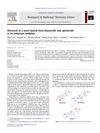
October 2010 in “Bioorganic & Medicinal Chemistry Letters” This study found that a new hybrid compound designed from finasteride and epristeride was a potent inhibitor of 5α-reductase with a mechanism similar to finasteride.
19 citations
,
March 2010 in “Steroids” This study found that specific steroids, particularly 5 and 7b, decreased growth of prostate and seminal vesicles and bound to the androgen receptor, showing comparable pharmacological activity to finasteride.
 June 2020 in “Journal of Investigative Dermatology”
 This study found that FDA-cleared devices for preparing platelet-rich plasma showed inconsistent product quality, with variable platelet counts and inadequate quality control performance, suggesting clinical improvement may not rely on platelet concentration.
September 2002 in “Oncology Times” This study presented at the ASCO Annual Meeting reported that the epidermal growth factor receptor antibody ABX-EGF showed preliminary efficacy in renal cell cancer patients, with tolerable side effects, while bortezomib demonstrated clinical benefit in a significant proportion of multiple myeloma patients.
 April 2017 in “Journal of Investigative Dermatology”
 In this study, deep phenotyping of 68 patients with XPD gene defects successfully separated individuals by clinical diagnosis and survival status, potentially improving diagnosis and prognosis for xeroderma pigmentosum and trichothiodystrophy.
2 citations
,
October 2023 in “PubMed” This study reported the creation of isogenic immortalized COL7A1-deficient keratinocyte lines, providing a model for researching Recessive Dystrophic Epidermolysis Bullosa biology and potential therapies.
 April 2026 in “Tissue Engineering and Regenerative Medicine”
 This study found that the GPRC6A-Duox1 signaling pathway influences hair cycle progression and testosterone-mediated hair loss in mice, suggesting that disruption of this pathway leads to resistance against testosterone-induced hair loss and longer anagen phase duration.
June 2023 in “bioRxiv (Cold Spring Harbor Laboratory)” This study developed new immortalized keratinocyte cell lines lacking COL7A1 using CRISPR/Cas9 technology, providing a valuable model to explore the biology and treatment options for recessive dystrophic epidermolysis bullosa.
November 2025 in “Drug Testing and Analysis” This study investigated the metabolic pathways of epristeride, a new Type II 5α‐reductase inhibitor, using in vitro models and found that its metabolites show significant interactions with key proteins, suggesting implications for its role in doping control.
 August 2025 in “JEADV Clinical Practice”
 This case report describes the management of PRIDE complex, a skin and hair condition associated with EGFR inhibitor treatment like cetuximab, emphasizing that it does not require stopping the medication.
9 citations
,
January 1997 in “Horticultura: Revista de industria, distribución y socioeconomía hortícola: frutas, hortalizas, flores, plantas, árboles ornamentales y viveros” In this study, researchers found that the transcriptional program regulated by PRC2 is not necessary for maintaining hair follicle stem cell quiescence and hair regeneration in vivo.
 August 2024 in “Plant Signaling & Behavior”
 This study found that overexpressing the gene OsPRX83 in rice plants enhanced osmotic and oxidative stress tolerance compared to wild-type and mutant rice, showing potential for engineering drought-resistant rice varieties through ABA-dependent pathways and ROS scavenging.
 April 2023 in “Cancer research”
 This study suggests that KRTAP2-3 may serve as a novel biomarker to identify cells in the polyaneuploid cancer cell state, which is linked to therapy resistance and poor prognosis in prostate cancer.
 9 citations
,
May 2024 in “Cureus”
9 citations
,
May 2024 in “Cureus” This review discusses the role of platelet-rich plasma in assisted reproductive technology for enhancing endometrial receptivity and reports promising outcomes.
 10 citations
,
October 2016 in “Monoclonal antibodies in immunodiagnosis and immunotherapy”
10 citations
,
October 2016 in “Monoclonal antibodies in immunodiagnosis and immunotherapy” This study developed rat monoclonal antibodies that specifically detect Pax1/PAX1 protein, which could improve diagnostic protocols for conditions involving deregulated Pax1/PAX1 expression.
56 citations
,
November 2007 in “Molecular and cellular endocrinology” This study identified enzymes responsible for regulating androgen action in the human prostate, suggesting that inhibiting AKR1C2 or RL-HSD may have therapeutic potential in androgen insufficiency or benign prostatic hyperplasia, respectively.
 April 2023 in “Journal of Investigative Dermatology”
 This study found that PX-12 inhibited the NLRP3 inflammasome and reduced psoriasis-like symptoms in a mouse model, suggesting its potential as a treatment for psoriasis.