 3 citations
,
January 2018 in “Biomedical dermatology”
3 citations
,
January 2018 in “Biomedical dermatology” This study found that epigallocatechin-3-gallate (EGCG) may reduce paclitaxel-induced apoptosis in human dermal papilla cells by regulating microRNA expression related to apoptosis and cell proliferation.
 108 citations
,
February 2008 in “The Journal of urology/The journal of urology”
108 citations
,
February 2008 in “The Journal of urology/The journal of urology” This review discusses the rationale for targeting 5α-reductase isoenzymes in prostate cancer prevention and treatment, highlighting the potential benefits of using inhibitors like dutasteride and finasteride but reports no new experimental results.
 25 citations
,
December 2008 in “The Journal of Urology”
25 citations
,
December 2008 in “The Journal of Urology” In this study, short-term finasteride treatment reduced apoptotic factors caspase-7 and IGFBP-3 in prostate cancer cells but did not significantly affect androgen receptor expression compared to placebo.
 1 citations
,
January 2009 in “Trepo - Institutional Repository of Tampere University”
1 citations
,
January 2009 in “Trepo - Institutional Repository of Tampere University” This study found that vitamin D regulates cholesterol metabolism and may influence prostate cancer development through mechanisms affecting prostate cell growth and sex hormone metabolism.
 3 citations
,
March 2005 in “The Journal of urology/The journal of urology”
3 citations
,
March 2005 in “The Journal of urology/The journal of urology” This letter to the editor addresses corrections related to an earlier study on the effect of the dual 5α-reductase inhibitor dutasteride on markers of tumor regression in prostate cancer, but reports no new findings.
 45 citations
,
January 2020 in “International Journal of Molecular Sciences”
45 citations
,
January 2020 in “International Journal of Molecular Sciences” This review discusses the potential of plant polyphenols to overcome multidrug resistance in various solid cancers and reports no new experimental results; further research is suggested.
 December 2025 in “Naunyn-Schmiedeberg s Archives of Pharmacology”
 In this animal study, AGO (agomelatine) effectively alleviated testosterone-induced benign prostatic hyperplasia in rats by reducing oxidative stress and inflammation, indicating its potential as a therapeutic option for managing BPH through specific signaling pathways.
 118 citations
,
May 2003 in “Toxicological Sciences”
118 citations
,
May 2003 in “Toxicological Sciences” This study found that prenatal exposure to finasteride in rats led to permanent changes in developmental endpoints like anogenital distance and nipple retention, which were predictive of further reproductive tract malformations.
 92 citations
,
November 2003 in “The Journals of Gerontology”
92 citations
,
November 2003 in “The Journals of Gerontology” This study indicated that while testosterone replacement in older men with low testosterone increases muscle mass and strength and reduces fat, its effects on physical function, disability, falls, or fractures remain unclear.
 55 citations
,
July 1999 in “Clinics in Sports Medicine”
55 citations
,
July 1999 in “Clinics in Sports Medicine” This review discusses recent data on the use of anabolic-androgenic steroids and other steroid compounds and reports no new clinical results.
29 citations
,
March 2010 in “Cancer epidemiology” This study found that early-onset male pattern baldness was associated with a reduced relative risk of prostate cancer.
 10 citations
,
October 2020 in “Microscopy and Microanalysis”
10 citations
,
October 2020 in “Microscopy and Microanalysis” This study found that resveratrol significantly alleviated testicular damage in male rats caused by finasteride, which otherwise led to decreased testosterone levels and various histopathological alterations in the testes.
 October 2025 in “International Journal of Social health”
 This systematic review reported that among men taking finasteride for benign prostatic hyperplasia, total PSA levels decreased by 30% to 50%, and free PSA by up to 45%, with reductions in prostate volume and PSA density observed as well.
 January 2010 in “Yearbook of Endocrinology”
 Two new compounds can block androgen receptor activity in different ways and may lead to new treatments for androgen-related diseases.
 101 citations
,
April 1994 in “Baillière's clinical endocrinology and metabolism”
101 citations
,
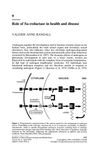
April 1994 in “Baillière's clinical endocrinology and metabolism” This review discusses the role of 5α-reductase enzymes in androgen action and related disorders, noting that their specific inhibitory drugs show promise for conditions like benign prostatic hypertrophy; it reports no new clinical results.
 25 citations
,
June 2019 in “Endocrine Related Cancer”
25 citations
,
June 2019 in “Endocrine Related Cancer” This review discusses the structure and function of steroid nuclear receptors, particularly focusing on androgen receptor dysregulation in prostate cancer and androgen insensitivity syndromes, without reporting new experimental results.
 9 citations
,
February 2022 in “Biomolecules”
9 citations
,
February 2022 in “Biomolecules” This review concludes that while many epidemiological studies suggest high alcohol intake is associated with an increased risk of prostate cancer, the evidence may be affected by confounding factors such as diet and lifestyle.
 218 citations
,
December 2011 in “Advances in Urology”
218 citations
,
December 2011 in “Advances in Urology” This review discusses the biochemical properties and clinical significance of 5 alpha-reductase isozymes and reports no new clinical results.
 86 citations
,
May 2013 in “American journal of obstetrics and gynecology”
86 citations
,
May 2013 in “American journal of obstetrics and gynecology” This article reviews the care of transgender patients, encompassing diagnosis, treatment options, and challenges in health care access, but does not present new research findings; the authors emphasize the critical role of providers in addressing transgender health needs.
 72 citations
,
October 1998 in “Baillière's clinical endocrinology and metabolism”
72 citations
,
October 1998 in “Baillière's clinical endocrinology and metabolism” This article discusses the potential effects of exogenous testosterone, highlighting that its impact on prostate cancer progression, cardiovascular health, and behavior remains uncertain and needs further investigation.
 54 citations
,
November 2001 in “Urology”
54 citations
,
November 2001 in “Urology” This review discusses the association between androgen receptor CAG repeat polymorphism and several health conditions, including Kennedy’s disease and urologic disorders, without reporting new clinical results.
50 citations
,
April 2010 in “Biology direct” This study's model suggests that low androgen levels can increase selection for prostate cancer phenotypes resistant to hormonal therapy, potentially leading to more aggressive forms of cancer.
 49 citations
,
December 1997 in “Urology”
49 citations
,
December 1997 in “Urology” This study found that low-dose tamoxifen may effectively treat painful gynecomastia in patients receiving flutamide and finasteride for advanced prostate cancer.
 46 citations
,
September 2011 in “Journal of Endocrinology”
46 citations
,
September 2011 in “Journal of Endocrinology” This study suggests that 5α-reduced glucocorticoids may have anti-inflammatory potential and could serve as biomarkers for liver inflammation in metabolic disease, with implications for drug development.
 37 citations
,
January 1991 in “Reproductive Toxicology”
37 citations
,
January 1991 in “Reproductive Toxicology” The study observed that finasteride reduced fertility in male Sprague-Dawley rats by impairing the formation of copulatory plugs, an effect considered specific to rats and not applicable to species without this reproductive feature.
30 citations
,
June 2010 in “Endocrine Related Cancer” In this study, dutasteride more effectively reduced prostate cancer cell viability than finasteride in vitro, but did not significantly alter the angiogenic response.
 29 citations
,
July 2013 in “The Journal of Sexual Medicine”
29 citations
,
July 2013 in “The Journal of Sexual Medicine” This review discusses the potential role of androgen receptor CAG repeat polymorphism testing in hypogonadism management for both sexes, but its clinical utility remains unclear and requires further investigation.
 28 citations
,
July 2017 in “Journal of Endocrinological Investigation”
28 citations
,
July 2017 in “Journal of Endocrinological Investigation” This study suggests that early onset androgenetic alopecia in men may indicate a male PCOS equivalent, possibly leading to higher risks of metabolic and cardiovascular disorders later in life.
 28 citations
,
August 2011 in “Journal of The American Academy of Dermatology”
28 citations
,
August 2011 in “Journal of The American Academy of Dermatology” This study found that men with early-onset androgenetic alopecia had significantly larger prostate volumes and lower urinary flow rates compared to healthy controls, suggesting a possible link between AGA and prostate-related urinary symptoms.
 27 citations
,
January 1984 in “Pharmacology & Therapeutics”
27 citations
,
January 1984 in “Pharmacology & Therapeutics” This review discusses androgen manipulation strategies for conditions like benign prostatic hyperplasia and prostatic carcinoma but reports no new clinical results.