 15 citations
,
August 2021 in “Reviews in endocrine and metabolic disorders”
15 citations
,
August 2021 in “Reviews in endocrine and metabolic disorders” This review discusses hypopituitarism's bidirectional relationship with COVID-19 due to metabolic comorbidities and pituitary risks, but it reports no new clinical results.
 14 citations
,
September 2007 in “Steroids”
14 citations
,
September 2007 in “Steroids” This study suggests that androstendione and DHEA are useful indicators for diagnosing hyperandrogenemia in hirsute women, while DHEAS was not found to be helpful.
 13 citations
,
January 2022 in “Stem cell reviews and reports”
13 citations
,
January 2022 in “Stem cell reviews and reports” This study found that using cultured mesenchymal stem cells from mouse whisker hair follicle outer root sheath in wound healing reduced inflammation, accelerated closure, and resulted in less hypertrophic scarring in mice.
 11 citations
,
August 2019 in “The Journal of Sexual Medicine”
11 citations
,
August 2019 in “The Journal of Sexual Medicine” This study found that women with nonclassic congenital adrenal hyperplasia (NC-CAH) reported lower sexual function and higher sexual distress compared to those with classic CAH (C-CAH), particularly among those showing signs of androgen excess.
 9 citations
,
February 2018 in “The Journal of Dermatology”
9 citations
,
February 2018 in “The Journal of Dermatology” This study identified a novel splice site mutation in the LIPH gene associated with autosomal recessive woolly hair, contributing to understanding the genetic basis of this condition.
 8 citations
,
June 2016 in “Clinical Chemistry”
8 citations
,
June 2016 in “Clinical Chemistry” This review discusses the expression of PSA in hormonally-regulated tissues and female malignancies, emphasizing its potential as a diagnostic biomarker and role in antidoping initiatives.
 7 citations
,
January 2025 in “Archives of Gynecology and Obstetrics”
7 citations
,
January 2025 in “Archives of Gynecology and Obstetrics” In this review, the authors aim to improve the differential diagnosis between hyperandrogenic PCOS and NCAH, which could lead to more personalized treatment strategies for patients experiencing hyperandrogenism.
 7 citations
,
January 2019 in “Australasian Journal of Dermatology”
7 citations
,
January 2019 in “Australasian Journal of Dermatology” In this study, the CYP 21A2 gene p.V281L mutation was associated with an increased susceptibility to familial frontal fibrosing alopecia, suggesting an antigen-driven mechanism linked to certain human leukocyte antigen haplotypes.
 7 citations
,
September 2014 in “Journal of Obstetrics and Gynaecology Research”
7 citations
,
September 2014 in “Journal of Obstetrics and Gynaecology Research” This study found that the ovarian stromal area to total ovarian area ratio alone is not a strong predictor of biochemical hyperandrogenism in Thai women with PCOS, but combining it with clinical hyperandrogenism improves prediction.
 7 citations
,
October 2006 in “Medical hypotheses”
7 citations
,
October 2006 in “Medical hypotheses” UV light might cause excessive hair growth by increasing PGE2 in the skin.
 6 citations
,
February 2022 in “The journal of neuroscience/The Journal of neuroscience”
6 citations
,
February 2022 in “The journal of neuroscience/The Journal of neuroscience” This study observed that deleting PTEN in mouse facial motoneurons enhanced peripheral axon regeneration but also led to physiological changes and potential hyperplasia in older mice.
 6 citations
,
April 2019 in “Journal of Pediatric Endocrinology and Metabolism”
6 citations
,
April 2019 in “Journal of Pediatric Endocrinology and Metabolism” In this study, metformin improved BMI, menstrual regularity, and symptoms of hyperandrogenism in adolescents with type 1 diabetes, but did not enhance glycemic control.
 6 citations
,
January 2017 in “Dermato-endocrinology”
6 citations
,
January 2017 in “Dermato-endocrinology” This study found that androsterone glucuronate (ADT-G) was the only androgenic metabolite sensitive to detecting differences between adult women with acne and controls, and its levels decreased with systemic treatment.
 6 citations
,
March 2015 in “Journal of Endocrinological Investigation”
6 citations
,
March 2015 in “Journal of Endocrinological Investigation” This study suggests that using both finasteride and dutasteride may increase the risk of acute coronary syndrome in patients with benign prostate hyperplasia.
 4 citations
,
June 1998 in “The Journal of Clinical Endocrinology & Metabolism”
4 citations
,
June 1998 in “The Journal of Clinical Endocrinology & Metabolism” This study found that keratinocyte growth factor is a potent mitogen in human hyperplastic prostate cells, suggesting it plays an important role in prostate growth by acting in a paracrine manner.
 2 citations
,
August 2023 in “Journal of Endocrinological Investigation”
2 citations
,
August 2023 in “Journal of Endocrinological Investigation” In this study, researchers found that pregnant mice exposed to excessive androgen led to thinner ventricular walls and cardiac hypertrophy in offspring, suggesting that prenatal androgen exposure adversely affects cardiac health through reduced cardiomyocyte proliferation.
 2 citations
,
April 2016 in “Medical Hypotheses”
2 citations
,
April 2016 in “Medical Hypotheses” This discussion of antioxidant use in pressure ulcer prevention highlights failed clinical trials but does not rule out ROS involvement or the potential efficacy of other antioxidants.
 2 citations
,
February 2014 in “Journal of the European Academy of Dermatology and Venereology”
2 citations
,
February 2014 in “Journal of the European Academy of Dermatology and Venereology” This letter reports three cases of diffuse hair loss linked to hyperprolactinaemia but does not present new research findings.
 2 citations
,
January 2014 in “Elsevier eBooks”
2 citations
,
January 2014 in “Elsevier eBooks” This review discusses drug-induced hypersensitivity syndrome and drug reaction with eosinophilia and systemic symptoms, highlighting clinical features, potential viral reactivations, and treatment, but reports no new clinical findings.
 2 citations
,
July 2012 in “Journal of Pediatric and Adolescent Gynecology”
2 citations
,
July 2012 in “Journal of Pediatric and Adolescent Gynecology” This case report describes an obese young adolescent girl with PCOS who presented with high testosterone levels and severe hyperinsulinemia, successfully treated with continuous combined oral contraceptives.
 2 citations
,
September 2008 in “Fertility and Sterility”
2 citations
,
September 2008 in “Fertility and Sterility” In this study, biochemical and clinical hyperandrogenism in PCOS were found to be distinct entities with no strong androgen correlation to clinical symptoms like acne or hirsutism.
 2 citations
,
September 2002 in “Journal of Endocrinological Investigation”
2 citations
,
September 2002 in “Journal of Endocrinological Investigation” The GH-IGF-I axis is likely involved in the hormonal imbalances seen in non-obese women with functional hyperandrogenism.
 1 citations
,
November 2022 in “Pharmaceutical research”
1 citations
,
November 2022 in “Pharmaceutical research” In this study, the authors found that applying hypobaric pressure to the skin significantly increases the transdermal permeation of large molecules by enhancing diffusion, despite the associated skin stretching and hair follicle enlargement not fully explaining this effect.
 1 citations
,
August 2011 in “Dermatology Reports”
1 citations
,
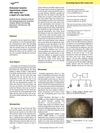
August 2011 in “Dermatology Reports” This case report describes a new family with autosomal recessive hypotrichosis simplex with woolly hair, suggesting the disorder may be underreported due to misdiagnosis.
 June 2025 in “Journal of Endocrinological Investigation”
 This review identifies and discusses various endocrine-related causes of hypertension in children and adolescents, emphasizing the role of genetic predispositions and highlighting the need for systematic diagnostic guidelines and genetic sequencing referrals to improve diagnosis and treatment strategies.
 June 2026 in “Dermatology and Therapy”
 This review provides an analysis of topical treatments with clinically proven efficacy for managing hyperpigmentation and concludes that the most effective approach is using combined therapies that target multiple aspects of skin pigmentation physiology.
 April 2026 in “Clinical Journal of Gastroenterology”
 In this case report, a woman with ulcerative colitis experienced clinical deterioration during upadacitinib therapy, which improved after discontinuation, strongly suggesting drug hypersensitivity to the Janus kinase inhibitor as a potential cause for her symptoms.
 January 2026 in “Frontiers in Medicine”
 In this study, PP-PTKL exhibited antioxidant, anti-inflammatory, and pro-melanogenic effects in laboratory settings, suggesting its potential role in preventing or treating hair greying. Further animal and human studies are needed to verify these findings.
 February 2025 in “American Journal of Biomedical Science & Research”
 This case report highlights two cases of alopecia areata in patients with celiac disease, noting the rare occurrence of one patient also having acquired hypertrichosis lanuginosa, which may be the first documented instance of this combination in the literature.
 January 2025 in “Ginekologia Polska”
 In this study, researchers found that certain vitamin D receptor gene polymorphisms are significantly related to insulin concentration during a glucose tolerance test in young women with hyperandrogenism, but these polymorphisms did not affect bone metabolism or other biochemical parameters.