 April 2019 in “Journal of Investigative Dermatology”
 This study demonstrated that gene-corrected 3D skin constructs from RDEB patient-derived iPSCs, grafted onto immunocompetent mice, showed normal collagen VII expression after two months.
 February 2023 in “World journal of plastic surgery”
 This review highlights the current uses of platelet-rich plasma in plastic surgery and reports no new research findings.
89 citations
,
May 2005 in “Stem Cells” This study found that keratinocyte stem cells in mouse skin are closely related to side population or BCRP1-positive cells based on their localization and marker expression.
 9 citations
,
January 2018 in “Plastic and Reconstructive Surgery – Global Open”
9 citations
,
January 2018 in “Plastic and Reconstructive Surgery – Global Open” Using PDRN injections and RF treatments improved revision nose surgery results without major side effects.
 54 citations
,
December 2014 in “Wound Repair and Regeneration”
54 citations
,
December 2014 in “Wound Repair and Regeneration” This study observed that autologous PRP and PDRN injections improved hair thickness and density in women with pattern hair loss, with combined therapy showing greater improvement in thickness than PDRN alone.
 37 citations
,
August 2014 in “Journal of experimental botany”
37 citations
,
August 2014 in “Journal of experimental botany” This study identified the AtPRPL1 gene in Arabidopsis thaliana as being involved in cell elongation processes, despite unclear changes in cell wall composition from its altered expression.
 13 citations
,
February 2024 in “Cureus”
13 citations
,
February 2024 in “Cureus” This review discusses the emerging role of platelet-rich plasma in bone healing and reports no new clinical results; it highlights promising outcomes from existing research and calls for further standardization and exploration in this field.
 April 2017 in “Journal of Investigative Dermatology”
 This study found that PRC1 plays crucial roles in skin epithelial stem cell regulation, with catalytic and non-catalytic functions impacting epidermal integrity, hair development, and Merkel cell dynamics in murine models.
 September 2024 in “Journal of the American Academy of Dermatology”
 This review discusses the limited evidence on the efficacy of platelet-rich plasma for treating endocrine therapy-induced and permanent chemotherapy-induced alopecia and reports no new clinical results.
 March 2026 in “International Journal of Molecular Sciences”
 PRP therapy's success varies and depends on PRP quality and patient condition, with athletes benefiting more.
April 2026 in “Journal of Plastic Reconstructive & Aesthetic Surgery” This article reviews the use of biologics like platelet-rich plasma and mesenchymal stem cells in plastic surgery but highlights a lack of standardization in reporting platelet concentrations, which limits the systematic evaluation of their efficacy and application.
84 citations
,
September 2008 in “Developmental biology” This study found that cellular retinoic acid-binding proteins and fatty acid-binding proteins are dynamically expressed in skin development and respond differently to retinoic acid, β-catenin, and Notch signaling.
 April 2026 in “Diagnostics”
 In this case report, a 38-year-old woman with Parry–Romberg syndrome displayed left-sided facial atrophy and subclinical central nervous system involvement detectable by neuroimaging, suggesting that even symptom-free cases may benefit from systematic brain evaluations.
 March 2026 in “Quality in Sport”
 This review evaluates photobiomodulation's diverse clinical uses in sports and medicine, reporting physiological modulation and potential therapeutic benefits, but emphasizes the importance of precise dosimetry for success.
February 2026 in “Advanced Science” This study found that targeting the p300/androgen receptor axis effectively reduced AR activation and ovarian fibrosis in mouse models of polycystic ovary syndrome, suggesting a potential therapeutic approach.
 January 2024 in “International Journal of Scientific Research in Science and Technology”
 This review analyzes Platelet-Rich Plasma therapy for facial aesthetics, discussing its principles, efficacy, safety, and future research directions, but reports no new clinical results.
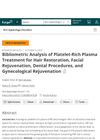 October 2024 in “Skin Appendage Disorders”
 This bibliometric analysis reported that PRP is most frequently studied for hair restoration, especially in placebo-controlled trials, although differences in PRP preparation and outcome measures challenge result consistency across studies.
 14 citations
,
May 2021 in “Marine Drugs”
14 citations
,
May 2021 in “Marine Drugs” This review discusses the therapeutic properties of polydeoxyribonucleotides derived from marine organisms for wound healing and inflammation, but it reports no new clinical results.
 2 citations
,
January 2025 in “Frontiers in Pharmacology”
2 citations
,
January 2025 in “Frontiers in Pharmacology” In a rat model of benign prostatic hyperplasia, this study found that purple corn extract may improve symptoms by inhibiting prostate enlargement, reducing androgen receptor signaling, and exerting anti-inflammatory effects.
 1 citations
,
May 2017 in “Hair transplant forum international”
1 citations
,
May 2017 in “Hair transplant forum international” This paper discusses the recent online debate over the use of PRP in hair restoration but provides no new findings.
26 citations
,
March 2018 in “Experimental Dermatology” This article argues that prolactin may have a role in sebaceous gland function and suggests it could be a potential target for treating skin conditions, but reports no new clinical findings.
22 citations
,
November 2020 in “Frontiers in Physics” This review discusses the experimental strategies and technological challenges of proton minibeam radiotherapy (pMBRT) and reports no clinical results; it highlights the potential of using a 3 GHz linear accelerator for precision therapy research.
September 2025 in “Global Journal of Pharmacy & Pharmaceutical Sciences” This review analyzes PDRN's molecular mechanisms and therapeutic applications in anti-aging dermatology but reports no new clinical results, highlighting the need for more standardized protocols and long-term evaluations.
 14 citations
,
June 2015 in “Toxicology and Industrial Health”
14 citations
,
June 2015 in “Toxicology and Industrial Health” This study found that low doses of bisphenol A may increase proliferation of the ventral prostate in adult rats by altering the estrogen to androgen ratio and gene expression.
21 citations
,
December 1994 in “Journal of Investigative Dermatology” 26 citations
,
October 2019 in “JNCI Cancer Spectrum” This clinical study observed that in patients with advanced breast cancer and BRCA1/2 mutations, talazoparib provided significantly better progression-free survival, objective response, clinical benefit, and patient-reported outcomes compared to physician’s choice chemotherapy, despite common side effects like anemia and fatigue.
February 2019 in “Journal of Physiology & Pathology in Korean Medicine” In this study, the ethanol extract of Puerariae Radix was found to promote proliferation and ERK activation in human dermal fibroblasts, suggesting its potential as a new cosmetic ingredient.
 October 2022 in “Journal of ophthalmology”
 This review discusses the implementation and mechanisms of photobiomodulation therapy in various medical fields, including ophthalmology, and reports no new clinical results.
This review evaluates the clinical efficacy of platelet-rich plasma therapy in dermatology, highlighting recent research findings and discussing its potential and limitations without reporting new clinical results.
1 citations
,
May 2024 in “Human Genomics” Among a Han Chinese cohort, this study found that a higher genetic risk score was linked to increased susceptibility to BPH, larger prostate size, reduced effectiveness of 5ARI treatment, and a higher risk of undergoing TURP.