January 2025 in “EXPERIMENTAL ANIMALS” This study found that gamma-ray exposure on the day of fertilization or the day after increased genome editing efficiency in pregnant mice using the i-GONAD method, potentially aiding in the creation of diverse experimental animal models.
 September 2022 in “Research Square (Research Square)”
 In this study, the DIET-AI model, developed from a large dataset of over 200,000 images, demonstrated diagnostic performance for 31 skin diseases comparable to dermatologists of varying experience levels in 15 hospitals across China, supporting its potential effectiveness in clinical settings.
 February 2016 in “The journal of investigative dermatology/Journal of investigative dermatology”
 This quiz presents educational questions about alopecia areata, including its diagnosis and underlying mechanisms, but reports no new clinical outcomes.
 11 citations
,
April 2013 in “SpringerPlus”
11 citations
,
April 2013 in “SpringerPlus” This study reports that melanocytes form a defined photoresponsive network in the skin that reads environmental light cycles and may influence the sleep-waking cycle similar to the pineal gland.
25 citations
,
February 2023 in “Aesthetic Surgery Journal” This review concludes that current clinical and preclinical evidence does not indicate oncologic safety concerns linked to photobiomodulation therapy for skin rejuvenation, including no clear evidence of increased cancer risk.
May 2024 in “International Journal of Cosmetic Science” This study found that using near-infrared optics, specifically in the second NIR window, allows for effective noninvasive evaluation of intra-hair damage caused by cosmetic treatments, demonstrating distinct damage types and changes in hair condition due to chemical or thermal processes.
April 2025 in “Indian Dermatology Online Journal” This study describes how avian-inspired imagery is used in dermatology to help clinicians and patients identify and communicate skin conditions, using familiar terms like "chicken skin" and "fried egg" to capture specific visual patterns and clinical features.
 18 citations
,
August 2018 in “The FASEB journal”
18 citations
,
August 2018 in “The FASEB journal” This study found that Hoxc13-/- rabbits exhibit complete hair loss on the head and dorsum, providing a potential model for understanding human ECTD-9 and related dermatological conditions.

This study concluded that adding a topical agent to intense pulsed light therapy significantly improved hair reduction and patient satisfaction in Pakistani women with idiopathic facial hirsutism compared to light therapy alone, without increasing adverse effects.
July 2024 in “Journal of Investigative Dermatology” CRISPR/Cas9 and prime editing can potentially fix skin disorder genes safely and effectively.
 March 2024 in “Majallah-i taḥqīqāt-i ̒ulūm-i pizishkī-i Zāhidān/Majallah-i taḥqīqāt-i ̒ulūm-i pizishkī-i Zāhidān./Zahedan journal of researches in medical sciences”
 This case study describes the successful treatment of facial pigmentation using microneedling combined with platelet-rich plasma, suggesting high effectiveness with minimal side effects in this application.
 August 2024 in “Biomolecules & Therapeutics”
 In this study, the researchers reported that a newly developed PYGL inhibitor, HTPI, enhanced hair growth in an ex-vivo culture by reducing oxidative damage in hDPCs and inhibiting glycogen degradation in hORSCs, showing potential as a treatment for hair loss comparable to minoxidil.
June 2025 in “Dermatologic Surgery” This article reviews multiple noncutaneous manifestations of pityriasis rubra pilaris, such as subungual hyperkeratosis and hair loss, but reports no new clinical results.
December 1998 in “福井大学教育学部紀要 第4部 教育科学” This study found that the bioconjugate nanoparticle HA-P5 significantly alleviated acne and reduced sebum production by inhibiting key signaling pathways without inducing unwanted protein expression that hinders acne treatment.
56 citations
,
July 2004 in “Mechanisms of Development” Pax9 is crucial for proper tongue surface development and preventing skin-like changes.
 3 citations
,
December 1994 in “JEADV. Journal of the European Academy of Dermatology and Venereology/Journal of the European Academy of Dermatology and Venereology”
3 citations
,
December 1994 in “JEADV. Journal of the European Academy of Dermatology and Venereology/Journal of the European Academy of Dermatology and Venereology” In this study, itraconazole was shown to accumulate in the deeper skin layers of guinea pigs after oral administration, suggesting this delivery method effectively targets infective organisms there.
 January 2026 in “Drug Delivery and Translational Research”
 This study investigated the integration of crystal engineering and microneedle technology for androgenetic alopecia treatment, finding that microneedles loaded with newly developed Kopexil multicomponent crystals reduced drug diffusion rates in vitro compared to standard formulations.
 31 citations
,
April 2019 in “Cell reports”
31 citations
,
April 2019 in “Cell reports” This study found that human iPSC-derived melanocytes from vitiligo patients successfully integrated into mouse hair follicles and epidermis, demonstrating potential for personalized therapy for depigmentation.
 50 citations
,
December 2011 in “Skin Research and Technology”
50 citations
,
December 2011 in “Skin Research and Technology” In this study, the researchers reported that their novel algorithm for hair restoration in dermoscopy images achieved high accuracy and texture preservation, outperforming other techniques in diagnostic accuracy and texture quality measures.
1 citations
,
January 2024 in “Egyptian Dental Journal /Egyptian Dental Journal” This study observed that injecting minimally cross-linked hyaluronic acid with PDO smooth threads in female patients with dry, cracked lips led to significant improvements in lip texture, elasticity, and reduced fissure depth, effects that lasted up to nine months with additional booster injections.
 January 2018 in “Surgical and Cosmetic Dermatology”
 In this study, researchers validated a software-based method that quantitatively assesses the effectiveness of treatments for hair loss by calculating the area of hair loss using contrast in standardized photographs, proving effective for both early and advanced cases of androgenetic alopecia and telogen effluvium.
 13 citations
,
February 2007 in “British Journal of Dermatology”
13 citations
,
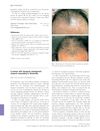
February 2007 in “British Journal of Dermatology” EF and PXE not closely related.
September 2022 in “Frontiers in Medicine” New treatments and drugs show promise for improving skin pigmentation and regeneration.
43 citations
,
April 1996 in “Journal of Investigative Dermatology” April 2005 in “Journal of Investigative Dermatology” This compilation reviews multiple dermatologic studies, reporting findings such as the lack of a psoriasis-susceptibility allele in cluster 17, and highlighting a mouse model for studying hair follicle formation, among others.
11 citations
,
September 2024 in “Journal of Advanced Research” This study found that PC 3DP models are reliable preclinical tools that could potentially customize treatment strategies and predict patient prognoses by correlating drug sensitivity profiles with clinical outcomes, though larger patient cohort validation is needed to confirm clinical utility.
 June 2022 in “Al-Qadisiyah Journal of Veterinary Medicine Sciences”
 This study found that 660 nm laser treatment and povidone iodine both eradicated Pseudomonas aeruginosa infection in mice wounds, with the laser enhancing healing, and the combination provided additive or synergistic healing benefits.
32 citations
,
July 2003 in “Histochemistry and Cell Biology” 36 citations
,
June 2016 in “Journal of dermatological treatment” This study found that a combination of low-fluence Q-switched 1064 nm Nd:YAG laser, hydroquinone cream, and oral tranexamic acid showed promising results for Riehl’s melanosis in Asian patients, with no serious adverse events reported.
 January 2024 in “Wiadomości Lekarskie”
 This review discusses the advantages of robotic hair transplantation using the ARTAS iX robot compared to manual Follicular Unit Extraction, emphasizing enhanced precision, speed, and hair preservation capabilities, and reports no clinical results.