June 2024 in “Clinical and Experimental Obstetrics & Gynecology” In this study, women with recurrent implantation failure after IVF/ICSI had significantly lower platelet, plateletcrit, and lymphocyte counts, but these parameters were not effective for predicting the condition.

This study observed significant differences in trace element hair-scalp concentrations associated with atherosclerosis in coronary and carotid disease patients, suggesting that zinc levels and lymphocyte count interactions may significantly influence cardiovascular disease development.
November 2025 in “International Journal of Molecular Sciences” This review covers the diverse clinical applications of platelet-rich plasma in regenerative medicine but provides no new clinical results.
 November 2023 in “Materials Today Bio”
 In this study, researchers developed a novel temperature-sensitive biopolymer-based drug delivery system that enhanced the transdermal delivery of ISX9, a neurogenesis inducer, resulting in more effective hair follicle regrowth and signal pathway activation in vivo compared to traditional topical application.
This study identified ISX9 as a novel agonist of the Wnt/β‐catenin pathway, which promoted hair regrowth in mice and may offer a therapeutic approach for alopecia.
November 2021 in “OPAL (Open@LaTrobe) (La Trobe University)” This study identified melatonin as a potential treatment for rosacea and Alzheimer's disease, suggesting it may help by modulating inflammatory and vascular signaling pathways.
 July 1999 in “Hair transplant forum international”
 This article profiles a respected hair restoration surgeon, Bill Parsley, and honors the "unsung heroes" who work diligently in the field without seeking recognition; it reports no research findings.
This chapter reviews procedural hair restoration techniques, including platelet-rich plasma and hair transplantation, and reports no new clinical findings.
 December 2024 in “PubMed”
 This study evaluates the compatibility of six active pharmaceutical ingredients, including finasteride and spironolactone, with TrichoFoam™, a foam vehicle used in personalized treatments for alopecia, though it does not report specific results.
 March 2005 in “Journal of The American Academy of Dermatology”
 Diphencyprone treatment protocols could be simplified as no harm occurred despite not fully following them.
 January 2021 in “International Journal of Research in Pharmaceutical Sciences”
 This review discusses the diagnosis and treatment strategies for polycystic ovary syndrome, particularly using the "MY PCOS" mnemonic, and reports no new experimental results.
 2 citations
,
June 2020 in “Dermatology and therapy”
2 citations
,
June 2020 in “Dermatology and therapy” In this case report, narrowband-UVB phototherapy successfully treated a rare instance of Graham Little-Piccardi-Lassueur syndrome, a variant of lichen planopilaris, as investigated through non-invasive imaging techniques.
 February 2014 in “Plastic and Reconstructive Surgery”
 This abstract contains titles of organizations and publication names but reports no study results or findings.
216 citations
,
June 2015 in “PLANT PHYSIOLOGY” This study found that OsPHR3 overexpression in rice led to significant tolerance to low-phosphorus stress and normal growth under normal conditions, suggesting its potential for improving phosphorus uptake efficiency.
23 citations
,
October 2008 in “Journal of medicinal chemistry” This study suggests that PF-0998425 is an effective androgen receptor antagonist for sebum control and androgenetic alopecia with rapid metabolism reducing the risk of systemic side effects.
December 2004 in “Annales d Urologie” This article examines the PCPT study on whether daily finasteride can reduce prostate cancer incidence, describing its methodology and findings but reporting no new clinical results.
1 citations
,
January 2025 in “OALib” This study found that injecting Platelet-Rich Plasma into the anastomotic line during low anterior resection for rectal cancer eliminated anastomotic leakage, reducing its incidence from 13.3% in the control group to 0% in the PRP group.
 6 citations
,
October 2012 in “Journal of Heredity”
6 citations
,
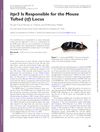
October 2012 in “Journal of Heredity” This study identified the Itpr3 gene as responsible for the tufted hair loss phenotype in the BTBR mouse strain.
44 citations
,
May 2023 in “MedComm” This review highlights the potential of PROTAC technology in drug discovery for previously undruggable targets, particularly in cancer therapy, while emphasizing the urgent need to discover more E3 ligase recruiters to optimize targeted protein degradation.
 August 2016 in “Journal of Investigative Dermatology”
 This case report identifies a novel LIPH gene mutation linked to autosomal recessive woolly hair/hypotrichosis in a Japanese boy, expanding the spectrum of known mutations associated with this condition.
January 2008 in “xPharm: The Comprehensive Pharmacology Reference” December 2023 in “Reactions weekly” December 2023 in “Reactions weekly” September 2013 in “Reactions weekly” July 1999 in “Journal of the American Academy of Dermatology” This review discusses valproic acid as a common antiseizure medication associated with alopecia and highlights the need for its inclusion in relevant medical guides, without presenting new clinical findings.
April 2025 in “Journal of Reproductive Healthcare and Medicine” This study confirmed that an injectable implant known as RISUG-PH™, when administered via the vas deferens, successfully delivers the drug Finasteride to the prostate in male rats for up to 28 days, suggesting a potential localized alternative to oral delivery methods.
 November 2024 in “Medicina”
 This case report details a unique instance of pityriasis rubra pilaris affecting only the scalp, highlighting novel trichoscopic features and emphasizing the importance of recognizing this rare presentation for improved diagnosis and treatment.
 April 2023 in “Journal of Investigative Dermatology”
 This study found that ALRN-6924 effectively protected human hair follicles from cyclophosphamide-induced damage in an ex vivo setting, suggesting it may reduce both acute and permanent chemotherapy-induced alopecia.
 April 2023 in “Journal of Investigative Dermatology”
 This research reexamined transcriptomic data to study stem and progenitor cell proliferation in psoriasis, finding that the number of committed progenitor cells increased eight-fold in psoriatic skin without altering stem cell numbers, potentially identifying new therapeutic targets.
January 2025 in “American Journal of Translational Research” This study reported that the combination of EE-CPA and raloxifene effectively manages PCOS-related infertility, enhancing pregnancy outcomes through improvements in metabolism, sex hormones, ovarian function, and endometrial receptivity, without significantly increasing adverse effects.