4 citations
,
January 2025 in “Pharmaceutics” This study found that spanlastic gel loaded with thymoquinone and ascorbic acid improved skin deposition and tyrosinase inhibition, suggesting potential as a treatment for hyperpigmentation.
August 2026 in “JURNAL ILMU KEFARMASIAN INDONESIA” This study found that the addition of SPACE peptide significantly enhanced the penetration of amniotic membrane stem cell metabolites in mice, with only very mild irritation observed.
7 citations
,
October 2024 in “Pharmaceutics” This study found that clindamycin-loaded PHA nanoparticles showed potent antibacterial effects against MRSA and enhanced wound healing in a mouse model of MRSA-infected wounds, indicating their potential as a novel treatment for these infections.
September 2025 in “Journal of Polymer Science” This review article highlighted the diverse applications of functionalized materials from bacterial cellulose, detailing advances in both in situ and ex situ methods for enhancing these materials' properties, particularly for medical applications, and proposed directions for future research.
9 citations
,
March 2023 in “Chemosphere” This study found that exposure to certain pesticides may be associated with delayed sexual maturation in adolescent males.
 1 citations
,
September 2022 in “Journal of dermatological science”
1 citations
,
September 2022 in “Journal of dermatological science” This study found that a combination of vitamins in hair care products promoted hair shaft elongation in a mouse model by activating the PlGF/VEGFR-1 signaling pathway.
January 2016 in “Universitätsbibliothek der FU Berlin Hochschulschriftenstelle u. Dokumentenserver” This study found that novel biodegradable nanocarriers with highly hydrophobic cores significantly increased the solubility and sustained release of hydrophobic drugs and dyes, showing promise for drug delivery applications.
 3 citations
,
September 2018 in “Journal of Biomaterials Science, Polymer Edition”
3 citations
,
September 2018 in “Journal of Biomaterials Science, Polymer Edition” This study found that pyramidal neural precursors best grew neurites on matrigel, while neural stem cells differentiated directionally on aligned fibrin, suggesting the importance of biomaterial selection for cell culture.
70 citations
,
May 2019 in “Preprints.org” This review discusses the physicochemical and biological properties of chitin and chitosans, their bioextraction methods, and their applications in advanced cosmetics and biomedical products, but reports no new clinical results.
 2 citations
,
March 2023 in “Experimental neurology”
2 citations
,
March 2023 in “Experimental neurology” In this study, pregnenolone was found to dose-dependently reduce L-DOPA-induced dyskinesias in a rat model of Parkinson's disease, suggesting its potential as a therapeutic target for these dyskinesias.
October 2018 in “Clinical approaches and procedures in cosmetic dermatology” This source reviews the use of hyaluronic acid fillers for lip augmentation and correction, highlighting their safety and effectiveness, while noting potential adverse effects and the importance of managing complications.
 August 2025 in “Journal of Applied Pharmaceutical Research”
 This study found that the polyherbal gel formulations F4 and F6 demonstrated superior in vitro performance in hair care, showing promise as cosmeceutical candidates, although further in vivo and clinical studies are necessary to confirm their efficacy and safety.
 1 citations
,
November 2020 in “Biochemical Society transactions”
1 citations
,
November 2020 in “Biochemical Society transactions” This narrative review discusses the discovery of plasticity in epidermal stem cells using single-cell transcriptomics, but reports no new results; it highlights the potential implications for regenerative medicine.
This study found that high-charge-density cassia HPTC improves deposition efficiency and conditioning benefits in shampoos compared to quaternized guar, suggesting its potential as an alternative or adjunct conditioning agent.
 6 citations
,
August 2021 in “International Journal of Pharmaceutics”
6 citations
,
August 2021 in “International Journal of Pharmaceutics” This study demonstrated that finasteride-loaded PLGA microspheres created using a novel microfluidic device exhibit extended drug release in beagle dogs, with modifications allowing for release up to 3 months.
24 citations
,
December 2018 in “Inflammation and Regeneration” This review discusses the roles of various PLA2 enzymes in skin health and disease, highlighting potential pathways for future diagnosis and therapy, but it reports no new clinical results.
 1 citations
,
November 2024 in “Cutis”
1 citations
,
November 2024 in “Cutis” PLLA injections can cause hair loss and skin issues.
 169 citations
,
June 2010 in “Molecular & cellular proteomics”
169 citations
,
June 2010 in “Molecular & cellular proteomics” This study suggests that ethylene and lignoceric acid (C24:0) may promote cotton fiber and Arabidopsis root hair growth by activating the pectin biosynthesis network.
 13 citations
,
January 2005 in “Chemical and Pharmaceutical Bulletin”
13 citations
,
January 2005 in “Chemical and Pharmaceutical Bulletin” This study reported that newly synthesized progesterone derivatives significantly reduced prostate weight in testosterone-treated hamsters, with 5alpha-reductase inhibitory activity dependent on the size of the substituent at C-17.
January 2024 in “World Congress on Medical Physics and Biomedical Engineering, September 7 - 12, 2009, Munich, Germany” Polisorbate 20 is not suitable for curl creams due to instability.
 May 2026 in “International Journal of Molecular Sciences”
 In this study, a new formulation of human placental extract showed antioxidant and neurite outgrowth activities, significantly reduced hair graying in mice, and alleviated neuropathy symptoms, suggesting potential therapeutic benefits.
 November 2025 in “Frontiers of Agricultural Science and Engineering”
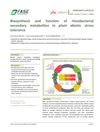
 This study observed that rhizobacterial strain RT3 significantly improved drought tolerance in lettuce by increasing survival rates and fresh biomass after rewatering, with metabolites such as proline and glycine enhancing stress resilience.
15 citations
,
June 2023 in “Molecules” This study focused on developing agarose/fucoidan hydrogels for the encapsulation of pancreatic cells, reporting that these materials supported cell viability and self-organization into pseudo-islets over 7 days, highlighting potential for diabetes treatment applications.
6 citations
,
September 2024 in “Plant Cell & Environment” This study found that in Arabidopsis root hairs, mild chitosan treatment triggered callose deposition and slowed growth, while a higher concentration inhibited growth without callose deposition, indicating different responses based on chitosan concentration.
August 2013 in “Annals of Translational Medicine” This review discusses human placental extract's potential for regenerating cartilage and reducing inflammation in osteoarthritis, noting promising in vitro and in vivo results but reports no new clinical outcomes.
 July 2023 in “BENTHAM SCIENCE PUBLISHERS eBooks”
 This book chapter reviews the subclasses and applications of platelet-rich plasma in tissue engineering and highlights the challenges in clinical translation without reporting new clinical results.
12 citations
,
July 2017 in “International Journal of Cosmetic Science” This study found that N‐AOHPA was particularly effective as a silicone emulsifier for improving the condition of damaged hair by preventing amino acid dissolution from bleached hair.
 December 2023 in “Biological & pharmaceutical bulletin”
 This study found that combining lecithin reverse wormlike micelles with isopropyl myristate enhanced the skin permeability of a model hydrophilic drug, facilitated by interactions with sebum in hair follicles.
April 2021 in “Journal of Investigative Dermatology” New inhibitors may help treat hair loss by promoting fat cell growth in the skin.
7 citations
,
April 2002 in “Science” This article discusses the evolving use of botulinum toxin for medical and aesthetic purposes, highlighting its potential benefits for conditions like headaches and cerebral palsy, and notes ongoing regulatory challenges.