 12 citations
,
December 2021 in “Aging”
12 citations
,
December 2021 in “Aging” This study demonstrated that a new non-invasive method for collecting and analyzing mouse hair follicles could replace traditional biopsy methods, providing advantages for translational research and routine applications.
4 citations
,
September 2024 in “Cell Reports” This study found that mice lacking the CXCR2 receptor regenerated tissue scarlessly in various injury models and that administering plasma or G-CSF from these mice to wild-type mice also reduced scarring, suggesting potential therapeutic strategies to improve human skin wound healing.
This study evaluated the use of AI software SwissADME to compare Minoxidil and Sildenafil for alopecia treatment, finding Minoxidil to be more effective and safer, while highlighting limited potential for Sildenafil and emphasizing AI's role in optimizing drug development.
 August 2016 in “Journal of Investigative Dermatology”
 This study found that the activity of CD73, an enzyme expressed in the hair follicle epithelium, may regulate human hair growth by modulating adenosine production.
 39 citations
,
November 2015 in “Nanomedicine”
39 citations
,
November 2015 in “Nanomedicine” This study found that the developed Finasteride-loaded SMEDDS improved the relative bioavailability of the drug compared to a commercial tablet, offering a promising oral delivery system for glucosteroid analogs.
June 2025 in “British Journal of Dermatology” This study found that an ML model incorporating factors like Breslow thickness and age improved cutaneous malignant melanoma prognosis predictions compared to TNM staging, with a C-index of 80% versus 66.6% for TNM alone, suggesting ML's potential for personalized prognostication.
 January 2024 in “International Journal of Biological and Environmental Investigations”
 This study developed and validated a reliable RP-HPLC method for accurately quantifying dutasteride in pharmaceutical formulations and bulk pharmaceuticals using a Shiseido C18 analytical column, demonstrating precision, accuracy, and sensitivity across a concentration range of 10 to 22 ppm.
 70 citations
,
April 2016 in “Experimental Dermatology”
70 citations
,
April 2016 in “Experimental Dermatology” In this study, oral tofacitinib treatment led to significant hair regrowth and changes in skin and blood biomarkers in a patient with alopecia areata.
 21 citations
,
October 2017 in “Journal of the European Academy of Dermatology and Venereology”
21 citations
,
October 2017 in “Journal of the European Academy of Dermatology and Venereology” This study reports that variable environmental factors, including dietary habits, may contribute to the increasing incidence and diverse clinical presentations of frontal fibrosing alopecia.
 July 2024 in “International Journal of Dermatology Venereology and Leprosy Sciences”
 This pilot clinical trial observed that combining subcision using a blunt cannula with platelet-rich plasma injections and microneedling for post-acne rolling scars was associated with a significant positive correlation between physician satisfaction and age of acne onset.
 October 2023 in “Dermatological reviews”
 In this study, exosomes isolated from fibroblast secretome and applied to the skin improved aging parameters like wrinkles and sagging over 12 weeks, suggesting these exosomes may enhance skincare formulations if their biological activity remains stable.

This study found that Botox® was most effective at a 25 U/ml concentration, while Dysport® and Neurobloc® were optimal at 100 U/ml for producing anhidrotic areas after injections.
3 citations
,
June 2017 in “Reproductive biomedicine online” In this study, the SRD5A2 rs523349 polymorphism was significantly associated with an increased risk of miscarriage, particularly during the second trimester.
May 2025 in “International Journal of Women’s Dermatology” In this retrospective cohort study, researchers found that exposure to 5-alpha reductase inhibitors and spironolactone in female alopecia patients was not linked to an increased risk of developing malignant or benign gynecologic tumors when compared to minoxidil use.
 July 2020 in “Journal of The American Academy of Dermatology”
 This article discusses the authors’ response to comments on their study about intradermal botulinum toxin's effect on androgenetic alopecia, reporting no new findings.
9 citations
,
April 2024 in “Heliyon” This review highlighted significant properties of probiotics that can promote hair growth and reduce dandruff, offering guidance for future research to scale these findings to pilot studies.
 211 citations
,
February 2009 in “European journal of pharmaceutics and biopharmaceutics”
211 citations
,
February 2009 in “European journal of pharmaceutics and biopharmaceutics” This review summarizes recent advancements in follicular targeting for drug delivery via hair follicles and calls for pilot studies in humans to explore potential clinical applications.
January 2026 in “Queensland University of Technology” This thesis reviews current therapeutic approaches for ARFID and provides preliminary insights into enhancing treatment and care in Australia, including an evaluation of a pilot dietetic-led cognitive-behavioral therapy intervention.
September 2024 in “Journal of Investigative Dermatology” VIP reduces hair pigmentation by decreasing melanin production.
 September 2024 in “Indian Journal of Dermatology Venereology and Leprology”
 Mesotherapy with bicalutamide has limited effectiveness for female hair loss.
July 2024 in “Journal of Investigative Dermatology” Topical sulforaphane reduces pigmentation and wrinkles from sun damage.
 4 citations
,
January 2016 in “JAMA Dermatology”
4 citations
,
January 2016 in “JAMA Dermatology” This article discusses potential benefits of increasing active range of motion in the care of venous leg ulcers but reports no new clinical results.
 August 2015 in “Advances in Small Animal Medicine and Surgery”
 Low-level laser therapy may help regrow hair in dogs with non-inflammatory hair loss.
November 2011 in “Journal watch” Botox might help hair grow, but more research is needed.
 February 2009 in “Journal of The American Academy of Dermatology”
 Fractional infrared technology is effective and safe for treating cervical laxity.
 September 1997 in “Inpharma Weekly”
 Rubbing finasteride on the scalp helps with hair loss.
15 citations
,
February 2014 in “Journal of Investigative Dermatology” NF-κB activity is crucial for keeping hair in the growth phase.
7 citations
,
March 2023 in “Journal of Investigative Dermatology” Low-intensity ultrasound may help protect hair follicles from chemotherapy-induced hair loss.
 6 citations
,
August 2014 in “Dermatologic Surgery”
6 citations
,
August 2014 in “Dermatologic Surgery” PRP injections may improve hair loss condition, but more research needed.
 3 citations
,
February 2002 in “Dermatologic Surgery”
3 citations
,
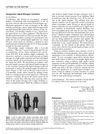
February 2002 in “Dermatologic Surgery” Using a handheld massage device during hair transplant significantly reduces pain for most patients.