
This study aims to describe the trichoscopic pattern of chemotherapy-induced alopecia and its changes during different phases of chemotherapy.
5 citations
,
October 2023 in “International Wound Journal” In this study, a novel portable LED device significantly accelerated wound healing in rats, with faster wound closure, increased collagen deposition, and more microvessels at a higher radiation intensity, suggesting its potential for innovative wound management.
 October 2023 in “Indian journal of ophthalmology. Case reports”
 This case report described acute vision loss in a patient after forehead injections of triamcinolone acetonide for alopecia areata, attributing retinal artery occlusion to embolization by steroid particles.
 1 citations
,
November 2020 in “Journal of Cosmetic Dermatology”
1 citations
,
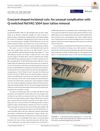
November 2020 in “Journal of Cosmetic Dermatology” This letter to the editor discusses an unusual complication, crescent-shaped incisional cuts, observed with Q-switched Nd:YAG 1064 laser tattoo removal and reports no new clinical results.
 September 2024 in “Cureus”
 In this study, researchers optimized a method for preparing platelet-rich plasma to improve light transmittance aggregometry testing in coronary artery disease patients on clopidogrel and ticagrelor, finding distinct differences in platelet aggregation and volumes among these patients compared to healthy controls.
 12 citations
,
June 2010 in “Journal of dermatology”
12 citations
,
June 2010 in “Journal of dermatology” This study found that hyperpigmentation following contact immunotherapy for severe alopecia areata may indicate poor treatment responsiveness and aligns with characteristics of pigmented contact dermatitis.
 March 2021 in “CRC Press eBooks”
 This article reviews the optimal methods for photographic documentation in managing patients with androgenetic or diffuse alopecia and reports no clinical results.
81 citations
,
January 2003 in “Journal of cosmetic and laser therapy” This review discusses various techniques for treating post-acne scars, highlighting new laser technologies and tissue augmentation methods, but reports no new clinical results.
 13 citations
,
October 2019 in “Journal of lasers in medical sciences”
13 citations
,
October 2019 in “Journal of lasers in medical sciences” This study found that the cytokine-mediated signaling pathway is the primary pathway disrupted in skin after CO2 laser surgery.
 2 citations
,
November 1998 in “Journal of The European Academy of Dermatology and Venereology”
2 citations
,
November 1998 in “Journal of The European Academy of Dermatology and Venereology” This article reports on a partial regrowth of scalp hair in a patient treated with extracorporeal photochemotherapy and interferon α 2a, but provides no new clinical outcomes.
18 citations
,
January 2024 in “Regenerative Biomaterials” This study developed and tested a new injectable hydrogel for chronic diabetic wounds, reporting significant improvements in wound healing through enhanced angiogenesis, epithelization, and reduction of inflammation and infection in animal models.
 March 2025 in “Frontiers in Pharmacology”
 This study developed a hydrogel dressing incorporating angelica polysaccharides, demonstrating enhanced wound healing properties in a mouse model by promoting rapid hemostasis, tissue healing, and new blood vessel formation compared to Tegaderm™ film.
15 citations
,
August 2011 in “Lasers in medical science” This study reported that a single treatment with a short-pulsed 755-nm alexandrite laser effectively treated trichostasis spinulosa in patients with skin types II to V, providing rapid results with minimal pain and no recurrence during a 3-month follow-up.
This article discusses the effects of ablative carbon dioxide laser treatment for skin rejuvenation, noting it requires only a single treatment but involves more complex postoperative management, without reporting new clinical outcomes.
January 2024 in “Skin Appendage Disorders” This article discusses ciliary madarosis as a transient condition secondary to IAC, emphasizing the value of physical and trichoscopic evaluations for diagnosis and prognosis; it does not report new clinical results.
19 citations
,
January 1999 in “Journal of cutaneous laser therapy” This review discusses various hair removal techniques, particularly focusing on laser hair removal, and reports no clinical results; it emphasizes the need for ongoing research to assess effectiveness.

This review examines the physiology of skin flap necrosis and various substances studied to improve flap viability, noting that promising results are mostly from animal studies, with nitroglycerin already tested in humans.
 6 citations
,
November 2008 in “Hair transplant forum international”
6 citations
,
November 2008 in “Hair transplant forum international” This article reviews the development of trichophytic closure techniques in hair restoration surgery aimed at reducing donor site scarring, but it does not report new clinical outcomes.
 43 citations
,
September 2017 in “Lasers in Surgery and Medicine”
43 citations
,
September 2017 in “Lasers in Surgery and Medicine” This study found that LED light irradiation induced proliferation and migration of human outer root sheath cells, potentially through the stimulation of the Wnt/β-catenin and ERK signaling pathways.
 June 2016 in “American Journal of Cardiology”
 This review discusses the preliminary results of using rotational thrombectomy for acute dialysis-access graft occlusion in the upper extremity, reporting no new clinical outcomes.
 1 citations
,
July 2015 in “European Journal of Dermatology”
1 citations
,
July 2015 in “European Journal of Dermatology” This article discusses timed exposure settings with ablative lasers for treating benign dermal tumors and highlights their potential to reduce treatment time and scarring risk, but it reports no new clinical results.
 3 citations
,
April 2022 in “Dermatologic Surgery”
3 citations
,
April 2022 in “Dermatologic Surgery” This systematic review found that photobiomodulation therapies using ultraviolet and infrared light effectively treated alopecia areata, while red and infrared light treatments were effective for androgenetic alopecia.
18 citations
,
April 1989 in “Clinics in Dermatology” This study found that using an argon gas-based system for intralesional cryotherapy significantly reduced keloid scar volume, improved scar quality, and resulted in low recurrence rates after 12 months.
 November 2022 in “The journal of investigative dermatology/Journal of investigative dermatology”
 This study found that Imaging Mass Cytometry effectively visualizes multiple biomarkers in alopecia areata, enhancing analysis of immune cell and tissue interactions in hair pathology.
 1 citations
,
April 2017 in “Journal of Investigative Dermatology”
1 citations
,
April 2017 in “Journal of Investigative Dermatology” This proof-of-concept study reported that a new, ultra-fast, one-step immunohistochemistry method improved the interpretation of Mohs surgery slides, particularly for poorly differentiated tumors.
32 citations
,
June 2021 in “Frontiers in Pharmacology” This study reports that Cur@CMCTS-Tk hydrogel effectively accelerated wound healing and tissue regeneration in rats by scavenging excess reactive oxygen species and protecting human fibroblasts from oxidative damage.
This review discusses various techniques for depigmentation in vitiligo patients and suggests that cryotherapy, performed by an experienced professional, may be the most cost-effective and accessible method.
November 2025 in “Photochemistry and Photobiology” This review article identifies a need for standardized guidelines in using photobiomodulation therapy for spinal cord injury repair, emphasizing that current inconsistencies in therapy parameters may hinder optimal outcomes and limit clinical trials.
January 2026 in “Journal of Aesthetic Nursing” This case report observed marked hair regrowth in a patient with refractory alopecia areata using a combination of platelet-rich plasma, low-level light therapy, and microneedling alongside topical and oral agents.
This article reviews applications of optical coherence tomography techniques in medicine, including for diagnosing androgenic alopecia and monitoring blood coagulation, but provides no new clinical results.