 December 2007 in “Röntgenpraxis”
 This review discusses various treatments for androgenic alopecia, highlighting FDA-approved options and other commonly used therapies, but reports no new clinical results.
 34 citations
,
March 2015 in “Clinical and Experimental Dermatology”
34 citations
,
March 2015 in “Clinical and Experimental Dermatology” This study observed that patients with pemphigus have a higher incidence of hypothyroidism, inflammatory bowel disease, and diabetes compared to the general population.
January 2019 in “International Journal of Clinical & Medical Images” This clinical image report discusses a 50-year-old male with ethanol-related chronic liver disease who, despite showing signs of Dupuytren Disease, was asymptomatic and therefore did not receive treatment.
119 citations
,
May 1987 in “The Journal of Dermatologic Surgery and Oncology” This study found that pigmentation following sclerotherapy is likely caused by hemosiderin deposition from red blood cells rather than post-inflammatory hyperpigmentation, with most cases resolving spontaneously within 6–24 months.
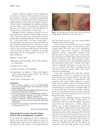 3 citations
,
May 2011 in “Journal of the American Academy of Dermatology”
3 citations
,
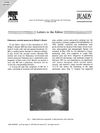
May 2011 in “Journal of the American Academy of Dermatology” This case report describes a 54-year-old woman who developed hypertrichosis around a leg ulcer while using PGE1 ointment, suggesting a potential side effect of the treatment.
14 citations
,
October 2001 in “British Journal of Ophthalmology” This case report suggests a successful outcome with intralesional cidofovir for SCC, although surgical excision remains the preferred treatment.
 April 2026 in “American Journal of Dermatopathology”
 This study identified a new dermoscopic feature, plexiform erythema, in lichen planopilaris lesions, suggesting it may indicate active disease and the potential need for more aggressive treatment.
 March 2026 in “Zenodo (CERN European Organization for Nuclear Research)”
 In this study, a polyherbal gel containing ingredients like Phyllanthus emblica and Melaleuca alternifolia was formulated to manage folliculitis, potentially offering a safe, effective alternative to conventional treatments by reducing microbial infections, relieving inflammation, and promoting healing.
 January 2026 in “JOURNAL OF CLINICAL AND DIAGNOSTIC RESEARCH”
 In this case study, a 62-year-old male with a history of uncontrolled diabetes and chronic kidney disease was diagnosed with perforating folliculitis after presenting with dark, raised, pruritic lesions on his limbs, confirmed by histopathological examination showing collagen extruding into hair follicles.
3 citations
,
January 2012 in “Journal of cosmetics, dermatological sciences and applications” This descriptive study reported that cutaneous issues, particularly anesthesia and neuropathy dermatitis, were common at saphenous vein harvesting sites in Iraqi patients who underwent coronary artery bypass surgery.
8 citations
,
December 2006 in “Journal of Vascular Surgery” Foam sclerotherapy for varicose veins may cause unexpected hair growth.
2 citations
,
February 2000 in “International Journal of Dermatology” This article presents four case reports of men with porphyria cutanea tarda and hepatitis C, highlighting associations with polysubstance abuse, primarily alcohol.
63 citations
,
January 1971 in “Acta Medica Scandinavica” This study found that replenishment of iron stores after phlebotomy-induced remission in porphyria cutanea tarda led to biochemical relapse, suggesting that reducing iron stores may be crucial for maintaining remission.
 December 2012 in “Canadian journal of ophthalmology”
 This case report describes a rare complication of eyelash transplantation, where it resulted in trichiasis and corneal surface damage, highlighting the need for preoperative counseling about potential ocular risks.
15 citations
,
March 2004 in “British Journal of Dermatology” This case report describes a 40-year-old Indian male with sclerosing cholangitis whose skin lesions and liver function improved following surgical treatment.
 34 citations
,
April 2008 in “Journal of the European Academy of Dermatology and Venereology”
34 citations
,
April 2008 in “Journal of the European Academy of Dermatology and Venereology” This study reported that while lichen planus was not significantly linked to hepatitis C virus infection, pruritus, dry skin, and hair loss were more common in HCV patients post-interferon treatment.
October 2022 in “Clinical Cosmetic and Investigational Dermatology” This case report describes Rumpel-Leede phenomenon in a patient without underlying conditions, occurring after pneumatic compression for venous thromboembolism prophylaxis, with spontaneous resolution upon stopping compression.
 8 citations
,
January 2023 in “Surgical Neurology International”
8 citations
,
January 2023 in “Surgical Neurology International” This case report describes the successful use of percutaneous and endovascular embolization with PHIL embolic agent to treat a rare scalp arteriovenous fistula following a hair transplant.
 January 2020 in “International Journal of PharmTech Research”
 This case report describes a patient with untreated lepromatous leprosy developing Lucio's phenomenon, highlighting difficulties in distinguishing it from erythema nodosum leprosum with vasculonecrotic lesions.
1 citations
,
January 2018 in “Journal of clinical & experimental dermatology research” This study presented cases of severe and permanent nail changes resembling lichen planus in patients with chilblain lupus erythematosus, suggesting a unique pattern related to cold exposure rather than typical histopathology findings.
 September 2024 in “Electronic Journal of General Medicine”
 This case report describes a healthy Thai male who developed severe folliculitis following diode laser hair removal, which improved significantly with prednisolone and benzoyl peroxide treatment.
 April 2019 in “Journal of Investigative Dermatology”
 This study observed that people with autoimmune blistering skin disorders report higher food intolerance rates, particularly avoiding alcohol, citrus, and spicy foods, and suggests potential dietary influences on symptom management.
 3 citations
,
September 1999 in “Journal of the European Academy of Dermatology and Venereology”
3 citations
,
September 1999 in “Journal of the European Academy of Dermatology and Venereology” This article reviews pulmonary arterial aneurysms in Behçet's disease and cites previous case reports, but it presents no new data or clinical findings.
 5 citations
,
June 2015 in “British Journal of Dermatology”
5 citations
,
June 2015 in “British Journal of Dermatology” This article discusses the role of lysophosphatidic acid-induced histamine release in generalized pruritus among patients with primary sclerosing cholangitis and reports no new clinical results.
2 citations
,
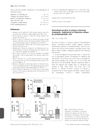
December 2015 in “Journal of dermatology” This letter to the editor discusses excessive hair growth observed around local β-interferon injection sites for malignant melanoma but reports no new clinical results.
35 citations
,
February 1993 in “International Journal of Dermatology” This report describes two cases where pemphigus lesions developed at sites of cosmetic procedures, suggesting these treatments might trigger the disease and should be distinguished from other post-surgery complications.
3 citations
,
October 2001 in “British Journal of Ophthalmology” This case report suggests that intralesional cidofovir successfully treated SCC without systemic toxicity, making it a potential alternative to consider alongside surgical excision.
25 citations
,
January 1999 in “Journal of cutaneous laser therapy” This report describes an African-American woman with pseudofolliculitis barbae, hirsutism, and associated postinflammatory hyperpigmentation who was effectively treated with a diode laser.
9 citations
,
June 2017 in “The journal of allergy and clinical immunology/Journal of allergy and clinical immunology/The journal of allergy and clinical immunology” This study suggests that local skin inflammation may enhance the deposition of autoantibodies in the skin, potentially affecting the severity of pemphigus lesions in mice.
July 2022 in “European Journal of Dermatology” In this study, researchers found that patients with psoriasis had a higher probability of achieving and maintaining a clinical response using brodalumab compared to ustekinumab over 52 weeks, as measured by a multistate modelling approach based on absolute PASI scores.