 8 citations
,
May 2010 in “Dermatologic clinics”
8 citations
,
May 2010 in “Dermatologic clinics” This review highlights recent advances in pediatric dermatologic treatments, including the use of propranolol for infantile hemangiomas and etanercept for plaque psoriasis, but it reports no new clinical results.
 2 citations
,
May 2021 in “Case reports in dermatological medicine”
2 citations
,
May 2021 in “Case reports in dermatological medicine” This report describes a 28-year-old male with type 1 diabetes who presented with acrodermatitis enteropathica symptoms, highlighting potential challenges in blood glucose control linked to zinc deficiency.
 February 2023 in “Research Square (Research Square)”
 This case report describes a 16-month-old girl with atypical acrodermatitis enteropathica who showed marked improvement after zinc supplementation despite normal serum zinc levels.
 April 2019 in “Journal of Investigative Dermatology”
 In this study, engineered mice with a mutation similar to that in Olmsted syndrome showed progressive hair loss due to impaired inner root sheath keratinocyte differentiation and stem cell exhaustion.
 April 2019 in “Journal of Investigative Dermatology”
 This study reported that gain-of-function mutations in TRPV3 lead to hair loss in mice by disrupting inner root sheath keratinocyte differentiation, ultimately causing follicular keratinocyte stem cell exhaustion and permanent follicle disruption.
 December 2016 in “Journal of Evolution of Medical and Dental Sciences”
 This case report highlights that inherited zinc deficiency can persist into adulthood and emphasizes the importance of selecting optimal chelating agents to improve oral zinc bioavailability.
 August 1996 in “Australasian Journal of Dermatology”
 This article reviews four books on pediatric dermatopathology, photodamage, photoimmunology, and hair and scalp disorders, reporting no new research findings.
 September 2026 in “Surgical Neurology International”
 This case report describes a 28-year-old male who developed a subpericranial abscess, an unusual complication of subpericranial hematoma, potentially related to microneedling procedures, highlighting a risk of infection even without open wounds.
4 citations
,
December 2014 in “Indian Journal of Dermatology” This case report documents a rare presentation of congenital milia en plaque on the scalp of a five-year-old boy, with blaschkoid extension to the nuchal area, highlighting its uncommon location and onset.
1 citations
,
March 2013 in “Journal of Dermatological Case Reports” This case report describes an atypical presentation of lichen planopilaris affecting only facial vellus hair, without scalp involvement, in a 46-year-old man.
February 2022 in “Authorea (Authorea)” This report presents a case of a seven-year-old girl with porokeratotic adnexal ostial nevus manifesting as hyperkeratotic verrucous papules on her left foot.
79 citations
,
January 1999 in “Dermatologic surgery” This review discusses various dermatologic treatments for periorbital skin rejuvenation but reports no new clinical results; it highlights the importance of patient selection and aging severity in choosing appropriate therapies.
3 citations
,
March 2024 in “Frontiers in Cell and Developmental Biology” This study observed that both prenatal androgen exposure and postnatal early-life environment influence the development of PCOS-like phenotypes and changes in the gut microbiota in prenatally androgenized offspring.
June 2026 in “Indian Journal of Case Reports” This source reports a rare case of a 10-year-old child developing periorbital milia as an unusual cutaneous manifestation of chronic graft-versus-host disease following allogeneic stem cell transplantation, suggesting that immune-mediated epidermal disruption may lead to milia formation.
June 2023 in “British Journal of Dermatology” In this case series, researchers observed a rare presentation of lichen planopilaris confined to the face in six patients, with dermoscopic and histopathological profiles indicating scarring alopecia and pigment changes, and suggested that shaving and mustard oil use might trigger the condition.
 March 2026 in “Scholars Journal of Medical Case Reports”
 In this study, nail involvement was observed in 42.8% of children with alopecia areata, yet often went unrecognized, indicating that clinical and dermoscopic evaluations can improve detection and provide important prognostic information.

This case report describes perifollicular melanocyte regeneration in the affected skin of a patient with bullous pemphigoid, highlighting an underreported aspect of the condition in skin of color patients, and emphasizing the need for increased awareness and earlier diagnosis in this demographic.
April 2009 in “The FASEB Journal” This review of the Motherisk Program's counseling experience found a scarcity of information on medication safety related to paternal exposure to drugs and chemicals during the peri-conception period, emphasizing the need for further research.
 39 citations
,
November 2013 in “European journal of pharmaceutics and biopharmaceutics”
39 citations
,
November 2013 in “European journal of pharmaceutics and biopharmaceutics” This study found that massaging the skin significantly increases follicular penetration of liposomes in an ex vivo setting, while occlusion only enhanced penetration for rigid liposomes.
 1 citations
,
March 2024 in “Ophthalmic Plastic and Reconstructive Surgery”
1 citations
,
March 2024 in “Ophthalmic Plastic and Reconstructive Surgery” In this case study, a 34-year-old woman with a rare presentation of pilomatrixoma involving alopecia and skin hypopigmentation showed no improvement in these symptoms despite a 3-month trial of topical steroid treatment, highlighting a potential association between pilomatrixoma and microinflammation.
 11 citations
,
February 2019 in “Journal of Cosmetic Dermatology”
11 citations
,
February 2019 in “Journal of Cosmetic Dermatology” This study found that male androgenetic alopecia patients had significantly lower serum zinc levels and suboptimal biotin levels compared to healthy controls, suggesting the potential value of zinc and biotin supplementation.
 September 2016 in “JAMA Dermatology”
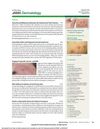
 In a randomized clinical trial, Robinson et al found that patients with melanoma and their partners could effectively perform skin self-examinations after participating in a 30-minute structured skills training, potentially aiding early detection of additional melanomas.
 1 citations
,
September 2019 in “Journal of surgery and medicine”
1 citations
,
September 2019 in “Journal of surgery and medicine” This study found that women with polycystic ovary syndrome had worse meibomian gland morphology and ocular surface conditions compared to healthy controls, as observed through non-contact meibography.
 2 citations
,
September 2003 in “Annals of Plastic Surgery”
2 citations
,
September 2003 in “Annals of Plastic Surgery” This paper discusses a method for eyebrow reconstruction using intermediate hair from the forehead hairline with a pedicled temporoparietal fascial flap and reports no new clinical results.
September 2023 in “Journal of the American Academy of Dermatology” This study suggests that using the International Psoriasis Council's classification, which includes body surface area, special areas, and treatment history, may identify more candidates for systemic therapy than by body surface area alone.
 4 citations
,
September 2016 in “Journal der Deutschen Dermatologischen Gesellschaft”
4 citations
,
September 2016 in “Journal der Deutschen Dermatologischen Gesellschaft” This study found that 7.9% of dermatological outpatients at a German hospital had clinically relevant body dysmorphic concerns, highlighting the need for psychotherapeutic support due to poor social adaptation and high motivation for change.
 18 citations
,
November 2000 in “British Journal of Dermatology”
18 citations
,
November 2000 in “British Journal of Dermatology” This study reports that over one-quarter of dermatology outpatients show psychiatric morbidity, highlighting the importance of considering psychological factors in managing skin diseases.
7 citations
,
April 2011 in “American journal of obstetrics and gynecology” This case report highlights the importance of considering exogenous androgen exposure, such as transdermal testosterone cream used by a partner, in the diagnosis of virilization among women.
 1 citations
,
March 2025 in “Archivos Argentinos de Pediatria”
1 citations
,
March 2025 in “Archivos Argentinos de Pediatria” This study found that exposure to phytoestrogens, bisphenol A, parabens, and phthalates was associated with developing idiopathic premature thelarche in girls.
 March 2026 in “Annals of Plastic Surgery”
 This review reported potential risks of complications, such as scarring and disease exacerbation, following facial cosmetic procedures in patients with existing dermatologic disorders, emphasizing the need for careful surgical planning to address these challenges.