
This study discovered that in *Drosophila*, knockdown of specific storage proteins in adipocytes decreased germline stem cell maintenance, implicating a role for these proteins in adult tissue regulation.
 July 2025 in “Journal of medical & health sciences review.”
 This review highlights the potential of ultrasound-assisted gene therapy for tissue regeneration by improving gene delivery efficiency through techniques like microbubble-mediated sonoporation. The authors discuss its applications in musculoskeletal, cardiovascular, and neural regeneration, while addressing future challenges in optimizing this non-invasive approach for clinical applications.
 April 2025 in “Indian Journal of Pharmaceutical Education and Research”
 This study highlights the potential of nanofibers in cosmeceuticals, reporting that nanofiber facial masks outperform regular masks in cleansing, and notes their exploratory use in anti-acne patches for enhanced acne management.
 January 2025 in “Cellular and Molecular Biology”
 This study found that in Liaoning cashmere goats, overexpression of the PIP5K1A gene enhances skin fibroblast proliferation, while interference with this gene reverses melatonin-induced proliferation, and PIP5K1A regulates certain miRNA expressions, suggesting a role in improving cashmere yield and quality.
 January 2025 in “International Journal of Veterinary Science”
 In this animal study, hibiscus leaf simplicia ointment was found to protect red blood cell levels and promote better hair growth in UV-exposed rats, though it did not maintain normal skin histology; the ointment showed no significant acute dermal toxicity.
 June 2024 in “Research Square (Research Square)”
 This study demonstrated that in mice, the absence of Jagged-1 expression in skin-resident regulatory T cells significantly delays wound healing by reducing the accumulation of neutrophils, highlighting the role of Jagged-1 in coordinating immune cell recruitment during injury.
 January 2024 in “International Research Journal Of Modernization In Engineering Technology And Science”
 This review highlights the increasing use of herbal cosmetics for maintaining healthy hair growth and preventing premature greying, influenced by rising living standards and interest in personal care.

This study found that elastin-like recombinamer (ELR) wound dressings promote tissue regeneration and stability without rejection in ex vivo and in vivo models, indicating potential for hard-to-heal wound treatment.
 December 2023 in “Scientific reports”
 This study assessed three lactic acid bacteria-fermented proteins and found that F-WPI and F-SPI could normalize osteoclastogenesis markers in vitro, while F-SPI enhanced osteoblastogenesis markers, suggesting potential as dietary supplements for osteoporosis prevention, though further research into mechanisms is needed.
 January 2023 in “Postępy Dermatologii i Alergologii”
 This review provides an overview of azelaic acid's dermatological uses, mechanisms, and its potential in skin cancer treatment, but reports no new clinical results.
 May 2022 in “Research Square (Research Square)”
 This study found that the newly developed transdermal oil body microgel emulsion (OBEME) improved wound healing in mice by enhancing skin permeability, reducing inflammation, and promoting new blood vessel formation and re-epithelialization.
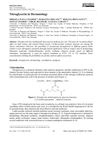 August 2020 in “Revista de chimie”
 This article discusses the potential therapeutic applications of topical nitroglycerin formulations in various medical conditions, but it reports no new clinical results.

This research concluded that the novel hydrogel PlacMA, derived from human placenta and curable by visible light, shows promise for cell culture and tissue engineering applications due to its tunable properties.

This study explored the structure and function of lipocalin prostaglandin D synthase, revealing its dual role in substrate catalysis and as a lipophilic ligand carrier, potentially informing future drug delivery design.
This article reviews the role of hormones in human penis development and associated conditions due to hormonal imbalances, but reports no new findings, suggesting hormone replacement can manage some conditions.
 March 2017 in “Trichology and cosmetology:”
 Cosmetic procedures can improve skin appearance and boost confidence.
 April 2016 in “Journal of Investigative Dermatology”
 This study found that a stimulating cream shampoo enhances the penetration of Minoxidil into hair follicles and scalp in a laboratory setting.
 April 2016 in “Journal of Investigative Dermatology”
 This study found that administering botulinum toxin A via Flex-PADs to mouse footpads inhibited sweating similarly to traditional injections, suggesting a promising patient-friendly delivery method for hyperhidrosis treatment.
 April 2016 in “Journal of Investigative Dermatology”
 This study identified mefloquine as a potent inducer of lethal ER stress that effectively eliminated vemurafenib-resistant and sensitive melanoma cells, suggesting its potential for repurposing as a melanoma treatment.
 April 2016 in “Journal of Investigative Dermatology”
 This study found that topical phenylephrine, an α1-AR agonist, significantly reduced hair shedding and increased epilation force threshold in women experiencing traction alopecia during cosmetic procedures.
 January 2015 in “Durham e-Theses (Durham University)”
 This study found that glucose starvation and hypoxia are physiological triggers of ER stress in in vitro differentiated adipocytes, rather than high concentrations of saturated fatty acids, cholesterol, or proinflammatory cytokines.
 January 1997 in “Elsevier eBooks”
 This review discusses the development and types of hair and nails as skin appendages and reports no new research findings.
 April 2016 in “Journal of Investigative Dermatology”
 This study found a perfect correlation between laser Doppler velocimetry measurements of scalp blood perfusion after minoxidil application and sulfotransferase enzyme activity in hair follicles, indicating a potential non-invasive test to predict minoxidil response in female pattern hair loss.
 249 citations
,
April 2002 in “The FASEB journal”
249 citations
,
April 2002 in “The FASEB journal” This study provides evidence that human skin contains genes and enzymes necessary for producing serotonin and melatonin.
 152 citations
,
April 2012 in “Recent Patents on Inflammation & Allergy Drug Discovery”
152 citations
,
April 2012 in “Recent Patents on Inflammation & Allergy Drug Discovery” This review describes minoxidil's hair regrowth mechanism and discusses dermatological applications, but reports no new clinical results, emphasizing the need for regular use and addressing allergic reactions.
 86 citations
,
April 2016 in “Nature Communications”
86 citations
,
April 2016 in “Nature Communications” This study suggests that Notch1 acts as a key signal in skin epithelium, promoting immune cell recruitment and aiding in normal skin repair after damage.
 80 citations
,
April 2017 in “Frontiers in Pharmacology”
80 citations
,
April 2017 in “Frontiers in Pharmacology” This review examines experimental and clinical evidence on PDRN, a drug derived from salmon DNA that acts via the adenosine A2A receptor and shows promise for tissue repair and treatment of diabetic foot ulcers in regenerative medicine.
 72 citations
,
January 2023 in “International Journal of Biological Sciences”
72 citations
,
January 2023 in “International Journal of Biological Sciences” This review discusses recent advances in the therapeutic potential of exosomes for wound healing, highlighting their benefits and challenges but reports no new clinical results.
 54 citations
,
October 2002 in “Journal of controlled release”
54 citations
,
October 2002 in “Journal of controlled release” This study found that increasing a drug's lipophilicity and adding ethanol to the donor phase can enhance its delivery to the hair follicle, although the precise transport mechanism remains unclear.
 52 citations
,
November 2013 in “European Journal of Pharmaceutical Sciences”
52 citations
,
November 2013 in “European Journal of Pharmaceutical Sciences” This study examined different polymersome systems for topical finasteride delivery and found that chitosan-decorated C7 polymersomes may enhance skin retention and provide controlled drug release compared to non-decorated systems in laboratory settings.