
This study in a nine-year-old boy from Lebanon identified a gene mutation (c.1066dup p.(Arg356Profs*16)) associated with a rare inborn error of immunity, characterized by craniosynostosis, jaundice, and several other symptoms, expanding the known genotypic and phenotypic spectrum of this condition.
August 2026 in “British Journal of Dermatology” sCD83 shows promise for treating hair loss by promoting growth and reducing inflammation.
1 citations
,
January 2025 in “Dermatologic Therapy” This study analyzed FAERS data to explore the risk and onset patterns of autoimmune skin diseases associated with immune checkpoint inhibitors, finding a strong association particularly with bullous pemphigoid and emphasizing the need for vigilant monitoring of these adverse effects.
January 2010 in “Acta Universitatis Medicinalis Nanjing” This study found that progesterone increased the survival of newborn neurons and enhanced spatial learning and memory in adult male mice, independent of neuron production changes.
July 2025 in “Journal of Investigative Dermatology” This study found that autologous Foxp3+ γδTregs, when tested in human scalp hair follicle models and mouse xenotransplants, can both prevent and treat alopecia areata by reducing immune privilege collapse and lymphocytic infiltration, suggesting their potential as a novel cell-based therapy for the disease.
1 citations
,
July 2024 in “Journal of Investigative Dermatology” Immune cells boost stem cell activity in hairy moles, causing more hair growth.
 7 citations
,
March 2021 in “Molecular Medicine Reports”
7 citations
,
March 2021 in “Molecular Medicine Reports” This study demonstrated that culturing high-passage dermal papilla cells with specific supplemented conditioned media may preserve their hair-inducing abilities, suggesting potential for reconstructing new hair follicles in vivo.
 13 citations
,
June 2007 in “Journal of Dermatological Science”
13 citations
,
June 2007 in “Journal of Dermatological Science” This study identified several genes regulated by dihydrotestosterone in an SV40T-transformed human dermal papilla cell line, which may play a role in androgen-mediated hair growth regulation.
 7 citations
,
January 2013 in “The journal of investigative dermatology/Journal of investigative dermatology”
7 citations
,
January 2013 in “The journal of investigative dermatology/Journal of investigative dermatology” This study found that thymus transplantation in athymic mice resulted in T-cell-driven hair follicle depigmentation and loss, without multiorgan autoimmune disease, highlighting mechanisms of tissue-specific tolerance.
4 citations
,
October 2016 in “The journal of investigative dermatology/Journal of investigative dermatology” This study found that the MD-3 antibody significantly improved the survival of hair follicle allografts in nonhuman primates by reducing T-cell infiltration.
2 citations
,
September 2014 in “Nature reviews. Drug discover/Nature reviews. Drug discovery” Specific immune cells cause alopecia areata and blocking certain proteins can prevent it.
8 citations
,
March 2015 in “Molecular Medicine Reports” This study found that para-phenylenediamine induces cytotoxic effects in normal human hair dermal papilla cells by altering microRNA expression and causing cell death, cell cycle arrest, and oxidative stress.
 9 citations
,
December 2023 in “Journal of Neuroimmune Pharmacology”
9 citations
,
December 2023 in “Journal of Neuroimmune Pharmacology” This study found that systemic administration of NDP-MSH, a melanocortin receptor agonist, provided neuroprotective effects on dopaminergic nigrostriatal neurons in a mouse model of Parkinson's disease, reducing neuroinflammation and suggesting a role for regulatory T cells in these neuroprotective effects.
July 2023 in “Nature Immunology” CD8+ virtual memory T cells may cause hair loss in alopecia areata.
 68 citations
,
March 2008 in “Experimental dermatology”
68 citations
,
March 2008 in “Experimental dermatology” This study introduced a novel in vitro assay for tracking melanosome transfer between melanocytes and keratinocytes, facilitating the quantification of melanin transfer and supporting the role of filopodia as a conduit.
This study found that deleting the Mad2l1 gene in mice leads to rapid onset of acute lymphoblastic leukemia and liver cancer due to induced chromosomal instability.
 June 2020 in “Journal of cosmetic medicine”
 This study found that TriCell CD34 + cell-containing PRP injections improved hair thickness and density in patients with alopecia after three months of treatment, with no special side effects reported.
14 citations
,
March 2015 in “Stem Cell Research & Therapy” This study indicates that ABCG2 expression identifies interfollicular keratinocyte progenitor cells in human epidermis and suggests it could help enrich these stem cells for research and treatment.
 August 2023 in “The journal of investigative dermatology/Journal of investigative dermatology”
 In this retrospective study of patients with advanced Merkel cell carcinoma responding to immunotherapy, those treated for 18 months or longer showed better progression-free outcomes compared to shorter treatment durations, indicating potential benefits of extended therapy duration.
This study found that IL18 signaling plays a crucial role in the homing and retention of mature regulatory T cells in the mouse thymus, primarily by upregulating the chemokine receptor CCR6.
 82 citations
,
October 2019 in “Frontiers in Immunology”
82 citations
,
October 2019 in “Frontiers in Immunology” This review discusses the features of regulatory T cells and the modulation of Foxp3, emphasizing post-translational modifications' impact on Treg function but reports no new clinical results.
 3 citations
,
March 2020 in “International Journal of Molecular Sciences”
3 citations
,
March 2020 in “International Journal of Molecular Sciences” This study found that overexpressing the gene Thymosin β4 (Tβ4) can promote the growth and development of secondary hair follicle dermal papilla cells in cashmere goats, suggesting its potential as a target for increasing cashmere production.
 1 citations
,
October 2023 in “Journal of the Pakistan Medical Association”
1 citations
,
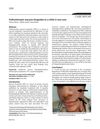
October 2023 in “Journal of the Pakistan Medical Association” This source describes a case of a 12-year-old male diagnosed with folliculotropic mycosis fungoides, presenting with an asymptomatic, erythematous plaque. Histology and immunohistochemistry confirmed FMF, which is typically rare in children and marked by follicular infiltration by CD4+ lymphocytes.
 48 citations
,
July 1992 in “International Journal of Dermatology”
48 citations
,
July 1992 in “International Journal of Dermatology” HIV can cause various nail and hair disorders, important for early diagnosis and treatment.
 2 citations
,
December 2022 in “PNAS nexus”
2 citations
,
December 2022 in “PNAS nexus” In laboratory experiments, this study found that the topical prodrug SCD-153, a derivative of 4-methyl itaconate, reduced inflammation-related gene expression and induced significant hair growth in mice, suggesting it as a promising treatment candidate for alopecia areata.
35 citations
,
October 2021 in “Journal of the European Academy of Dermatology and Venereology” This report describes two cases where a viral vector COVID-19 vaccine was associated with the recurrence of cutaneous lymphoma conditions that had been in remission.
April 2023 in “Journal of Investigative Dermatology” This study reports that CD200R expression is significantly reduced in a mouse model of scarring alopecia, suggesting a potential role for this pathway in immune regulation and hair follicle protection.
4 citations
,
December 2016 in “Blood” This study describes a case of cyclic thrombocytopenia where a novel MPL gene mutation may contribute to the disease, with gene expression changes in platelet and neutrophil genes preceding platelet count fluctuations.
60 citations
,
December 1988 in “Journal of Biochemical Toxicology” In this study, TCDD administered to male rats down-regulated EGF receptor in liver plasma membranes and increased protein kinase activity, suggesting EGF receptor–mediated toxicological effects.
 January 2024 in “Pharmaceutical medicine”
 In this study, most surveyed physicians were aware of the meningioma risk linked to cyproterone acetate monotherapy, but many did not recall receiving updated safety communications.