 1 citations
,
November 2014 in “British journal of medicine and medical research”
1 citations
,
November 2014 in “British journal of medicine and medical research” This study investigated the inheritance patterns of PCOS and found that 33% of participants had metabolic syndrome, which was more prevalent in first-generation relatives.
October 2020 in “Indian journal of forensic medicine and toxicology” This review discusses the link between polycystic ovary syndrome and periodontal disease and emphasizes the need for further studies to clarify their association, but it reports no new clinical results.
 April 2018 in “The journal of investigative dermatology/Journal of investigative dermatology”
 This phase 2a trial evaluated Samcyprone for common wart treatment and found that while a sensitization reaction is necessary for therapeutic response, its level does not predict wart clearance.
 926 citations
,
June 2010 in “BMC Medicine”
926 citations
,
June 2010 in “BMC Medicine” This review emphasizes the need for comprehensive guidelines to address the cardiometabolic and psychological features of polycystic ovary syndrome, alongside its reproductive aspects, and reports no new results.
 1 citations
,
January 2022 in “Saudi journal of medicine”
1 citations
,
January 2022 in “Saudi journal of medicine” This systematic review found that PCOS is a leading cause of anovulatory infertility, accounting for 70% of such cases, and emphasized the importance of using ultrasound for diagnosis.
 1 citations
,
February 2018 in “Journal of Plastic Reconstructive and Aesthetic Surgery”
1 citations
,
February 2018 in “Journal of Plastic Reconstructive and Aesthetic Surgery” This review from the 2013 Keogh Review found that non-surgical cosmetic interventions in the UK are largely unregulated, leaving patients with little protection or recourse.
49 citations
,
November 2022 in “Life” This review discusses global variations in polycystic ovary syndrome prevalence and highlights the need for more comprehensive studies to understand its association with race, ethnicity, and diagnosis criteria; it reports no new results.
 12 citations
,
August 2021 in “International Journal of Biological Macromolecules”
12 citations
,
August 2021 in “International Journal of Biological Macromolecules” This study observed that Poria cocos polysaccharides and finasteride both reduced inflammation in chronic nonbacterial prostatitis in rats, but only Poria cocos polysaccharides reversed related changes in the gut microbiota.
 January 2022 in “World journal of pharmaceutical sciences”
 This review discusses methods for inducing polycystic ovary syndrome in animal models, with letrozole considered the easiest and most convenient for testing new treatments, but it reports no new clinical findings.
 51 citations
,
April 2021 in “JAMA network open”
51 citations
,
April 2021 in “JAMA network open” This study found that artificial intelligence assistance improved diagnostic accuracy in dermatologic cases for primary care physicians and nurse practitioners, with higher agreement rates with reference diagnoses observed.
9 citations
,
February 2023 in “International Journal of Environmental Research and Public Health” In this study, researchers found that fungal infections and unspecified dermatitis were the most common skin conditions in a rural South Florida clinic, and only 20% of referred patients attended dermatology follow-ups.
This study found that while parabens in haircare products were within legal limits, all samples contained dibutyl phthalate, raising concerns about chronic exposure to endocrine disruptors.
 16 citations
,
December 2007 in “Expert Review of Pharmacoeconomics & Outcomes Research”
16 citations
,
December 2007 in “Expert Review of Pharmacoeconomics & Outcomes Research” This review discusses the impact of polycystic ovary syndrome on health-related quality of life, highlighting its negative effects which may be influenced by cultural perceptions, obesity, infertility, and menstrual issues.
 March 2005 in “Journal of The American Academy of Dermatology”
 Diphencyprone treatment protocols could be simplified as no harm occurred despite not fully following them.

This paper addresses diagnostic criteria and treatment options for polycystic ovary syndrome, emphasizing lifestyle changes and combination oral contraceptives as primary management strategies, but it reports no new clinical results.
 December 2022 in “Archives of Clinical Trials”
 In this case series study, mild ovarian hyperstimulation syndrome was reported in only one out of 118 PCOS patients receiving highly purified HMG injections for IVF treatment.
20 citations
,
September 2015 in “Pediatric Annals” This article discusses the importance of recognizing polycystic ovary syndrome in adolescent girls during initial evaluations of menstrual irregularity and outlines current treatment strategies, reporting no new clinical results.
 15 citations
,
April 2019 in “Best Practice & Research Clinical Endocrinology & Metabolism”
15 citations
,
April 2019 in “Best Practice & Research Clinical Endocrinology & Metabolism” This chapter reviews the pathogenesis, diagnosis challenges, associated comorbidities, and management of polycystic ovary syndrome in adolescents, but reports no new clinical findings.
 March 2025 in “Annals of Medicine and Surgery”
 This review discusses the pathophysiology, diagnosis, management, and psychosocial impact of skin manifestations in PCOS and emphasizes the need for holistic, personalized care without reporting new results.
1 citations
,
February 2024 in “Gynecological Endocrinology” This study found that cyclic MPA is as effective as OCPs in resuming ovulation among women with PCOS, offering a viable alternative for those who cannot or choose not to use OCPs.
June 2026 in “Health Nanotechnology” This narrative review suggests that nanoformulated phytochemicals hold promise for managing polycystic ovarian syndrome, but their efficacy and safety compared to standard treatments require further validation through clinical studies.
 January 2004 in “Online Publication Service of Würzburg University (Würzburg University)”
 This study found that women with PCOS displayed significantly higher activity of 5alpha-reductase, suggesting an additional role for liver and peripheral tissues in their androgen excess.
This review explores psychodermatology and platelet-rich plasma as complementary approaches for enhancing patient-centered care in dermatology, reporting no new results but highlighting their potential to improve outcomes and quality of life.
 60 citations
,
May 2018 in “Indian Journal of Psychological Medicine”
60 citations
,
May 2018 in “Indian Journal of Psychological Medicine” This article highlights the lack of attention to the impact of polycystic ovarian syndrome on women's identity, mental health, and quality of life in India without offering new findings.
 June 2022 in “COJ Biomedical Science & Research”
 PCOS management includes lifestyle changes and medications to improve fertility.
 February 2020 in “Acta Scientific Women's Health”
 This narrative review discusses the various symptoms, diagnosis challenges, and treatment options for polycystic ovary syndrome, emphasizing the need for increased awareness and early diagnosis to prevent complications.
 24 citations
,
July 2012 in “Current Opinion in Obstetrics & Gynecology”
24 citations
,
July 2012 in “Current Opinion in Obstetrics & Gynecology” This review discusses the diagnostic criteria and treatment options for adolescent polycystic ovary syndrome, highlighting ongoing debates and the need for further research, without presenting new clinical results.
3 citations
,
October 2013 in “International Journal of Rheumatic Diseases” This case report found that a patient with cutaneous polyarteritis nodosa experienced rare and severe manifestations, including digital gangrene and a breast ulcer, requiring aggressive treatment and resulting in below-knee amputation.
 September 2005 in “Morecambe Bay medical journal”
 This article discusses the complex condition of polycystic ovary syndrome and its modern management, emphasizing it as a multisystem disorder with significant impacts on patients' well-being.
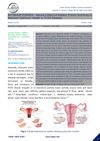 January 2020 in “Asian Journal of Basic Science & Research”
 This review discusses the role of Nutrease powder in managing hormonal disturbances in polycystic ovary syndrome and reports no new clinical results.