 August 2021 in “Pediomaternal Nursing Journal”
 This study concluded that clomiphene citrate is generally preferred over metformin for inducing ovulation in obese women with PCOS, despite low-quality evidence indicating metformin may be superior to placebo for live births.
 June 2025 in “Dermatologic Surgery”
 This study found that growth factor concentrate provides quicker improvements for patterned hair loss, but platelet-rich plasma offers more sustained benefits after treatment.
 9 citations
,
November 2015 in “Gynecological Endocrinology”
9 citations
,
November 2015 in “Gynecological Endocrinology” This study found that among different subtypes of PCOS based on Rotterdam criteria, group A showed higher androgen levels and hirsutism, while all subtypes had increased LH and LH/FSH compared to controls.
19 citations
,
February 2018 in “International Journal of Endocrinology and Metabolism” This study found that the revised 43-item PCOSQ had better validity and reliability than the original version, although further studies are needed to assess its predictive efficacy.
October 2017 in “Zenodo (CERN European Organization for Nuclear Research)” This study found that metformin improved quality of life for overweight and obese women with PCOS, while clomiphene citrate and inositol were more effective for non-obese and underweight women.
 February 2022 in “Obstetrics and gynaecology cases - reviews”
 This case report highlights the diagnostic and management challenges of polycystic ovary syndrome, especially in young women with metabolic complications like type 2 diabetes.
 October 2022 in “Indian Journal of Pharmacy Practice”
 This article discusses the confusion and misinformation surrounding PCOD and PCOS, two distinct but commonly misunderstood conditions, and reports no new clinical results.
 4 citations
,
January 2019 in “Clinical Chemistry”
4 citations
,
January 2019 in “Clinical Chemistry” This article discusses the complexities of diagnosing PCOS and highlights the importance of early recognition and treatment to improve patient outcomes, despite often being overlooked.
 December 2022 in “International journal of preventive, curative & community medicine”
 This article reviews current understanding and management strategies for polycystic ovary syndrome, emphasizing lifestyle changes alongside medical treatment, and reports no new clinical results.
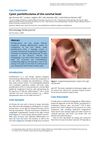 March 2026 in “Dermatology Online Journal”
 In this case report, the authors describe a rare cystic panfolliculoma in an 84-year-old man's right conchal bowl, noting its potential to mimic other tumors like basal cell carcinoma, which complicates diagnosis.
 20 citations
,
January 2016 in “Open Journal of Endocrine and Metabolic Diseases”
20 citations
,
January 2016 in “Open Journal of Endocrine and Metabolic Diseases” This article discusses the prevalence, diagnosis, and treatment of polycystic ovary syndrome, emphasizing its early diagnosis and management due to potential reproductive and metabolic complications, but reports no new findings.

This study found that CPA-loaded nanoparticles, particularly SLN formulations, increased CPA epidermal penetration compared to a conventional cream and may reduce side effects in treating androgen-dependent conditions.
 343 citations
,
October 2015 in “Endocrine Practice”
343 citations
,
October 2015 in “Endocrine Practice” This review discusses the diagnostic criteria and management strategies for Polycystic Ovary Syndrome (PCOS) and highlights the need for comprehensive clinical assessment, but does not report new clinical findings.
 August 2025 in “Advances in Therapy”
 In this study, the researchers noted that physicians in China prioritize clinical hyperandrogenism when making PCOS treatment decisions, highlighting a need to align clinical practices with guidance recommendations and to clarify the role of biochemical hyperandrogenism in future guidelines.
 28 citations
,
April 2013 in “Fertility and Sterility”
28 citations
,
April 2013 in “Fertility and Sterility” This study found that Caucasian and Asian women with PCOS in the San Francisco Bay Area had a similar prevalence of androgen excess, including hirsutism, across most measures.
 114 citations
,
January 2014 in “World Journal of Gastroenterology”
114 citations
,
January 2014 in “World Journal of Gastroenterology” This study highlights the potential increased frequency of advanced liver disease in obese PCOS patients with NAFLD and underscores the importance of lifestyle modifications as initial treatment.
 24 citations
,
March 2010 in “Value in Health”
24 citations
,
March 2010 in “Value in Health” This review found that the only PCOS-specific quality of life measure, the PolyCystic Ovary Syndrome Questionnaire, has an incomplete development history and lacks some essential measurement properties for clinical trial use.
 March 2023 in “International Journal of Herbal Medicine”
 This review discusses polycystic ovarian syndrome (PCOS), its current treatment challenges, and explores integrative approaches for managing the syndrome and its related symptoms, but it presents no new research findings.
 2 citations
,
November 2019 in “Journal für Klinische Endokrinologie und Stoffwechsel”
2 citations
,
November 2019 in “Journal für Klinische Endokrinologie und Stoffwechsel” This review discusses the complex and variable presentation of polycystic ovary syndrome, emphasizing the need for consistent diagnostic criteria and individualized treatment strategies but reports no new clinical results.
 145 citations
,
March 2010 in “Fertility and Sterility”
145 citations
,
March 2010 in “Fertility and Sterility” This study reported that ovulatory PCOS is a milder form of the condition compared to classic PCOS phenotypes, which share similar clinical and hormone characteristics.
 7 citations
,
August 2019 in “Endokrynologia Polska”
7 citations
,
August 2019 in “Endokrynologia Polska” This study reported that women with metabolic PCOS phenotype have free androgen index values approximately twice as high as those with the reproductive phenotype.
 10 citations
,
January 2018 in “Seminars in Reproductive Medicine”
10 citations
,
January 2018 in “Seminars in Reproductive Medicine” This review discusses the challenges in diagnosing and managing polycystic ovary syndrome and highlights the need for an integrated, multidisciplinary healthcare model tailored to the diverse needs of women with PCOS; it reports no new clinical findings.
 April 2019 in “The journal of investigative dermatology/Journal of investigative dermatology”
 In this study, researchers found that CCCA in women of African descent is associated with molecular changes, including dysregulation of fatty acid metabolism and fibrosis pathways, suggesting potential targets for new treatments.
April 2025 in “Middle East Fertility Society Journal” This study established reference values for nine fertility hormones important in diagnosing and monitoring PCOS in Pakistani and other subcontinent populations.
 1 citations
,
September 2024 in “BMC Ophthalmology”
1 citations
,
September 2024 in “BMC Ophthalmology” This study found significantly elevated central corneal thickness and intraocular pressure in patients with polycystic ovary syndrome, suggesting it should be considered in evaluating anterior segment diseases and glaucoma in women.
17 citations
,
April 1997 in “American Journal of Dermatopathology” This report provides the first microscopic description of pachyonychia congenita-associated alopecia, identifying a combination of histological features that might be unique to this condition.
 November 2023 in “Journal of cosmetic dermatology”
 This report describes three cases of erythromelanosis follicularis faciei et colli showing significant improvement in facial telangiectasia following treatment with a 595-nm pulsed dye laser, with minimal recurrence observed during follow-up.
 2 citations
,
May 2010 in “Journal of Obstetrics and Gynaecology Canada”
2 citations
,
May 2010 in “Journal of Obstetrics and Gynaecology Canada” This review summarizes best practices for diagnosing and managing PCOS, emphasizing accurate biochemical assessments and individualized treatment approaches, but reports no new clinical results.
35 citations
,
June 1997 in “Annals of the New York Academy of Sciences” Early diagnosis and multidisciplinary care are crucial for managing PCOS in adolescents.
951 citations
,
December 2013 in “Clinical epidemiology” This article reviews the prevalence, risk factors, and clinical manifestations of polycystic ovary syndrome, highlighting current treatment and management options, but reports no new research findings.