This study found that irregular menstrual cycles and weight gain were common among women with PCOS, with 87% and 64% of patients experiencing these symptoms, respectively.
November 2025 in “Journal of Investigative Dermatology” A new genetic mutation causing Xeroderma Pigmentosum was found in an 8-year-old girl, affecting her DNA repair.
 4 citations
,
January 2022 in “Open Health”
4 citations
,
January 2022 in “Open Health” This article discusses the challenges in treating PCOS, highlights the role of lifestyle interventions, and notes the lack of effective treatment beyond symptomatic management for this common reproductive health issue.
 30 citations
,
January 2016 in “Journal of Pharmaceutical and Biomedical Analysis”
30 citations
,
January 2016 in “Journal of Pharmaceutical and Biomedical Analysis” This study identified trilauric glyceride and decanoylcarnitine as potential biomarkers for diagnosing PCOS in patients with and without insulin resistance, suggesting significant metabolic alterations in these conditions.
1 citations
,
July 2022 in “Zenodo (CERN European Organization for Nuclear Research)” This paper discusses the role of food and exercise in managing polycystic ovarian syndrome and reports no new results.
 4 citations
,
July 2019 in “Children (Basel)”
4 citations
,
July 2019 in “Children (Basel)” This review discusses recent findings on pathogenic mechanisms, diagnostic criteria, and treatment options for PCOS but reports no new clinical results.
 3 citations
,
March 2018 in “Journal of Continuing Education in Nursing”
3 citations
,
March 2018 in “Journal of Continuing Education in Nursing” This study found that a continuing education program significantly improved rural nurse practitioners' knowledge about assessing, diagnosing, and managing PCOS.
 August 2008 in “Obstetrics & gynecology science”
 This review discusses the various features, diagnostic challenges, and associated immediate and long-term morbidities of polycystic ovary syndrome, highlighting its significant impact on quality of life and costs, but reports no new clinical results.
 October 2023 in “Frontiers in endocrinology”
 This review investigates molecular mechanisms behind PCOS pathogenesis and discusses potential therapies, but reports no new clinical results.
 January 2025 in “International Journal of Gynaecology Research”
 This study found that serum cystatin C levels may be elevated in adolescent females with PCOS, suggesting it could serve as a predictive marker for metabolic and cardiovascular issues independent of renal function.
17 citations
,
April 1997 in “American Journal of Dermatopathology” This report provides the first microscopic description of pachyonychia congenita-associated alopecia, identifying a combination of histological features that might be unique to this condition.
 1 citations
,
March 2022 in “medRxiv (Cold Spring Harbor Laboratory)”
1 citations
,
March 2022 in “medRxiv (Cold Spring Harbor Laboratory)” This study found that women with PCOS have a significant risk of mental health disorders, including depression and anxiety, but results varied due to methodological differences, and ethnic disparities were not well-examined.
 22 citations
,
January 2018 in “Experimental Dermatology”
22 citations
,
January 2018 in “Experimental Dermatology” This article reviews insights into the pathogenesis of primary cicatricial alopecias, such as lichen planopilaris, provided by emerging technologies, but it does not report new clinical results.
 11 citations
,
June 2019 in “International journal of gynaecology and obstetrics”
11 citations
,
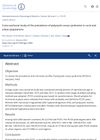
June 2019 in “International journal of gynaecology and obstetrics” This study found that among women with PCOS in Haryana, a larger proportion lived in urban areas, suggesting lifestyle and dietary factors may influence prevalence.
This study concluded that a formulated herbal suspension containing selected home remedial herbs was effective for the prevention and treatment of polycystic ovary syndrome in an animal model.
 June 2020 in “Journal of Investigative Dermatology”
 This study found that FDA-cleared devices for preparing platelet-rich plasma showed inconsistent product quality, with variable platelet counts and inadequate quality control performance, suggesting clinical improvement may not rely on platelet concentration.
 53 citations
,
January 2011 in “Diabetes”
53 citations
,
January 2011 in “Diabetes” The study found that severe insulin resistance and premature diabetes are common in patients with PCNT genetic defects, primarily affecting those over four years old, while not impacting early insulin signaling in adipocytes.
 December 2025 in “Editora Pasteur eBooks”
 A combined medical and aesthetic approach is crucial for effectively managing PCOS and its skin-related issues.
 January 2025 in “Directory of Open access Books (OAPEN Foundation)”
 This book reviews the symptoms, diagnosis, and treatments for Polycystic Ovary Syndrome, providing a comprehensive exploration but reports no new clinical results.
 July 2019 in “International Journal of Advance Research in Community Health Nursing”
 This study observed that, among women in Padgampora Village, J&K, aged 15-45, 42.5% had PCOS between ages 15 and 25, with clinical signs like irregular cycles, obesity, acne, and more, highlighting the need for increased awareness and early intervention.
 May 2026 in “Zenodo (CERN European Organization for Nuclear Research)”
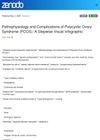
 This infographic reviews the pathophysiology and complications of PCOS, illustrating how genetic and environmental factors contribute to its development, and highlights associated metabolic and neuroendocrine effects.
 March 2022 in “International journal of pharmaceutical sciences review and research”
 This review examines treatment options for PCOS, highlighting the importance of managing symptoms and patient counseling, and reports no new clinical results.
 414 citations
,
August 2005 in “The Journal of Clinical Endocrinology and Metabolism”
414 citations
,
August 2005 in “The Journal of Clinical Endocrinology and Metabolism” This study estimates the total cost of evaluating and treating polycystic ovary syndrome in reproductive-aged women in the United States to be $4.36 billion, suggesting more liberal screening could be beneficial.
1947 citations
,
September 1995 in “New England journal of medicine/The New England journal of medicine” This article discusses the heterogeneity of polycystic ovary syndrome, its association with insulin resistance, and its implications for long-term health, but reports no new clinical results.
6 citations
,
August 2016 in “Journal of Visualized Experiments” This article describes a method using the CUBIC protocol to clarify and visualize molecular and cellular interactions in mouse skin biopsies at single cell resolution, but does not provide new biological findings.
 December 2023 in “Asian Journal of Pharmaceutical Research and Development”
 This research suggests that phytoestrogen-rich herbal extracts may help reduce hyperandrogenism, insulin resistance, and ovarian weight while promoting ovulation in polycystic ovarian syndrome, indicating potential for discovering new bioactive compounds.
6 citations
,
March 2007 in “BioTechniques” This study observed that PCR-based genotyping for cre-loxP mice can lead to errors due to cre-mediated recombination in non-target tissues like tails, affecting the detection of lox alleles.
 January 2015 in “Springer eBooks”
 This chapter reviews polycystic ovary syndrome's clinical features, highlighting diagnostic criteria and management strategies, and reports no new findings; the authors emphasize the need for targeted treatment approaches.
 January 2022 in “Journal of family medicine”
 This case report highlights the challenges of misdiagnosis in women with PCOS and emphasizes the importance of a holistic approach to address interconnected endocrine and reproductive dysfunctions.
 42 citations
,
January 2006 in “Obstetrical & Gynecological Survey”
42 citations
,
January 2006 in “Obstetrical & Gynecological Survey” This article discusses the importance of recognizing and distinguishing polycystic ovary syndrome from similar endocrine disorders, and reports no new clinical results.