September 2023 in “Journal of the American Academy of Dermatology” Recognizing IPPP is crucial to prevent misdiagnosis and unnecessary treatments.
 September 2024 in “Journal of the American Academy of Dermatology”
 This review discusses the limited evidence on the efficacy of platelet-rich plasma for treating endocrine therapy-induced and permanent chemotherapy-induced alopecia and reports no new clinical results.
 1 citations
,
November 1983 in “The Lancet”
1 citations
,
November 1983 in “The Lancet” Acute leukemias with the Philadelphia chromosome may be biphenotypic, and identifying this is important for proper treatment.
 4 citations
,
January 2025 in “Translational Psychiatry”
4 citations
,
January 2025 in “Translational Psychiatry” In this study, remote photobiomodulation therapy to the lungs improved behavioral and neurological outcomes in rats with repeated closed-head injuries, suggesting potential preventive benefits for brain health.
 2 citations
,
January 2007 in “Acta Dermato Venereologica”
2 citations
,
January 2007 in “Acta Dermato Venereologica” In this report, a case of a bullous lesion developed at the injection site in a patient treated with PEG-IFN-α-2a for chronic hepatitis C was described.
October 2018 in “The American journal of gastroenterology” This case study highlights the importance of early detection and management of pembrolizumab-induced hepatitis, suggesting that early steroid treatment could potentially prevent severe complications.
 3 citations
,
October 2021 in “Brain Sciences”
3 citations
,
October 2021 in “Brain Sciences” This review hypothesizes that risperidone long-acting injectable may be linked to bullous pemphigoid in a bipolar patient, though current studies report mixed results.
 1 citations
,
January 2014 in “Health Renaissance”
1 citations
,
January 2014 in “Health Renaissance” This report describes a rare case of pseudopelade of Brocq in a 20-year-old male, emphasizing its unique presentation with scalp hair loss and mild itching.
June 2026 in “British Journal of Dermatology” This case report discusses an atypical presentation of bullous pemphigoid in a young man potentially triggered by occupational chemical exposure, highlighting diagnostic challenges and effective treatment with clobetasol propionate and prednisolone, transitioning to mycophenolate mofetil.
 1 citations
,
August 2005 in “British Journal of Dermatology”
1 citations
,
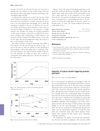
August 2005 in “British Journal of Dermatology” This case report describes a 7-year-old girl who developed widespread erythroderma and systemic symptoms after ingesting clobetasone butyrate cream, despite previous psoriasis treatment.
7 citations
,
August 2017 in “European journal of endocrinology” This study suggests that mutations in exon 10 of the POC1A gene may be linked to a distinct clinical condition characterized by extreme insulin resistance and short stature, differing from SOFT syndrome.
2 citations
,
December 2024 in “Journal of Photochemistry and Photobiology B Biology” This study suggests that pulsed wave photobiomodulation could be a promising treatment for androgenetic alopecia by enhancing dermal papilla cell function through specific light parameters, particularly frequency.
 138 citations
,
November 2015 in “Journal of Pharmacology and Experimental Therapeutics”
138 citations
,
November 2015 in “Journal of Pharmacology and Experimental Therapeutics” This review discusses the mechanisms associated with protoporphyrin IX in living cells and reports no clinical results; the authors emphasize its potential in cancer diagnosis and the risks of toxicity.
 March 2026 in “Zenodo (CERN European Organization for Nuclear Research)”
 This report reviews the causes, symptoms, diagnosis, complications, and treatment options for Polycystic Ovarian Disease, emphasizing the importance of early diagnosis and individualized management, but it does not provide new research findings.
 2 citations
,
June 2020 in “Dermatology and therapy”
2 citations
,
June 2020 in “Dermatology and therapy” In this case report, narrowband-UVB phototherapy successfully treated a rare instance of Graham Little-Piccardi-Lassueur syndrome, a variant of lichen planopilaris, as investigated through non-invasive imaging techniques.
3 citations
,
July 2023 in “International Journal of Trichology” This study found that treatment with diphenylcyclopropenone led to more than 75% hair regrowth in 33.3% of patients with alopecia totalis or alopecia universalis, despite notable side effects.
 April 2023 in “Journal of Investigative Dermatology”
 This case study reports an unusual presentation of primary cutaneous diffuse large B-cell lymphoma–leg type occurring on the upper lip of an 81-year-old woman, highlighting the need for timely recognition of atypical manifestations.
 October 2021 in “Journal of Investigative Dermatology”
 This study found no significant difference in SARS-CoV2 IgG seroconversion rates between patients with immune-mediated inflammatory diseases treated with targeted immune-modulating therapies and those on conventional systemic treatments.
 June 2020 in “Journal of Investigative Dermatology”
 This study of photobiomodulation therapy devices for androgenetic alopecia found variable improvements in hair grade across different skin types and devices, suggesting a need for larger, more comprehensive trials.
24 citations
,
May 2000 in “Journal of the American Academy of Dermatology” This case report describes a patient with pseudopelade affecting both the scalp and beard area, highlighting the unusual presentation of a rare hair disorder.
 11 citations
,
April 2019 in “Bioscience Reports”
11 citations
,
April 2019 in “Bioscience Reports” In this study, single nucleotide polymorphisms in the RAB5B gene were linked to an increased risk of polycystic ovary syndrome and associated with specific microRNA binding sites.
50 citations
,
May 1985 in “The journal of pediatrics/The Journal of pediatrics” This study reported successful treatment of biotin deficiency in three patients receiving total parenteral nutrition, suggesting current biotin supplementation recommendations may be inadequate to maintain normal biotin status.
11 citations
,
May 2008 in “British journal of dermatology/British journal of dermatology, Supplement” This case report describes a 32-year-old man who developed SCC of the common bile duct a year after receiving treatment for a malignant proliferating trichilemmal tumour on the scalp.
 5 citations
,
October 2019 in “The journal of investigative dermatology/Journal of investigative dermatology”
5 citations
,
October 2019 in “The journal of investigative dermatology/Journal of investigative dermatology” This study identified a high-risk allele in the PLCD1 gene associated with hereditary trichilemmal cyst formation, proposing a monoallelic two-hit mechanism as the underlying genetic pathogenesis.
2 citations
,
October 2016 in “OPAL (Open@LaTrobe) (La Trobe University)” This study reports that the Swedish newborn screening program for phenylketonuria, galactosaemia, and biotinidase deficiency is effective, with high sensitivity and specificity, and lower false positive rates compared to other countries, while genetic variants impact detection and incidence patterns in Sweden.
 9 citations
,
January 2020
9 citations
,
January 2020 This case series observed that macular changes from popper use can resolve completely after cessation, even in individuals with chronic use.
7 citations
,
September 2013 in “Familial cancer” This review discusses recent insights into Birt–Hogg–Dube syndrome, including the functions of the FLCN gene and clinical recommendations for screening and treatment, but it reports no new experimental results.
 July 2021 in “International journal of dermatology, venereology and leprosy sciences”
 This study found that diphenylcyclopropenone (DPCP) was more effective and better tolerated than dinitrochlorobenzene (DNCB) in promoting hair regrowth in patients with alopecia areata.

In this case report, a 36-year-old patient undergoing secukinumab treatment for psoriasis experienced both hepatitis B reactivation and hair discoloration, suggesting a potential link between these effects, though further studies are needed to understand this relationship.