 January 2019 in “Springer Reference Medizin”
 This article reviews the role of factor Xa inhibitors like Rivaroxaban and suggests they may eventually replace vitamin K antagonists, but their side effects require further clarification.
 January 2012 in “Current Therapy In Oral and Maxillofacial Surgery”
 Endoscopic forehead and brow lifting safely and consistently improves aged eyebrows, but may have complications.
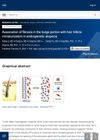 February 2021 in “Journal of The American Academy of Dermatology”
 This study observed that fibrosis occurs in the bulge region of hair follicles affected by androgenetic alopecia and is correlated with the hair miniaturization process.
2 citations
,
June 2024 in “Frontiers in Immunology” In this study, researchers developed a 3D in-vitro system for generating functional AT-resident macrophages without cell sorting, providing a valuable tool to study their differentiation and function in various physiological and pathological conditions.
 May 2025 in “Anatolian journal of obstetrics and gynecology research.”
 This source highlights the essential role of androgens in women's health, noting their impact on various body systems and the critical need for more research on androgen therapies regarding side effects, patient selection, and laboratory standardization.
October 2021 in “Case Reports in Veterinary Medicine” This veterinary case study of a dog with myxedema coma found clinical and pathologic changes including severe thyroid atrophy and marked atherosclerosis consistent with the diagnosis.
 40 citations
,
December 2015 in “Stem Cells International”
40 citations
,
December 2015 in “Stem Cells International” This review discusses the roles that mesenchymal stem cells may play in reepithelialization of wounds, but reports no new clinical results.
 29 citations
,
September 2012 in “Birth Defects Research”
29 citations
,
September 2012 in “Birth Defects Research” This review discusses the developmental regulation of wound healing mechanisms in mammals, focusing on the role of the Wnt and TGF‐β signaling pathways, and reports no new clinical findings.
 20 citations
,
January 2021 in “GeroScience”
20 citations
,
January 2021 in “GeroScience” This study found that administering spermidine to aged mice for six months significantly reduced various age-related conditions, including brain, heart, kidney, liver issues, and hair loss, possibly due to decreased telomere attrition.
 1 citations
,
September 2023 in “Stem cell research & therapy”
1 citations
,
September 2023 in “Stem cell research & therapy” This review discusses how mesenchymal stromal cell-based therapy holds promise for treating age-related diseases, given its potential to target aging's pathological features, although significant challenges remain for its clinical application.
 January 2026 in “Florence Research (University of Florence)”
 This perspective reviews current knowledge about cellular and molecular mechanisms in wound healing from 2023–2025, highlighting inadequately understood pathways associated with conditions like keloids and chronic wounds, and discusses proposed novel therapies for these conditions.
June 2025 in “International Journal of Molecular Sciences” This review compiles current research on the role of long non-coding RNAs in regulating muscle growth and regeneration processes, particularly their influence on Duchenne muscular dystrophy, and reports no new clinical results.
 March 2025 in “Frontiers in Cell and Developmental Biology”
 This study reviewed how neuropeptides and cutaneous innervation play crucial roles in the process of wound healing, suggesting they significantly influence inflammation and tissue repair phases.
 March 2025 in “International Journal of Pharmaceutical Research and Applications”
 This study highlights recent biological and technological strategies in anti-aging research aimed at delaying aging and related diseases, improving skin healing, and potentially restoring hair growth.
 59 citations
,
January 2005 in “Endocrine Journal”
59 citations
,
January 2005 in “Endocrine Journal” This study found that sex steroid hormone receptors are largely maintained during the transformation of skin appendages to neoplasms, except for androgen and estrogen receptors in sweat and sebaceous gland tumors.
 17 citations
,
July 2014 in “Our Dermatology Online”
17 citations
,
July 2014 in “Our Dermatology Online” In this study of elderly patients at an Indian medical center, researchers found that xerosis was the most common physiological skin change and pruritus was the most frequent complaint.
13 citations
,
July 2020 in “World journal of stem cells” This review discusses vitamin D and calcium signaling roles in epidermal stem cell processes essential for wound healing but reports no new experimental results, emphasizing their potential interdependent regulatory mechanisms.
 4 citations
,
January 2019 in “Dermatologic Therapy”
4 citations
,
January 2019 in “Dermatologic Therapy” This review explores the clinical characteristics, risk factors, and treatment challenges of scalp basal cell carcinoma, noting its potential aggressiveness and difficulty in treatment, but reports no new clinical results.
 33 citations
,
August 2013 in “British Journal of Dermatology”
33 citations
,
August 2013 in “British Journal of Dermatology” Lack of small, fine hair on the front hairline is a key sign of frontal fibrosing alopecia.
 13 citations
,
February 2017 in “Science”
13 citations
,
February 2017 in “Science” Turning scar-forming cells into fat cells can reduce scarring.
 451 citations
,
March 2005 in “Endocrine Reviews”
451 citations
,
March 2005 in “Endocrine Reviews” This paper discusses the role of steroid sulfatase in hormone-dependent tumors and highlights the development of potent inhibitors, noting the commencement of a phase I trial for one inhibitor in postmenopausal breast cancer patients.
 132 citations
,
January 2017 in “International Journal of Molecular Sciences”
132 citations
,
January 2017 in “International Journal of Molecular Sciences” This review explores how adipose-derived stem cells contribute to skin homeostasis and highlights recent advances in their clinical applications in dermatology, but it reports no new clinical results.
 62 citations
,
September 2014 in “PLoS ONE”
62 citations
,
September 2014 in “PLoS ONE” This study identified distinct human and bacterial protein profiles in sebaceous follicular casts, with acne samples showing proteins linked to inflammation and normal samples showing proteins involved in stress protection.
 59 citations
,
November 2010 in “Circulation Research”
59 citations
,
November 2010 in “Circulation Research” This review discusses the potential role of Wnt signaling in aging-related heart diseases and reports no clinical results.
 47 citations
,
September 2016 in “Reviews in endocrine and metabolic disorders”
47 citations
,
September 2016 in “Reviews in endocrine and metabolic disorders” This review discusses the steroidogenic properties of human skin and suggests that impaired steroidogenesis may be linked to conditions like acne, rosacea, atopic dermatitis, and androgenic alopecia, but reports no new clinical results.
 27 citations
,
July 2017 in “European Journal of Dermatology”
27 citations
,
July 2017 in “European Journal of Dermatology” This article reviews the role of microRNAs as epigenetic modulators in dermatology but reports no new clinical findings.
 15 citations
,
January 2018 in “Biomedical Reports”
15 citations
,
January 2018 in “Biomedical Reports” This review discusses multiple pathways through which exosomes may regulate skin functions and diseases like melanoma, scleroderma, and pigmentation disorders, without providing new clinical results; future therapeutic strategies are suggested.
 4 citations
,
January 2019 in “Elsevier eBooks”
4 citations
,
January 2019 in “Elsevier eBooks” This review examines the current landscape of drug repositioning, highlighting that computational methods expand possibilities for reusing existing drugs to treat unmet medical needs. The authors discuss both the potential of these methods and the challenges faced in identifying new therapeutic applications.
1 citations
,
February 2013 in “InTech eBooks” This article discusses research about Netherton syndrome, highlighting its contributions to understanding epidermal structure, immune responses, and processes like atopic dermatitis, but it reports no new clinical findings.
 May 2025 in “Antioxidants”
 This review highlights how natural products with antioxidant properties can modulate the Wnt signaling pathway, potentially influencing various pathological conditions such as cancer, stroke, and regenerative medicine. It also addresses controversies in the compounds' mechanisms across different models and suggests research directions for future studies.