 9 citations
,
January 2015 in “Current problems in dermatology”
9 citations
,
January 2015 in “Current problems in dermatology” This review discusses partial longitudinal-follicular unit transplantation (PL-FUT) for hair loss and notes its potential to multiply hair follicles while preserving donor areas, but reports no new clinical results.
 2 citations
,
November 1998 in “Journal of The European Academy of Dermatology and Venereology”
2 citations
,
November 1998 in “Journal of The European Academy of Dermatology and Venereology” This article reports on a partial regrowth of scalp hair in a patient treated with extracorporeal photochemotherapy and interferon α 2a, but provides no new clinical outcomes.
 December 2023 in “Journal of Korean Society of Beauty Cultral Arts”
 This study observed that among hair loss patients in Daejeon and Chungcheong, female pattern hair loss was most common, scalp massage was the preferred management behavior, and satisfaction was above average except for lower satisfaction with folk remedies.
 1 citations
,
February 1993 in “Nursing Standard”
1 citations
,
February 1993 in “Nursing Standard” This article highlights that nurses may not be sufficiently aware of the potential for various drug groups, beyond cytotoxic drugs, to cause alopecia, and emphasizes the importance of early recognition of this side effect.
 July 2012 in “European journal of cancer”
 This study demonstrated that switching aE-catenin to aT-catenin in murine skin substantially rescued hyperproliferative and pre-cancerous conditions, but led to partial baldness, indicating potential functional discrepancies.
 2 citations
,
May 2005 in “Seminars in Plastic Surgery”
2 citations
,
May 2005 in “Seminars in Plastic Surgery” This article discusses the temporo-parieto-occipital flap for scalp reconstruction and reports no new clinical results; the authors emphasize its specific reconstructive indications.
 November 2021 in “Open Forum Infectious Diseases”
 This study found that dermatological manifestations in COVID-19 patients with severe pneumonia were relatively rare, with the most frequent being the morbilliform viral exanthema and some cases of reversible androgenetic alopecia linked to disease severity.
 December 2020 in “Dermatology archives”
 This review discusses the challenge of linking cutaneous manifestations directly to COVID-19 infection and highlights the inadequate characterization of these skin lesions, reporting no new clinical results.
 January 2020 in “Journal of South Asian Federation of Obstetrics and Gynaecology”
 In this case study, laparoscopic bilateral salpingo-oophorectomy was associated with reduced androgen levels and partial reversal of male-pattern hair loss in a postmenopausal woman with ovarian hyperandrogenism.
 1 citations
,
January 2008 in “touchREVIEWS in Endocrinology”
1 citations
,
January 2008 in “touchREVIEWS in Endocrinology” Generalized glucocorticoid resistance causes hormone imbalances and varied symptoms due to gene mutations.
 7 citations
,
September 1977 in “PubMed”
7 citations
,
September 1977 in “PubMed” This article describes a new surgical technique called "hair-lifting" for treating male-pattern alopecia, which involves removing sections of bald scalp and repositioning remaining hair.
 6 citations
,
July 2026 in “Zenodo (CERN European Organization for Nuclear Research)”
6 citations
,
July 2026 in “Zenodo (CERN European Organization for Nuclear Research)” This review evaluates the use of 5α-reductase inhibitors in feminising hormone therapy, finding their additive feminising benefits unclear due to their specific action on testosterone conversion, with concerns highlighted regarding limited supporting evidence and safety signals, particularly for psychiatric and sexual effects.

This study found that daily application of the herbal mixture Xiantene significantly increased hair growth in men with androgenetic alopecia by prolonging the anagen phase, potentially slowing or reversing hair loss.
65 citations
,
December 1986 in “The Journal of Clinical Endocrinology & Metabolism” This study concluded that a 26-year-old woman had autosomal dominantly inherited hereditary cortisol insensitivity, leading to increased adrenocortical cortisol and androgen secretion, which caused clinical symptoms unlike in her male relatives.
11 citations
,
October 2007 in “International Journal of Dermatology” This study describes the epidemiologic, clinical, and etiologic characteristics of alopecia among patients at a dermatology service, identifying tinea and alopecia areata as the most common causes.
 8 citations
,
July 2014 in “Anais Brasileiros de Dermatologia”
8 citations
,
July 2014 in “Anais Brasileiros de Dermatologia” This article discusses a case of alopecia areata, androgenetic alopecia, and trichostasis spinulosa, highlighting how dermoscopy can help differentiate black dots from trichostasis spinulosa lesions, but it reports no new clinical results.

This case study describes a 34-year-old male developing painful inflammatory scalp nodules post-scalp microinfusion of medication. The findings suggest that repeated microtrauma or bacterial colonization might trigger dissecting cellulitis in susceptible individuals, with exogenous testosterone as a potential modifier, not a direct cause.
 June 2022 in “Indian journal of clinical and experimental opthalmology”
 This case report details the ocular complications of Hutchinson-Gilford Progeria syndrome in a 20-year-old Bangladeshi patient, highlighting symptoms like dry eyes, Meibomian gland dysfunction, and cataracts.
 December 2020 in “Skin appendage disorders”
 This discussion highlights the evolving clinical spectrum of lichen planopilaris, noting atypical features and presentations in younger males that suggest potential different pathomechanisms from previously recognized variants.
 November 1998 in “Journal of The European Academy of Dermatology and Venereology”
 A man's skin cancer improved and some of his hair grew back after treatment with a special light therapy and a medication.
January 2020 in “International Journal of Trichology” This case study reported two instances of female androgenetic alopecia with male pattern reversed after surgical removal of an ovarian tumor.
 2 citations
,
September 2017 in “Plastic and reconstructive surgery. Global open”
2 citations
,
September 2017 in “Plastic and reconstructive surgery. Global open” This pilot study found that a single session of nanofat treatment may increase hair thickness and density in male patients with androgenic alopecia, with effects lasting up to 12 months in some cases, though results varied.
 24 citations
,
July 1983 in “Clinical and Experimental Dermatology”
24 citations
,
July 1983 in “Clinical and Experimental Dermatology” Tigason improved hair growth in a boy with monilethrix without side effects.
3 citations
,
January 2023 in “Journal of Biomedical and Allied Research” This review examines the therapeutic applications and potential pharmacological properties of Calotropis gigantea but presents no new clinical findings.
 3 citations
,
March 2021 in “Metabolites”
3 citations
,
March 2021 in “Metabolites” This study identified distinct differences in metabolic pathways related to pattern baldness, with findings highlighting the androgen metabolic pathway in males and the estrogen plus arachidonic acid pathways in females using hair samples.
 10 citations
,
April 2015 in “Netherlands Heart Journal”
10 citations
,
April 2015 in “Netherlands Heart Journal” This study concluded that there is no association between male pattern baldness and the severity or presence of coronary artery disease as measured by Gensini and Rentrop scores.
 8 citations
,
October 2008 in “Medical hypotheses”
8 citations
,
October 2008 in “Medical hypotheses” This article introduces a new theory on male pattern baldness, attributing it to scalp pressure affecting hair follicles, and suggests it could revolutionize understanding and treatment; no clinical results are presented.
 6 citations
,
June 2021 in “Journal of health psychology”
6 citations
,
June 2021 in “Journal of health psychology” This review found that commercial influences may affect how male baldness is represented as a disease and how treatment options are presented, often omitting limitations.
 4 citations
,
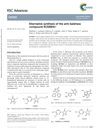
January 2014 in “RSC Advances”
4 citations
,
January 2014 in “RSC Advances” A new, less toxic and more efficient method to create the anti-baldness compound RU58841 was developed in 2014.
 January 2026 in “Medico Research Chronicles”
 This case report suggests that a classical homeopathic approach at Dr Batra’s® Homeopathy Clinic significantly improved hair fall, hair density, and quality of life for a young male with Grade III Male Pattern Baldness over 18 months.