 April 2024 in “Medical & clinical research”
 This study reviews the range of both conventional and unconventional treatments for Alopecia Areata, highlighting the promise of biological therapies like JAK inhibitors, but notes more research is needed to optimize treatment effectiveness and personalization.
April 2024 in “Journal of clinical medicine” This review discusses various therapeutic options for frontal fibrosing alopecia and highlights the need for more research, as existing data are largely retrospective and lack precise treatment guidelines.
This review highlights recent advances in the use of light exposure for health purposes, examining its role in pathology, therapeutic strategies, and molecular changes, as well as discussing future developments in this globally supported field.
 February 2024 in “Sohag Medical Journal”
 This review discusses the challenges in treating alopecia areata and the potential psychological impact, noting that spontaneous hair regrowth often occurs and highlighting the consideration of psychotherapy alongside treatment options; it reports no new experimental results.
January 2024 in “Journal of the American Academy of Dermatology” Gabapentin helps with scalp itch, dutasteride works for frontal fibrosing alopecia, and more research is needed for better PCA treatments.
 September 2023 in “International Journal of Community Medicine and Public Health”
 This source reviews a range of sebaceous gland disorders, exploring their clinical characteristics, risk factors, and common treatments, including conditions such as sebaceous gland hyperplasia and acne vulgaris, and highlighting various therapeutic approaches.

Bee pollen, green tea, essential oils, and various plant extracts improve skin and hair health.
 August 2023 in “Journal of The American Academy of Dermatology”
 This article discusses various treatments for primary cicatricial alopecia with a focus on early intervention to manage symptoms and improve hair density, but it reports no new clinical results.
 June 2023 in “RECIMA21 - Revista Científica Multidisciplinar - ISSN 2675-6218”
 This study reviewed literature on phototherapy for hair loss, finding that both high and low-power phototherapy can promote hair growth, but choosing the appropriate power level is essential for effective results.
 June 2023 in “British journal of dermatology/British journal of dermatology, Supplement”
 This case report identified a distinct pattern of scarring alopecia with folliculocentric noncaseating granulomas, linked with granulomatous dermatitis in the breast, as a potential cutaneous manifestation of rheumatoid arthritis.
 April 2023 in “IP Indian journal of clinical and experimental dermatology”
 This article reviews the pathogenesis, complications, and management of lichen planus, especially its persistent oral form, and highlights the need for further prospective studies.
 March 2023 in “International journal of integrated medical research”
 This article discusses keratosis pilaris, a common skin condition often considered a normal variant, and reviews its associations, progression, and available treatments without reporting new clinical results.

In this study involving two volunteers with Androgenetic Alopecia, phototherapy using red and blue wavelengths promoted benefits, as observed through photographic and trichoscopy comparison after 12 weekly sessions.
July 2022 in “British Journal of Dermatology” This systematic review observed that Janus kinase inhibitors show promising efficacy for treating alopecia areata, but more studies on adolescent treatments and patient-relevant outcomes are needed.
June 2022 in “Zenodo (CERN European Organization for Nuclear Research)” In a case report, this study documented successful healing of a patient with alopecia totalis using the Remember/Regeneration Therapy Method, a holistic approach combining various complementary treatments, and noted the potential for consistent outcomes in managing alopecia and other autoimmune diseases.
September 2021 in “Journal of the American Academy of Dermatology” This study found that reported stress and hair growth changes related to facial/body hair excess or scalp hair loss differ among ethnic gender minority groups, with black and other ethnic respondents experiencing more stress compared to Caucasians, particularly in relation to facial/body hair excess.
June 2021 in “Dépôt Institutionnel de lUniversité de Tlemcen” This survey reported that essential oils are predominantly used by Algerian women for cosmetic and medical purposes, with applications ranging from skincare to treating respiratory illnesses and other conditions.
 April 2021 in “Advances in Cosmetic Surgery”
 Hair restoration can be achieved through non-surgical treatments like minoxidil, antiandrogens, phototherapy, and PRP procedures, or through surgical methods like hair transplantation. Continued treatment is needed to maintain results, and full results are visible after 12-18 months.
 September 2019 in “Journal of Investigative Dermatology”
 This study found that a history of smoking significantly predicted a more refractory course of palmoplantar pustulosis, with associated comorbidities often including hypertension, type 2 diabetes mellitus, and thyroid diseases.
This chapter discusses pediatric disorders like alopecia areata and vitiligo, identifying laser and light therapies as treatment options, and highlights that the pulsed dye laser is well tolerated and effective for treating molluscum contagiosum.
January 2019 in “Springer eBooks” Combination therapies might work better for some vitiligo patients, but results vary.
 April 2018 in “Dermatologic Surgery”
 A new surgical technique using vellus hair grafts effectively treated vitiligo without causing unwanted hair growth.

This study discusses the safety, complications, and limitations of melanocyte transplantation for treating vitiligo, noting that these techniques are generally safe and often combined with medical treatments for repigmenting stable vitiligo macules.
 January 2017 in “Dermatology Review”
 This article discusses skin lesions in chronic graft-versus-host disease and highlights the importance of coordinated care between haematologists and dermatologists for effective management; it presents no new clinical results.
February 2016 in “Journal of Allergy and Clinical Immunology” This report highlights a case of disseminated and recurrent infundibulofolliculitis in a 45-year-old African American male and underscores the importance of performing a skin biopsy for diagnosis.
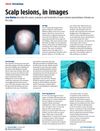 January 2015 in “Independent Nurse”
 Different scalp conditions can lead to hair loss or tumors, with treatments varying from creams to surgery; early detection is crucial.
January 2015 in “Journal of the turkish academy of dermatology” This review discusses the evidence and literature on phototherapy for vitiligo but reports no novel clinical findings, highlighting the treatment's reliance on melanocyte reservoirs for repigmentation.
 January 2015 in “Indian Dermatology Online Journal”
 This diagnostic discussion reports that diffuse alopecia areata was identified in a patient with diffuse hair loss, based on specific histopathological features observed in a biopsy.

This article reviews the spectrum of connective tissue disorders and discusses the role of autoantibodies, particularly in lupus erythematosus, but reports no new findings.
 May 2014 in “Journal of The American Academy of Dermatology”
 Psoriasis increases annual healthcare costs by $4,044 per patient, with biologic treatments costing significantly more than phototherapy.