253 citations
,
April 2009 in “Journal of Biological Chemistry” This study found that p2y5 functions as a novel LPA receptor involved in the G13-Rho signaling pathway, with implications for human hair growth, and proposes renaming it to LPA6.
 39 citations
,
June 1982 in “The BMJ”
39 citations
,
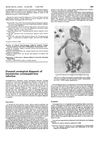
June 1982 in “The BMJ” Blood tests confirmed a baby in the womb had a CMV infection.
 2 citations
,
October 2023 in “Philosophical transactions - Royal Society. Biological sciences”
2 citations
,
October 2023 in “Philosophical transactions - Royal Society. Biological sciences” This article reports that mutations in the PADI3 gene, affecting its activity or localization, cause uncombable hair syndrome and are linked to central centrifugal cicatricial alopecia, particularly among women of African ancestry.
69 citations
,
December 2006 in “Archives of dermatology” This entry contains no research abstract, so no scientific findings or conclusions are reported.
 October 2022 in “JAAD international”
 This study found that more than 70% of patients with autoimmune blistering diseases experienced alopecia, with about 10% having scarring alopecia, and elevated Dsg1 ratios were linked to hair loss in pemphigus vulgaris.
1 citations
,
April 2020 in “Journal of the Endocrine Society” This case report describes a 19-year-old patient with microsatellite stable adrenocortical carcinoma who showed a promising 36-month response to pembrolizumab, including structural and biochemical improvements, with primary adrenal insufficiency as a major side effect.
June 2017 in “The Medical Journal of Australia” This article provides no abstract or new research findings.
February 2024 in “Veterinary sciences” This study found that canine pemphigus foliaceus skin lesions exhibit a distinct immune signature, with upregulated pro-inflammatory and Th17-related genes, showing similarities to human pemphigus. Further research using advanced sequencing is needed to better understand the disease's pathogenesis.
 April 2016 in “Journal of Investigative Dermatology”
 This study found that administering botulinum toxin A via Flex-PADs to mouse footpads inhibited sweating similarly to traditional injections, suggesting a promising patient-friendly delivery method for hyperhidrosis treatment.
 14 citations
,
January 1990 in “Fertility and Sterility”
14 citations
,
January 1990 in “Fertility and Sterility” In this study, five patients with moderate hyperprolactinemia lacked symptoms, signs, or underlying causes, leading researchers to conclude that no further investigation or therapy was needed.
 3 citations
,
March 2014 in “Journal of Industrial Microbiology & Biotechnology”
3 citations
,
March 2014 in “Journal of Industrial Microbiology & Biotechnology” This study identified a cytochrome P450 enzyme, CYP-pa1 from Pseudonocardia autotrophica, as responsible for the specific hydroxylation of cyclosporin A at the 9th N-methyl leucine, suggesting potential for biotechnological applications.
20 citations
,
January 2002 in “Laboratory Animals” This study identified a compound heterozygous mutation in a hairless rhesus macaque, which was associated with skin abnormalities similar to those in hairless mice and humans with APL.
This study found that a short-term treatment with all-trans retinoic acid may effectively stabilize platelet counts in idiopathic thrombocytopenic purpura patients experiencing fluctuations during thrombopoietin receptor agonist therapy.
6 citations
,
January 2024 in “International Journal of Dermatology” This study examined FAERS data and found an increasing trend in alopecia areata cases, with monoclonal antibodies most frequently linked to the condition.
 October 2004 in “Australian Prescriber”
 This review discusses the lack of long-term clinical studies on metformin's cardiovascular benefits in women with polycystic ovary syndrome, highlighting lifestyle changes as a crucial management strategy for reducing associated risks.
February 2025 in “JEADV Clinical Practice” This study described a rare case of bullous pemphigoid presenting as cicatricial alopecia in a Hispanic female, successfully treated with a combination of oral methotrexate and topical steroids.
 6 citations
,
May 2021 in “Journal of Health Sciences”
6 citations
,
May 2021 in “Journal of Health Sciences” In this study, researchers administered intravenous autologous activated platelet-rich plasma (aaPRP) to 611 patients and reported no adverse events, suggesting that this treatment is safe even for patients with various pathological conditions.
 89 citations
,
May 1999 in “Allergy”
89 citations
,
May 1999 in “Allergy” This article reviews the role of Pityrosporum (Malassezia) in skin conditions such as pityriasis versicolor, seborrheic dermatitis, and atopic dermatitis, and discusses treatment approaches; it reports no new clinical results.
3 citations
,
February 2018 in “Experimental and Molecular Medicine/Experimental and molecular medicine” This study suggests that hair loss disorders like Marie Unna hereditary hypotrichosis may result from mutations that disrupt post-transcriptional regulation of HR protein expression by PCPB2 interacting with Hr mRNA.
 54 citations
,
November 1998 in “Archives of dermatology”
54 citations
,
November 1998 in “Archives of dermatology” This article discusses the potential role of nutritional ingredients, such as thiols and tannins, in triggering pemphigus, and reports no new empirical findings.
3 citations
,
January 2011 in “American Journal of Hematology” This study describes a case where immunochemotherapy, including chlorambucil and rituximab, successfully reversed agranulocytosis and other Waldenström's macroglobulinemia symptoms, indicating a possible connection between the two.

This study identified 193 plasma proteins associated with prostate cancer risk, validating 20 high-risk proteins including KLK3, and pinpointed potential drug targets like HSPB1, RRM2B, and PSCA through genetic analysis, offering new insights for biomarkers and treatments.
11 citations
,
February 2011 in “The Journal of Dermatology” This study observed four consanguineous families with congenital atrichia with papular lesions and identified three novel mutations in the hairless gene, which may contribute to the disorder.
 7 citations
,
August 2005 in “British Journal of Dermatology”
7 citations
,
August 2005 in “British Journal of Dermatology” This study reported improvement of psoriatic onychopachydermoperiostitis symptoms with the use of etanercept.
 2 citations
,
December 2020 in “Endocrinology, diabetes & metabolism case reports”
2 citations
,
December 2020 in “Endocrinology, diabetes & metabolism case reports” This case study highlights the complexity of managing autoimmune polyglandular syndrome type 1, emphasizing the need for thorough clinical history, high suspicion for early diagnosis, and continuous long-term follow-up.
13 citations
,
January 2019 in “Journal of the American Academy of Dermatology” This study found that those with pityriasis rubra pilaris reported worse quality of life than patients with most other dermatologic conditions, impacting daily activities and emphasizing its severe life quality implications.
 78 citations
,
April 1994 in “Archives of dermatology”
78 citations
,
April 1994 in “Archives of dermatology” This study suggests genetic and clinical heterogeneity in keratosis pilaris atrophicans, with variations in inheritance patterns, severity, and response to treatment among 21 individuals observed.
June 2024 in “Journal of the European Academy of Dermatology and Venereology” This abstract provides information on potential conflicts of interest and acknowledges sources of support for the findings, but does not report specific study results.
December 2025 in “Zenodo (CERN European Organization for Nuclear Research)” This abstract describes the intended benefits of Kerablak Calcium Pantothenate Tablet for hair health but reports no new clinical study findings.
 October 2023 in “Frontiers in Medicine”
 In a reported case, researchers observed full hair regrowth on the scalp, eyebrows, and eyelashes of a 4-year-old with alopecia universalis after 10 months of treatment with dupilumab, following resistance to baricitinib.