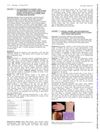
This case report details a child with a specific TNFAIP3 mutation manifesting as a severe SLE/SS phenotype, expanding the known phenotype for this genetic variant.
 June 2022 in “World Journal Of Advanced Research and Reviews”
 This case report describes successful hair regrowth and repigmentation in a patient with scalp-localized alopecia areata following treatment with Sunetics Laser therapy.
 15 citations
,
January 2021 in “Cellular and Molecular Biology”
15 citations
,
January 2021 in “Cellular and Molecular Biology” This study found that Prosopis farcta is a rich source of phenolic compounds with strong antioxidant activity, suggesting its potential for use in food, beverage, feed, and pharmaceutical applications.
 5 citations
,
October 2018 in “Dermatologic therapy”
5 citations
,
October 2018 in “Dermatologic therapy” This case report describes the first recorded instance of congenital triangular alopecia in the mid-frontal scalp region, challenging the assumption that it is restricted to the frontotemporal area.
 4 citations
,
July 2018 in “The Journal of Allergy and Clinical Immunology: In Practice”
4 citations
,
July 2018 in “The Journal of Allergy and Clinical Immunology: In Practice” This review discusses both occupational asthma, caused by work, and work-exacerbated asthma, reporting no new clinical results and highlighting their prevalence in industrialized nations.
 February 2026 in “Medicina”
 This study found that intradermal injections of Profhilo® significantly reduced skin inflammation and pain, while altering spinal cord markers in mice with ovalbumin-induced atopic dermatitis, suggesting potential therapeutic benefits for inflammatory skin conditions involving both peripheral and central processes.
 169 citations
,
June 2010 in “Molecular & cellular proteomics”
169 citations
,
June 2010 in “Molecular & cellular proteomics” This study suggests that ethylene and lignoceric acid (C24:0) may promote cotton fiber and Arabidopsis root hair growth by activating the pectin biosynthesis network.
 48 citations
,
May 1999 in “International Journal of Dermatology”
48 citations
,
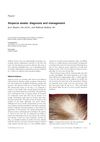
May 1999 in “International Journal of Dermatology” This article reviews the diagnosis and management of alopecia areata but reports no new research findings.
 11 citations
,
August 2016 in “Journal of dermatological treatment”
11 citations
,
August 2016 in “Journal of dermatological treatment” This study evaluated the effects of tip cryotherapy on idiopathic guttate hypomelanosis lesions, finding that 82.3% of treated lesions showed significant improvement after four months compared to only 2% of control lesions, with minimal side effects.
 11 citations
,
May 1998 in “International Journal of Dermatology”
11 citations
,
May 1998 in “International Journal of Dermatology” This case report describes a 23-year-old woman who experienced hair breakage along her anterior hairline due to the formation of bubbles in the hair shafts from blow-drying techniques.
 2 citations
,
October 2021 in “Journal of skin and stem cell”
2 citations
,
October 2021 in “Journal of skin and stem cell” This study observed that nail abnormalities often indicate underlying dermatological or systemic conditions, with psoriasis and infections being the most common causes among patients.
 March 2026 in “Berkala Ilmu Kesehatan Kulit dan Kelamin”
 In this observational study of medical students at the University of Muhammadiyah North Sumatra, no significant link was found between wearing headscarves and experiencing hair loss.
 January 2018 in “Springer eBooks”
 Congenital triangular alopecia is a harmless, non-spreading hair loss condition often seen in young children.
 September 2021 in “International Ayurvedic Medical Journal”
 This study reported that in 31 patients with diffuse hair loss, daily application of Bhringraj oil significantly reduced hair fall, dandruff, itching, and dryness over four weeks, without any adverse reactions.
 30 citations
,
May 2005 in “Pediatric dermatology”
30 citations
,
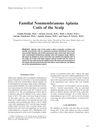
May 2005 in “Pediatric dermatology” This report reviews familial cases of aplasia cutis of the scalp, noting large irregular defects at the vertex or anterior along the sagittal suture in six families.
 28 citations
,
December 2012 in “The American Journal of Cosmetic Surgery”
28 citations
,
December 2012 in “The American Journal of Cosmetic Surgery” This study reported that treatments using ADSC-CM improved hair growth in all participants, with the most pronounced results after four sessions within three to four months.
 18 citations
,
June 2017 in “Journal of The American Academy of Dermatology”
18 citations
,
June 2017 in “Journal of The American Academy of Dermatology” In this study, trichoscopy consistently identified typical findings of frontal fibrosing alopecia, revealing three unusual clinical patterns in 18.4% of patients, which may aid in the differential diagnosis when clinical presentations are atypical.
 4 citations
,
March 2022 in “Frontiers in pharmacology”
4 citations
,
March 2022 in “Frontiers in pharmacology” This article reviews the botanical characteristics, traditional and modern medicinal uses, and market potential of Prunus mira, but reports no new clinical findings.
 2 citations
,
February 2018 in “Journal of dermatology & cosmetology”
2 citations
,
February 2018 in “Journal of dermatology & cosmetology” This article discusses triangular temporal alopecia, highlighting dermoscopy's role in diagnosis and the limited therapeutic options, without reporting new clinical results.
 2 citations
,
July 2012 in “InTech eBooks”
2 citations
,
July 2012 in “InTech eBooks” This article reviews the influence of thyroid hormone on skin and hair health, emphasizing its role in epidermal homeostasis and hair growth, but reports no new experimental results.
 1 citations
,
March 2015 in “Journal of Visualized Experiments”
1 citations
,
March 2015 in “Journal of Visualized Experiments” This study developed a method to quantify hair loss in mice, aiding the evaluation of new treatments for alopecia.
 November 2020 in “INDIAN JOURNAL OF APPLIED RESEARCH”
 This study found that women with alopecia have significantly lower tensile strength in both dry and wet hair samples compared to controls, indicating increased hair breakability.
 January 2003 in “Steinkopff eBooks”
 This review discusses the incidence, demographics, and associated conditions of alopecia areata and provides no new clinical findings.
 February 2024 in “Oriental Journal of Chemistry/Oriental journal of chemistry”
 This review reports various ethnomedicinal uses, phytochemical components, and potential pharmacological effects of Eclipta alba, highlighting benefits like wound healing and neuroprotection, though it underscores the need for further mechanism-based studies and clinical trials.
4 citations
,
January 2023 in “Journal of Clinical Investigation” This study identified a recurrent mutation in the endothelin receptor type A associated with mandibulofacial dysostosis with alopecia, and proposed a mechanism involving increased ligand affinity due to structural changes.
 February 2025 in “Eduvest - Journal Of Universal Studies”
 In a laboratory study on guinea pigs, Kepok banana peel extract serum at a 30% concentration showed promising effectiveness for hair growth, with results close to those of 5% minoxidil®, suggesting it could be a viable hair care alternative.
 12 citations
,
May 2019 in “Molecular Medicine Reports”
12 citations
,
May 2019 in “Molecular Medicine Reports” This study demonstrated that Forsythiaside A improved survival and reduced neurological deficits in rats with cerebral ischemic injury, potentially through activating Nrf2 and reducing ER stress pathways.
January 2026 in “Indian Journal of Ophthalmology - Case Reports” In this study, a rare case of a trichilemmal cyst in a 6-year-old's upper eyelid was observed; it was identified through histopathological examination after excision, highlighting the importance of considering trichilemmal cysts in atypical pediatric eyelid swellings.
352 citations
,
August 2003 in “Proceedings of the National Academy of Sciences” In this study, nestin-expressing cells in the hair follicle bulge, marked by GFP in transgenic mice, were identified as progenitors of the hair follicle outer-root sheath.
132 citations
,
September 2009 in “Experimental Dermatology” This study introduced a new classification system for distinguishing between anagen VI and early catagen stages in human hair follicle organ culture, using it to confirm eflornithine's ability to induce premature catagen.