 2 citations
,
June 2022 in “Revista de la Asociación Colombiana de Dermatología y Cirugía Dermatológica”
2 citations
,
June 2022 in “Revista de la Asociación Colombiana de Dermatología y Cirugía Dermatológica” This review discusses cultural hair care practices for African American scalp health and recommends combining clinical evaluation with cultural knowledge, but reports no new research findings.
 2 citations
,
January 2019 in “Medizinische Genetik”
2 citations
,
January 2019 in “Medizinische Genetik” Among families with pediatric brain disease, this study identified over 200 novel genetic causes, revealing potential treatment points using drug repurposing or nutritional supplementation.
 2 citations
,
May 2014 in “Journal of the Egyptian Women's Dermatologic Society (Print)”
2 citations
,
May 2014 in “Journal of the Egyptian Women's Dermatologic Society (Print)” This review examines the use of dermoscopy for diagnosing common hair disorders and highlights its importance, but it does not report new clinical results.
 2 citations
,
September 2012 in “Actas Dermo-Sifiliográficas”
2 citations
,
September 2012 in “Actas Dermo-Sifiliográficas” This article discusses the modern societal obsession with body perfection and its impact on body dissatisfaction, escalating demand for aesthetic techniques, and advertising, without reporting new research findings.
 1 citations
,
January 2026 in “Physical review. D/Physical review. D.”
1 citations
,
January 2026 in “Physical review. D/Physical review. D.” In this study, researchers found that black holes with primary Proca hair exhibit distinctive optical properties, including a two-boundary shadow structure and additional inner rings, offering novel observational signatures and potential insights into strong-gravity environments.
 1 citations
,
December 2025 in “Frontiers in Endocrinology”
1 citations
,
December 2025 in “Frontiers in Endocrinology” This review examines the potential role of gut microbiota and its metabolites in polycystic ovary syndrome (PCOS) and highlights the growing interest in this area; it reports no new clinical findings.
 1 citations
,
October 2025 in “International Journal of Nanomedicine”
1 citations
,
October 2025 in “International Journal of Nanomedicine” This review explores the potential for using exosomes in treating autoimmune skin diseases and promoting skin regeneration, highlighting current applications, delivery methods, and ongoing clinical trials while also identifying challenges and future research directions within dermatology.
 1 citations
,
October 2024 in “Journal of Clinical Immunology”
1 citations
,
October 2024 in “Journal of Clinical Immunology” This study observed that adult Netherton syndrome patients showed a range of normal to diminished immune responses to polysaccharide, conjugate, and mRNA-based vaccines, with responses generally overlapping those of healthy controls, suggesting no consistent B- or T-cell immunodeficiency in this population.
 1 citations
,
August 2024 in “World Journal of Advanced Pharmaceutical and Medical Research”
1 citations
,
August 2024 in “World Journal of Advanced Pharmaceutical and Medical Research” This review discusses the causes, symptoms, and management of Polycystic Ovarian Syndrome (PCOS) without presenting new clinical results.
 1 citations
,
August 2023 in “Curēus”
1 citations
,
August 2023 in “Curēus” This review discusses polycystic ovarian syndrome, particularly in Saudi Arabia, and metformin's use and mechanism in treating related infertility, without presenting new clinical findings.
 1 citations
,
January 2023 in “Brazilian Journals Editora eBooks”
1 citations
,
January 2023 in “Brazilian Journals Editora eBooks” Children's screen time increased during the pandemic, causing various health issues.
 1 citations
,
December 2022 in “̒Ulūm-i dārūyī”
1 citations
,
December 2022 in “̒Ulūm-i dārūyī” This study found that in a rat model, minoxidil promoted better wound healing through potential anagen hair growth effects, while dexamethasone suppressed wound healing by reducing collagen production.
 1 citations
,
January 2020 in “Elsevier eBooks”
1 citations
,
January 2020 in “Elsevier eBooks” Forensic medicine is crucial for justice and needs continuous innovation and technology integration.
 1 citations
,
May 2018 in “The journal of investigative dermatology/Journal of investigative dermatology”
1 citations
,
May 2018 in “The journal of investigative dermatology/Journal of investigative dermatology” This meeting synopsis on the 66th Annual Montagna Symposium reports no new results but outlines discussions on precision dermatology, integrating molecular insights with clinical applications for personalized skin care.
 1 citations
,
September 2017 in “Frontiers in Laboratory Medicine”
1 citations
,
September 2017 in “Frontiers in Laboratory Medicine” This review discusses recent research on the relationship between gut microflora and depression, highlighting the potential for new insights into the pathogenesis and treatment of major depressive disorder.
 1 citations
,
January 2017 in “Springer eBooks”
1 citations
,
January 2017 in “Springer eBooks” This review discusses the role of flavonoids and Nod factors in the symbiosis between legumes and rhizobia and reports no new results; the authors argue this knowledge could enhance sustainable agriculture.
 1 citations
,
April 2016 in “CRC Press eBooks”
1 citations
,
April 2016 in “CRC Press eBooks” Skin aging reflects overall body aging and can indicate internal health conditions.
 1 citations
,
January 2016 in “Asian-Australasian journal of animal sciences”
1 citations
,
January 2016 in “Asian-Australasian journal of animal sciences” In this study, the expression of Gnαs was significantly higher in black mice compared to white mice, suggesting its potential involvement in coat color formation in mice.

This study utilized a pigmented human epidermal equivalent model to incorporate melanocytes into the epidermis and found enhanced differentiation potential compared to conventional in vitro systems, reflecting in vivo cellular trajectories and highlighting melanocyte-to-keratinocyte communication pathways.
 July 2026 in “Organoid Research”
 In this review, researchers summarize key factors in constructing skin organoids, including cell source and assembly methods, and emphasize advances such as air-liquid interface culture for improving tissue development, aiming to guide standardized protocols and future clinical applications.
 July 2026 in “Quality in Sport”
 This narrative review highlights that endurance, skill-oriented athletes, and physique-oriented competitors such as bodybuilders face accelerated degradation of fillers and botulinum neurotoxin due to elevated basal metabolic rates and other factors, and raised concerns about psychological conditions like body dysmorphic disorder in these populations.
 June 2026 in “Open Access Research Journal of Biology and Pharmacy”
 This study used molecular docking simulations to identify approved drugs, including Bedaquiline and Telmisartan, with potential to treat Onchocerca volvulus infections by inhibiting key protein targets, suggesting these drugs could be repurposed for onchocerciasis treatment with further validation.
 June 2026 in “Cell Regeneration”
 This review highlights the roles of key transcription factors and signaling pathways in regulating olfactory epithelium regeneration, discussing recent advances in single-cell and spatial transcriptomics as well as organoid models to enhance understanding of olfactory regeneration mechanisms.
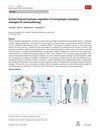
This review highlights that surface mechanical regulation can program macrophage behavior through specific mechanical cues on material surfaces, potentially advancing immunotherapies and regenerative medicine by enabling precise control over macrophage functions.
 April 2026 in “Signal Transduction and Targeted Therapy”
 In a hamster model of COVID-19, this study observed that both low and high doses of testosterone worsened illness in males, while finasteride prevented severe outcomes.
 April 2026 in “Quality in Sport”
 This review discusses the cardiovascular risks and events associated with anabolic-androgenic steroid use, suggesting the need for further research on some effects.
 April 2026 in “Al-Kufa University Journal for Biology”
 This pilot study observed that post-bariatric surgery, both zinc and iron deficiencies increased among Iraqi patients, underscoring the importance of lifelong nutritional monitoring and targeted supplementation to address these issues and prevent related complications.
 March 2026 in “Frontiers in Pharmacology”
 This study highlighted the promising health benefits of taxifolin, a flavonoid with antioxidant, anti-inflammatory, and other protective effects found in foods like onions and milk thistle, though more research is needed to fully understand its mechanisms and safety for human therapeutic use.
 March 2026 in “Physical Education Health and Social Sciences”
 In this randomized controlled trial, combining cinnamon and inositol led to significant improvements in metabolic and hormonal parameters, such as reduced LH, testosterone, fasting glucose, and ovarian ultrasound scores, in overweight women with PCOS, indicating superior benefits over either supplement alone.
 January 2026 in “GSC Biological and Pharmaceutical Sciences”
 This study used molecular docking simulations to identify Adapalene, Diosmin, and Azelastine as promising drugs for repurposing against onchocerciasis by targeting proteins in the parasite and its endosymbiont; further research is needed to confirm their efficacy.