 July 2025 in “Journal of Dermatology Research Reviews & Reports”
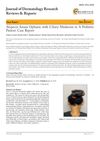
 In this case study, a 10-year-old girl with infantile ophiastic alopecia areata and ciliary madarosis showed excellent hair and eyelash regrowth after 56 days of treatment involving oral corticosteroids, topical minoxidil, and clobetasol hair lotion, following an initial diagnosis and psychological evaluation.
21 citations
,
August 1984 in “BJOG An International Journal of Obstetrics & Gynaecology” This study found no differences in ovarian function between renal transplant recipients treated with either cyclosporin A or azathioprine and prednisone, although excessive hair growth was common in both groups.
 April 2019 in “Journal of the Endocrine Society”
 In this case report, a 48-year-old woman's hyperandrogenism, presenting with symptoms like acne and hirsutism, was attributed to a benign Leydig cell tumor, which resolved after surgical removal.
 55 citations
,
July 1999 in “Clinics in Sports Medicine”
55 citations
,
July 1999 in “Clinics in Sports Medicine” This review discusses recent data on the use of anabolic-androgenic steroids and other steroid compounds and reports no new clinical results.
December 2022 in “CRC Press eBooks” This research outlines that antiandrogens have mechanisms involving competitive inhibition of androgen binding and enzyme inhibition, with contraindications during pregnancy due to potential fetal risks.
1 citations
,
October 2018 in “InTech eBooks” This chapter reviews ethosomes for targeted drug delivery to the scalp in androgenetic alopecia and reports no clinical results; the authors emphasize reducing systemic side effects.
 6 citations
,
February 2020 in “Journal of Natural Products”
6 citations
,
February 2020 in “Journal of Natural Products” In this chemical investigation, cyclospongiaquinone 1 from the sponge Verongula cf. rigida showed strong steroid 5α-reductase inhibitory activity, comparable to that of finasteride.
1 citations
,
January 2010 in “uO Research (University of Ottawa)” This research found that the widely used herbicide atrazine may alter Northern leopard frog development, affecting metamorphosis success, sex ratio, and hormone-related gene expression.
This study found a significant negative correlation between adrenal hormone DHEAS levels and ovarian volume in Greek women with polycystic ovary syndrome, though further clinical research is needed to confirm these results.
17 citations
,
July 2013 in “Amino Acids” This study found that elevated epidermal ODC activity in transgenic mice promotes skin tumor development by recruiting bulge stem cells, rather than through reactive oxygen species generation by polyamine catabolic oxidases.
 January 2023 in “Case Reports in Obstetrics and Gynecology”
 This case report highlights the need for early diagnosis and treatment of ovarian hyperthecosis to enhance the quality of life and health outcomes for affected patients.
January 2008 in “LA Referencia (Red Federada de Repositorios Institucionales de Publicaciones Científicas)” This study found that the gene for the enzyme aromatase is expressed in scalp hair follicles of women and is negatively correlated with LH levels, potentially reflecting the hormonal environment of hair follicles in PCOS.
This study identified seven novel CYP17A1 inhibitor scaffolds as potential leads for treating polycystic ovary syndrome through an in silico approach, demonstrating favorable interactions, drug-like properties, and predicted bioactivities warranting further experimental validation.
 22 citations
,
January 2002 in “Treatments in endocrinology”
22 citations
,
January 2002 in “Treatments in endocrinology” This review examines the role of androgens in cutaneous disorders and the potential therapeutic effects of different oral contraceptives, noting variations in individual responses and the influence of genetic and local factors but reports no new clinical results.
1 citations
,
January 2005 in “PubMed” This review explores current concepts of steroid action in skin health and healing but provides no new clinical findings.
17 citations
,
November 2009 in “Dermato-endocrinology” This study found that a series of three monthly courses of medium-dose prednisolone pulse therapy was effective and well tolerated in most patients with active, multifocal alopecia areata but not in those with totalis/universalis.
 44 citations
,
May 2012 in “Endocrinology”
44 citations
,
May 2012 in “Endocrinology” This review discusses the etiology of polycystic ovary syndrome, emphasizing the role of genetic and environmental factors, and reports no new experimental findings.
1 citations
,
September 2023 in “Journal of the American Academy of Dermatology” Mini pulse corticosteroid therapy with oral dexamethasone is effective and has fewer side effects for treating extensive alopecia areata.
53 citations
,
January 1985 in “Acta obstetricia et gynecologica Scandinavica” This study found that an 8-month treatment with a low-dose oral contraceptive significantly reduced testosterone levels and hair growth in women with polycystic ovary syndrome and hirsutism, with minimal side effects.
 1 citations
,
December 2017 in “Research for Rural Development/Research for Rural Development (Online)”
1 citations
,
December 2017 in “Research for Rural Development/Research for Rural Development (Online)” This study found no correlation between clinical signs and sex steroid levels in ferrets with hyperadrenocorticism and noted that androstenedione was elevated in many cases.
20 citations
,
April 2000 in “Experimental dermatology” This study observed that overexpression of the enzyme ODC in transgenic mice caused hair loss and skin changes similar to human papular atrichia, suggesting that ODC might be involved in a critical hair follicle function pathway.
 80 citations
,
November 1975 in “Acta dermato-venereologica”
80 citations
,
November 1975 in “Acta dermato-venereologica” This study found that while some patients with severe alopecia areata responded to high-dose prednisolone, the response was inconsistent and the therapy's risks prevent recommending it for general use.
August 2025 in “OPAL (Open@LaTrobe) (La Trobe University)” This study found that hydroxycinnamate derivatives, especially a compound named 10a, effectively inhibited SRD5A1 activity and protein expression in cell assays, suggesting potential for treating androgen-related conditions.
2 citations
,
October 2024 in “Archives of Dermatological Research”  12 citations
,
January 2009 in “Gynecological Endocrinology”
12 citations
,
January 2009 in “Gynecological Endocrinology” This case report identified ovarian hyperthecosis as the cause of recent-onset androgenic symptoms in a 73-year-old woman, which was confirmed by ovary removal and led to symptom improvement.
 November 2024 in “Pharmaceutics”
 This study found that dutasteride-loaded transfersomes, compared to traditional liposomes, better target hair follicles by releasing the drug in a more controlled manner, as shown in vitro with enhanced follicular targeting (Tf = 0.32 versus 0.15, p < 0.005) using porcine ear skin.
 4 citations
,
January 2018 in “General Physiology and Biophysics”
4 citations
,
January 2018 in “General Physiology and Biophysics” In this study, finasteride-treated WAG/Rij rats showed a significant increase in spike-wave discharges when administered endogenous steroids THPROG and THDOC, indicating potential exacerbation of absence seizures.
 21 citations
,
February 2021 in “BMJ case reports”
21 citations
,
February 2021 in “BMJ case reports” This case study potentially links the use of anabolic steroids to increased severity of COVID-19 in a healthy 28-year-old man, with marked symptom improvement following treatment with proxalutamide.
February 2025 in “Clinical Chemistry” This case study reported a 34-year-old woman presenting with secondary amenorrhea, hirsutism, and obesity showed elevated testosterone and anti-Müllerian hormone levels, leading to the exclusion of nonclassical congenital adrenal hyperplasia as a diagnosis.
19 citations
,
June 2013 in “Journal of Neuroendocrinology” This study suggests that neurosteroids, particularly allopregnanolone, may play a crucial role in the progression and management of epilepsy, as indicated by their effects on seizure modulation in both rats and humans.