 April 2026 in “Boletín Médico Del Hospital Infantil de México (English Edition)”
 This study found that 90% of pediatric patients with alopecia areata had comorbidities, including allergic rhinitis and atopic dermatitis, with localized AA being associated with better treatment outcomes and fewer relapses compared to non-localized forms.
 May 2026 in “International Journal of Advanced Biochemistry Research”
 In this case study, a three-year-old Labrador with canine atopic dermatitis showed significant improvement in pruritus and skin lesions after treatment with oclacitinib and supportive therapy over a one-month follow-up.
 December 2024 in “Frontiers in Genetics”
 This review discusses the genetic causes and pathogenesis of Olmsted syndrome, emphasizing the potential for a genotype-phenotype correlation due to TRPV3 mutations, and explores avenues for individualized treatment developments for this condition.
January 2023 in “Odisha Journal of Psychiatry” This case study describes a patient initially misdiagnosed with pediculosis capitis, later identified as having trichotillomania, highlighting the importance of thorough behavioral inquiries by physicians in such cases.
 4 citations
,
January 2014 in “Dermatology”
4 citations
,
January 2014 in “Dermatology” This case report details a woman with autoimmune primary ovarian insufficiency linked to hormonal contraception discontinuation, who achieved pregnancy through ovarian stimulation and in vitro fertilization despite typically low fertility in such conditions.
 August 2021 in “Acta medica Philippina”
 This case study highlights how trichoscopy helped differentiate between diffuse alopecia areata and trichotillomania in an 11-year-old girl, demonstrating its importance in distinguishing hair disorders with similar presentations.
14 citations
,
August 2013 in “Journal of Parasitology” This study reported that 39.7% of Amargosa voles had mite-associated lesions, which may severely impact their health and fitness.
 May 2021 in “Journal of the Endocrine Society”
 This case report describes the rare association of an ovarian Leydig cell tumor and primary hyperparathyroidism in a postmenopausal woman, highlighting the importance of considering rare causes in patients with virilizing symptoms.
November 2017 in “Arthritis Care & Research” 2 citations
,
May 2022 in “International journal of trichology” This article reviews the condition plica neuropathica, including its manifestations, potential causes, and treatment, but it does not provide new clinical findings.
April 2011 in “Companion Animal” This article reviews the clinical presentation, diagnosis, and management of feline pododermatitis, discussing conditions like trombiculidiasis and bacterial paronychia, but reports no new clinical results.
65 citations
,
March 2004 in “Journal of Clinical Investigation” In this study, overexpression of ornithine decarboxylase accelerated basal cell carcinoma in Ptch1+/– mice under UVB exposure, while its inhibition reduced tumor induction, suggesting potential chemoprevention strategies in humans.
4 citations
,
January 2018 in “Indian dermatology online journal” This case report found that dermoscopy, showing characteristic "comma" and "corkscrew" hairs, effectively identified tinea capitis in a 7-year-old girl, allowing for early treatment before confirmation with fungal culture.
 3 citations
,
January 2021 in “Skin appendage disorders”
3 citations
,
January 2021 in “Skin appendage disorders” This case report describes how trichoscopy helped diagnose tinea capitis disguised as female pattern hair loss in cases of endothrix infection, highlighting its usefulness in avoiding misdiagnosis.
April 2019 in “The journal of investigative dermatology/Journal of investigative dermatology” In this study, researchers observed a strong association between keloid scars and atopic dermatitis, suggesting a link between keloids and signs of atopy in a diverse patient population.
June 2019 in “bioRxiv (Cold Spring Harbor Laboratory)” This study found that atopic dermatitis patients had a 30% lower prevalence of benign paroxysmal positional vertigo, with socioeconomic factors influencing these patterns.

This case report described a five-year-old girl with alopecia areata totalis who experienced significant hair regrowth after receiving dental rehabilitation for extensive untreated caries and chronic oral infection, suggesting a possible link between chronic oral infection and alopecia areata.
July 2000 in “The Pediatric Infectious Disease Journal” This case report highlights tinea faciei as a potential diagnosis for vesicular lesions in neonates, suggesting its consideration over more invasive diagnostics for similar presentations.
In this case study, treatment with terbinafine effectively resolved symptoms of tinea capitis in an eight-year-old male, highlighting trichoscopy as a valuable diagnostic tool for this common fungal scalp infection and proposing its integration with clinical data for quicker diagnosis in settings lacking mycological facilities.
 13 citations
,
October 2015 in “Journal of the European Academy of Dermatology and Venereology”
13 citations
,
October 2015 in “Journal of the European Academy of Dermatology and Venereology” The document concludes that early recognition and appropriate treatment of red scalp, red ear, and red scrotum syndromes can lead to remission.
June 2025 in “Judi Clinical Journal” In this case report, researchers described an exceptionally rare occurrence of a 19-year-old female having three concurrent pilonidal sinuses at intermammary, umbilical, and sacrococcygeal locations, with surgical and conservative treatment leading to favorable healing outcomes.
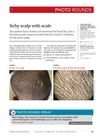 December 2020 in “The Journal of Family Practice”
 This report describes an 11-year-old boy in Panama who visited a village health center due to scalp itching and subtle hair loss, previously treated for head lice, with no hair pulling reported.
January 2002 in “대한피부과학회지” This study analyzed clinical manifestations in 18 dermatomyositis patients, noting that all exhibited skin rash and variable symptoms like itching and muscle weakness, with treatment involving prednisolone and hydroxychloroquine.
This study found significant cephalometric changes in patients with skeletal Class III malocclusion treated with rapid maxillary expansion and reverse traction, demonstrating maxilla advancement and improved facial convexity.
98 citations
,
July 1968 in “Archives of Dermatology” This study found that applying scalp sebum from young men to rabbit ear canals caused follicular hyperkeratosis, suggesting sebum stimulates the formation of comedones, a key feature in acne vulgaris.
130 citations
,
December 2022 in “Antioxidants” This review discusses the antioxidant activity of natural polysaccharides, highlighting their potential applications in areas like drug delivery and tissue engineering, but reports no new experimental findings.
 June 2026 in “Acta Pharmacologica Sinica”
 This review highlights how integrating medicinal chemistry with delivery science could transform the limitations of PROTACs—such as poor solubility and low cell permeability—into strengths, potentially advancing these compounds from experimental stages to clinical applications by optimizing their delivery and enhancing therapeutic efficacy.

This study reviewed the efficacy of hair intradermotherapy for treating androgenetic alopecia, finding that the technique, whether used alone or with other interventions, can increase hair density, reduce hair loss, and improve patient self-esteem, although professional supervision is recommended to minimize adverse effects.
 February 2026 in “International Journal of Research in Dermatology”
 In this report, two adult cases of tinea capitis with unusual symptoms like pustules and non-scarring alopecia were diagnosed based on clinical and pathological findings, and successfully treated with oral Griseofulvin and topical luliconazole cream.
April 2025 in “Experimental Eye Research” In this study, researchers characterized the retinal structure and function of the Oatrhg mouse model of gyrate atrophy, finding localized atrophy without significant retina-wide functional impact, suggesting the model may be useful for testing new treatments using multimodal retinal imaging.