 1 citations
,
August 1946 in “Archives of dermatology”
1 citations
,
August 1946 in “Archives of dermatology” This case presentation describes an adult with tinea capitis and related symptoms who was found to have a Trichophyton gypseum infection.
4 citations
,
June 1989 in “Archives of Dermatology” This case report describes a 65-year-old man diagnosed with a trichofolliculoma, a benign tumor originating from hair follicles, which appeared as a persistent pore on his cheek.
July 2026 in “SKIN The Journal of Cutaneous Medicine” This case report details a 17-year-old male with Alopecic and Aseptic Nodules of the Scalp successfully treated with doxycycline and intralesional corticosteroids, highlighting the importance of thorough evaluation for accurate diagnosis.
11 citations
,
March 2016 in “PubMed” This article highlights that tinea capitis in adults is often misdiagnosed, leading to treatment delays, and suggests fungal testing for those unresponsive to seborrheic dermatitis or psoriasis treatments.
48 citations
,
March 1993 in “The Laryngoscope” This study found that EGF receptors are aberrantly regulated and persist in cholesteatoma epithelium, suggesting a hyperproliferative character compared to normal human skin.
January 2025 in “Veterinary Record Case Reports” In this case report, a young male beagle diagnosed with canine eosinophilic dermatitis, characterized by intraepidermal pustules and itchy skin, showed significant improvement with prednisolone treatment without recurrence, contrasting with common reports of recurrence in similar cases.
52 citations
,
April 2000 in “International Journal of Dermatology” In this study of tinea capitis in Benghazi, Libya, the most common form identified was the gray patch type, with Trichophyton violaceum being the predominant causative agent.
2 citations
,
July 2011 in “International Journal of Dermatology” This case report describes three instances of eosinophilic pustular folliculitis lacking visible pustules, which histopathology confirmed involve eosinophilic infiltration around hair follicles.
 3 citations
,
January 2017 in “Journal of Pakistan Association of Dermatology”
3 citations
,
January 2017 in “Journal of Pakistan Association of Dermatology” This study observed that tinea capitis is prevalent among school children in Karachi, with T. violaceum as the most common organism and asymptomatic carriers possibly facilitating its spread.
 November 2023 in “International Journal of Infectious Diseases”
 In this case study, dermoscopy successfully visualized head lice and their eggs on a 19-year-old girl's scalp, aiding in the diagnosis of pediculosis capitis, which was then treated with sulfur ointment and hair shaving.
April 1992 in “Pediatrics in Review” This review discusses diagnostic methods for superficial fungal infections in children and does not report new clinical results; the authors note the ease and simplicity of these diagnostic approaches.
 44 citations
,
March 2016 in “Frontiers in cellular neuroscience”
44 citations
,
March 2016 in “Frontiers in cellular neuroscience” In this study using zebrafish, four bisbenzylisoquinoline derivatives were found to protect hair cells from aminoglycoside-induced damage without reducing antibiotic efficacy, potentially leading to therapies for patients undergoing such treatments.
 January 2024 in “The Indian Veterinary Journal”
 In this case study involving a two-month-old crossbred kid, severe skin conditions characterized by alopecia and pruritic lesions were linked to Malassezia yeast and bacteria, and successful treatment was observed with ketoconazole and supportive care.
1 citations
,
June 2018 in “Journal of General-Procedural Dermatology & Venereology Indonesia” This case study reports that combining skin debridement with topical and systemic antifungals improved treatment outcomes for kerion celsi in a 5-year-old boy, preventing scarring alopecia.
February 2026 in “American Journal of Case Reports” This case report describes a 26-year-old woman with an uncommon presentation of varicella zoster virus interstitial keratitis misdiagnosed as corneal intraepithelial neoplasia; the correct identification using diagnostic tools such as AS-OCT prevented unnecessary surgical interventions and allowed for effective antiviral treatment.
5 citations
,
January 2000 This study observed a new skin disease in farmed mink in Canada, suggesting that an unidentified infectious agent, in association with secondary bacterial infection, may cause the condition.
3 citations
,
March 2013 in “American Journal of Dermatopathology” This study found that ossification in trichilemmal cysts may be more common than previously thought, often associated with cyst wall rupture, and reports a novel case of ossifying TC with extramedullary hematopoiesis.
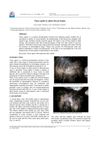
This report presents the first known case of tinea capitis caused by Microsporum canis in an adult female in the authors' locality, responsive to oral fluconazole treatment.
 August 2019 in “International journal of current microbiology and applied sciences”
 This study found that among 86 skin scrapings from various dog breeds with ringworm lesions, Microsporum species were the predominant fungal infection, with Labradors showing the highest infection rate. Miconazole was most effective in antifungal susceptibility tests.
September 2025 in “JAAD Case Reports” Hair extensions can worsen scalp conditions and should be avoided in those with alopecia.
36 citations
,
January 1994 in “Cell and Tissue Research”  December 2023 in “Journal of comparative pathology”
 This case report describes the first known instance of a dilated pore of Winer, a type of follicular cyst, identified in a dog, specifically a 9-year-old neutered Goldendoodle, which was surgically excised after causing pain due to periodic ruptures.
This article discusses the inflammation process in dissecting cellulitis and folliculitis keloidalis, noting the role of follicular rupture and hair fragments while reporting no new results; the authors highlight differences in bacterial presence and pathogenesis understanding.
 January 2019 in “Open access journal of mycology & mycological sciences”
 This article discusses tinea capitis, highlighting its causes, symptoms, diagnostic methods, and the importance of selecting treatment based on the causal agent for effective outcomes; it reports no new clinical results.
April 2002 in “Postgraduate medicine” This case report describes a 4-year-old African American boy with tinea capitis characterized by itchy, scaly patches and hair loss, diagnosed through microscopic examination after initial treatments were only partially effective.
43 citations
,
January 2015 in “Journal of Cutaneous Medicine and Surgery” This study found that most patients with folliculitis decalvans showed improvement and remission with oral antibiotics, although some experienced relapses and required prolonged treatment.
6 citations
,
October 2006 in “International Journal of Dermatology” This article discusses central trichoptilosis with onycholysis but provides no new clinical results.
 February 2024 in “Curēus”
 In this report, a rare case of hair tourniquet syndrome was described in a six-month-old girl, involving the uvula and requiring surgical intervention to remove the constricting hair.
 January 2025 in “Advances in Clinical Medicine”
 This article discusses the clinical and basic research on the use of traditional Chinese medicine external treatments for Hashimoto thyroiditis, highlighting accumulated experience despite not detailing specific study results.
 April 2014 in “Jurnal Biomedik : JBM”
 This case report diagnosed an 8-year-old girl with trachyonychia and secondary onychomycosis, finding that spontaneous improvement is common, making specific therapy often unnecessary despite treatment challenges with associated fungal infections.