4 citations
,
April 2019 in “JAAD Case Reports” This article reviews the clinical features of dermatopathia pigmentosa reticularis, highlighting its characteristic triad of symptoms, but provides no new research results.
44 citations
,
May 1980 in “Archives of Dermatology” This case study discusses a patient with persistent 20-nail dystrophy following alopecia areata, suggesting that "20-nail dystrophy" describes a condition with multiple potential causes.
 13 citations
,
September 1989 in “International Journal of Dermatology”
13 citations
,
September 1989 in “International Journal of Dermatology” Carbamazepine may cause reversible nail detachment.
2 citations
,
May 2024 in “International Journal of Dermatology”  February 2026 in “Journal of Cutaneous and Aesthetic Surgery”
 In this study, a case of a 20-year-old woman revealed ectopic acanthosis nigricans at a post-syndactyly-release surgical site, suggesting this rare condition could result from epidermal–dermal mismatch and altered growth factor signaling in grafted skin, without indicating any metabolic or malignancy concerns.
1 citations
,
January 2008 January 2026 in “Clinical Case Reports” This case report describes a 6-year-old girl diagnosed with the rare concurrence of monilethrix and trichorrhexis nodosa, characterized by sparse, brittle hair, who showed minimal clinical improvement with low-dose oral and topical minoxidil treatment.
January 2012 in “Case reports in pediatrics” This case study reports the first instance of localized acquired hypertrichosis in a pediatric patient following splint application after forearm surgery, with hair growth returning to normal within eight months.
2 citations
,
January 2007 in “Actas Dermo-Sifiliográficas” This case report describes a unilateral contact dermatitis caused by shoe dye containing 4-aminoazobenzene, which was confirmed with patch testing, highlighting its atypical presentation.
1 citations
,
April 2021 in “Journal of Cosmetic Dermatology” In this placebo-controlled clinical study, a cream containing 4% capryloyl glycine and 1% glycine soy‐fermented extract effectively inhibited ODC1 activity and improved hypertrichosis in 91.7% of Caucasian female patients on the forearms, whereas no improvement was observed with the placebo.
In this dermatopathologic examination of an 88-year-old man with progressive eyelash loss and scale on the eyelids, the best diagnosis was suggested as either alopecia areata, alopecia mucinosa, or folliculotropic mycosis.
31 citations
,
October 2018 in “Journal of the European Academy of Dermatology and Venereology” In this study, trichoscopic examination found distinct hair characteristics for diagnosing eyebrow loss: alopecia areata is marked by features like exclamation mark hairs, while frontal fibrosing alopecia shows dystrophic hairs and distinctive regrowth patterns.
76 citations
,
March 2008 in “Journal of the American Academy of Dermatology” This study found that videodermoscopy can help diagnose nailbed psoriasis by revealing distinctive hyponychial capillary patterns, which correlated with disease severity and response to treatment.
 10 citations
,
February 2015 in “Clinics in Dermatology”
10 citations
,
February 2015 in “Clinics in Dermatology” This article discusses various periocular conditions like madarosis, milphosis, trichomegaly, and dermatochalasis, and highlights their potential link to underlying local and systemic diseases, but reports no new clinical findings.
 4 citations
,
December 2013 in “The Journal of Dermatology”
4 citations
,
December 2013 in “The Journal of Dermatology” This letter to the editor discusses a case of delayed-onset pachyonychia congenita linked to a new mutation in keratin 6b but presents no new research findings.
 2 citations
,
August 2014 in “Archivos argentinos de pediatría”
2 citations
,
August 2014 in “Archivos argentinos de pediatría” This report describes a 6-year-old girl with Turner syndrome and coexisting psoriasis, alopecia areata, and trachyonychia, suggesting a potential link between these conditions.
8 citations
,
June 2016 in “Journal of Investigative Dermatology” A rare genetic deletion in the KRT1 gene causes unique skin symptoms in a family.
 18 citations
,
August 2018 in “The FASEB journal”
18 citations
,
August 2018 in “The FASEB journal” This study found that Hoxc13-/- rabbits exhibit complete hair loss on the head and dorsum, providing a potential model for understanding human ECTD-9 and related dermatological conditions.
 September 2025 in “Scientific periodicals of Ukraine”
 This study reports on a 46-year-old patient with pseudopelades of Brocq, highlighting the effectiveness of early diagnosis and treatment in preventing atrophy and controlling hair loss, as positive clinical outcomes were noted after prescribed therapy.
22 citations
,
July 2006 in “Annals of The Royal College of Surgeons of England” This case report aims to raise physician awareness about 'toe-tourniquet' syndrome, which can lead to digit loss if not promptly treated, and to prevent its misdiagnosis as child abuse.
 September 1998 in “Journal of The European Academy of Dermatology and Venereology”
 Old people's nails often have problems due to body changes, more diseases, and self-care difficulties, affecting their movement and hand use.

This case study describes a 31-year-old man with myotonia and a history of hypertrophic cardiomyopathy and androgenic alopecia, who presented with arm and leg weakness.
5 citations
,
March 1943 in “Archives of Dermatology and Syphilology” This report describes a rare case of a woman with keratosis follicularis presenting with extensive alopecia and nail abnormalities, adding to the medical literature due to its unusual presentation.
 108 citations
,
March 2011 in “Archives of Dermatology”
108 citations
,
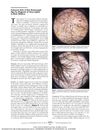
March 2011 in “Archives of Dermatology” Corkscrew hair may be a new sign for quickly diagnosing scalp fungus in black children.
 1 citations
,
January 2016 in “Journal of cosmetology & trichology”
1 citations
,
January 2016 in “Journal of cosmetology & trichology” Trichoscopy helped diagnose and treat a child's fungal scalp infection by spotting specific hair shapes.
January 2005 in “Journal of Cutaneous Pathology” This report describes a unique benign neoplasm on the nail unit called onychoblastoma, which histologically resembles a trichoblastoma, marking the first documented case of this tumor type.
 December 2025 in “Clinical Cosmetic and Investigational Dermatology”
 In this report, a unique female presentation of IFAP syndrome is described, featuring musculoskeletal contractures but no photophobia, highlighting the importance of early detection and multidisciplinary care to improve outcomes and prevent disability.
20 citations
,
January 1997 in “Dermatology” This case report describes a 16-year-old with ectrodactyly-ED-clefting syndrome, where scarring alopecia with follicular involvement appeared during puberty, possibly due to anatomic hair abnormalities.
14 citations
,
January 1995 in “Archives of Physical Medicine and Rehabilitation” This case report describes an individual who developed both localized hypertrichosis and ipsilateral dyshidrotic dermatitis following multiple fractures and cast application, with symptom resolution similar to when these conditions occur independently.
April 1977 in “Pediatric Research”