Search
for
Sort by
Research
900-930 / 1000+ resultsresearch HAIR TONIC OF BROCCOLI (BRASSICA OLERACEA VAR. ITALICA) EXTRACT: FORMULATION, PHYSICAL CHARACTERISTIC, STABILITY AND HAIR GROWTH ACTIVITY TEST
This study found that a hair tonic containing 40% broccoli stalks extract was more effective in promoting hair growth in male white rats compared to lower concentrations, while also maintaining stable physical characteristics and safety during testing.
research Spironolactone therapy for hyperandrogenic anovulatory women--clinical and endocrinological study.
This study found that spironolactone may improve acne and some ovarian functions in patients with irregular menstrual periods and androgenic symptoms, while causing few side effects.
research Lanceolate hair-J (lahJ ): A mouse model for human hair disorders
This study investigated a spontaneous mutation in mice resulting in hair abnormalities and elevated IgE levels, which resembles human Netherton's syndrome and monilethrix.

research Role of cholesterol sulfate in epidermal structure and function: Lessons from X-linked ichthyosis
This paper discusses X-linked ichthyosis and its genetic causes, focusing on biochemical pathways and their role in epidermal differentiation and barrier function, but it presents no new clinical findings.

research A Photo-Crosslinked Casein-Tannic Acid System for Enhanced Hair Protection: A Green Chemistry Approach
In this study, researchers developed an environmentally friendly hair coating from casein proteins and tannic acid, enhancing the tensile strength of virgin Asian hair by approximately 21% compared to untreated hair, while maintaining elasticity.
research A completely polyherbal conditioning and antioxidant shampoo: A phytochemical study and pharmaceutical evaluation
This study concluded that the formulated polyherbal shampoo is a chemical-free product with nourishing, conditioning, cleansing, and antimicrobial effects.
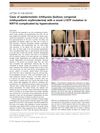
research Case of epidermolytic ichthyosis (bullous congenial ichthyosiform erythroderma) with a novel L157P mutation in KRT10 complicated by hypercalcemia
A man with a rare skin condition and a new gene mutation developed high calcium levels due to his treatment.

research Quintaquinone, a Merosesquiterpene from the Yellow Sponge Verongula cf. rigida Esper
In this chemical investigation, cyclospongiaquinone 1 from the sponge Verongula cf. rigida showed strong steroid 5α-reductase inhibitory activity, comparable to that of finasteride.
research Antioxidant, Black Hair, and Hair Growth Effect of Mixed Extracts of Nardostachys jatamansi, Ocimum basilicum and Crocus sativus
This study found that a mixed extract of N. jatamansi, O. basilicum, and C. sativus, particularly when extracted via steaming and ultrasonic methods, increased antioxidant content, stimulated melanin production for black hair, and promoted hair growth in mouse models, while maintaining high cell viability.
research Importance of Citrullination on Hair Protein Molecular Assembly During Trichocytic Differentiation
research Cyclic ADP-Ribose Modulates Intracellular Calcium Homeostasis and Anagen-Associated Signaling Pathways in Human Hair Follicle Dermal Papilla Cells
In this study, cyclic ADP-ribose (cADPR) treatment in human hair follicle dermal papilla cells was associated with increased intracellular calcium retention and activated anagen-related signaling without causing significant cytotoxicity, indicating its potential impact on hair growth processes.

research Investigating bioactive phytochemicals in bulb and shoot of Allium longisepalum Bertol. from Iran
This study analyzed the bioactive compound profiles of Allium longisepalum from Iran, finding unique metabolites with potential antioxidant, allelopathic, antibacterial, anti-inflammatory, anticarcinogenic, and hair growth-enhancing properties, revealing the plant's chemical diversity and therapeutic potential.

research Study to compare the efficacy of 50% glycolic acid with 65% trichloroacetic acid in the treatment of atrophic acne scar by CROSS technique
In this study, 65% TCA showed better improvement for acne scars compared to 50% GA, but GA may be a safer alternative with fewer adverse effects.
research Oral spironolactone therapy for female patients with acne, hirsutism or androgenic alopecia
This article discusses oral spironolactone therapy for female patients with acne, hirsutism, or androgenic alopecia and reports no new clinical results.

research Accelerative action of topical piperonylic acid on mice full thickness wound by modulating inflammation and collagen deposition
In this study, topical piperonylic acid was found to improve wound healing in mice by activating EGFR and modulating gene expression related to the healing process.

research Molecular docking studies and ADME-Tox prediction of phytocompounds from Merremia peltata as a potential anti-alopecia treatment
This study reported that compound 16 (olean-12-en-3beta-ol, cinnamate) from Merremia peltata showed potential as an androgen receptor antagonist, suggesting it may benefit alopecia treatment based on molecular docking and ADME-Tox predictions.

research Evaluation of Paraoxonase 1 Serum Level in Male Androgenetic Alopecia Patients
This study found that male patients with androgenetic alopecia had lower serum levels of the antioxidant enzyme paraoxonase 1 compared to healthy controls.
research Lung Cancer Chemoprevention with Retinol Palmitate: Preliminary data from a randomized trial on stage la non small-cell lung cancer
This study found that retinol palmitate treatment in patients with stage Ia non-small-cell lung cancer may reduce cancer relapses, but longer follow-up is needed to confirm its efficacy.

research PEGylated Flavonoid Aspasomes as a Brain-Targeted Nano-Vesicular Platform for Enhanced Neuroprotection in Stress-Induced Cognitive Dysfunction
This study found that PEGylated LUT-Aspasomes significantly improved neuroprotective effects in stressed rats, enhancing spatial memory, reducing depressive-like behavior, and preserving hippocampal architecture better than free luteolin. Additionally, it increased brain delivery and stability, suggesting potential for treating stress-related neurobehavioral disorders.

research Biotics for Acne-Prone Skin and Scalp Disorders: A Scoping Review
This review assessed dermo-cosmetic treatments using prebiotics, probiotics, synbiotics, and other biotics for acne and scalp disorders, finding potential benefits, especially with multi-strain or synbiotic formulations, although challenges like formulation stability and the need for larger trials persist.
research The versatility of azelaic acid in dermatology
This review found the strongest evidence supporting azelaic acid's use in treating rosacea, with somewhat less evidence for its effectiveness in melasma and acne vulgaris, and weaker support for its use in conditions like hidradenitis suppurativa and keratosis pilaris.
research Uptake and Utilisation of Amino Acids by Human Hair Follicles and Related Cells
This study found that cysteine and arginine are crucial for hair growth in hair follicles, with cysteine affecting hair fibre diameter and arginine involved in protein incorporation and energy metabolism.

research Biological and Functional Properties of Wedelolactone in Human Chronic Diseases
This review discusses the potential therapeutic applications of wedelolactone, a compound in Eclipta prostrata, for various chronic human diseases and reports no new clinical results.

research Taurine, a non-proteinous essential amino acid for human body systems: an overview
This review discusses the potential clinical benefits and functional properties of taurine as a conditionally essential amino acid, noting its presence in energy drinks, but reports no new experimental results.
research Glycine Inhibits Melanogenesis in Vitro and Causes Hypopigmentation in Vivo
This study found that glycine treatment inhibited melanogenesis in B16F0 melanoma cells and reduced melanin content in C57BL/6J mice by down-regulating tyrosinase protein levels.
research In Vivo and In Vitro Evaluation of PTeCA (1H‐Pyrrole‐2,3,4,5‐Tetracarboxylic Acid) in Hair Matrix as a Marker for Oxidative Cosmetic Treatment
This study observed that the degradation product PTeCA significantly increased in hair treated with oxidative cosmetics, suggesting it could be a reliable marker for detecting such treatments, with a proposed PTCA cut-off value using PTeCA as the gold standard.

research Loss of adipocyte phospholipase gene PLAAT3 causes lipodystrophy and insulin resistance due to inactivated arachidonic acid-mediated PPARγ signaling
This study found that individuals with homozygous loss-of-function mutations in PLAAT3 experience a novel type of partial lipodystrophy linked to defects in white adipose tissue differentiation and function.
research Effect of Dieckol, a Component of Ecklonia cava, on the Promotion of Hair Growth
This study found that Ecklonia cava enzymatic extract, particularly its component dieckol, promoted hair growth by increasing dermal papilla cell proliferation and inhibiting 5α-reductase activity in cultured vibrissa follicles and C57BL/6 mice.
research Baricitinib Attenuates IFN-γ and Polyinosinic:polycytidylic Acid‒Induced Mitochondrial Damage and Inflammasome Activation in Human Keratinocytes
Baricitinib reduces inflammation and mitochondrial damage in skin cells.