March 2026 in “Journal of Bioscience and Bioengineering” Oxytocin from hair cells helps hair growth and stem cell increase.
 August 2008 in “Obstetrics & gynecology science”
 This review discusses the various features, diagnostic challenges, and associated immediate and long-term morbidities of polycystic ovary syndrome, highlighting its significant impact on quality of life and costs, but reports no new clinical results.
This case study suggests that obstructive sleep apnea syndrome may be hereditary in patients with connective tissue disorders due to a variant in the COL1A2 gene.
 45 citations
,
January 2006 in “Endocrine journal”
45 citations
,
January 2006 in “Endocrine journal” To diagnose Polycystic Ovarian Syndrome, two out of three signs—irregular periods, high male hormone levels, or cysts on the ovaries—are needed.
3 citations
,
May 2024 in “BMC Medical Genomics” This study is the first to identify a de novo heterozygous frameshift insertion variant in the ARID1B gene as a cause of Coffin-Siris syndrome with an association to excessive early-onset high myopia.
 2 citations
,
August 2023 in “Human Reproduction”
2 citations
,
August 2023 in “Human Reproduction” This update of the 2023 International Guideline for PCOS offers refined diagnostic criteria and management recommendations, emphasizing evidence-based care, but notes that research quality remains low to moderate.
 January 2025 in “The Analyst”
 In this study, researchers identified a novel biomarker of oxalate metabolism, which plays a crucial role in conditions like hyperoxaluria and kidney stones, marking the first time this detection has been reported.
12 citations
,
August 2011 This paper discusses tinea capitis in adults, emphasizing that it particularly affects postmenopausal African American or Black women, and notes challenges in treatment due to antifungal resistance.
5 citations
,
October 2001 in “British Journal of Ophthalmology” This abstract describes the initial success of intralesional cidofovir for SCC treatment and states that it has not shown systemic toxicity, but it does not report new clinical trial results.
 467 citations
,
October 2014 in “European Journal of Endocrinology”
467 citations
,
October 2014 in “European Journal of Endocrinology” This paper reviews the diagnostic criteria, etiological factors, and treatment approaches for PCOS, highlighting the importance of considering metabolic issues such as insulin resistance and obesity, but reports no new findings.
 October 2022 in “Aesthetic Cosmetology and Medicine”
 This study reviews polycystic ovary syndrome, focusing on its hormonal and metabolic disturbances and related skin lesions, but provides no new clinical findings.
2 citations
,
September 2021 in “Anais Brasileiros de Dermatologia” Increased sunscreen use may be linked to frontal fibrosing alopecia in Hispanic females.
 3 citations
,
March 2018 in “Journal of Continuing Education in Nursing”
3 citations
,
March 2018 in “Journal of Continuing Education in Nursing” This study found that a continuing education program significantly improved rural nurse practitioners' knowledge about assessing, diagnosing, and managing PCOS.
February 1968 in “PubMed” This abstract explores the roles of dermal fibroblasts and keratinocytes in hair follicle neogenesis and regeneration but does not present new experimental results; it suggests more study is needed on the dermal sheath.

This chapter discusses the role of orthognathic surgeons in facial feminization surgery, focusing on procedures such as forehead reduction and orbital rim contouring, but reports no new clinical results.
 August 2023 in “Revista Contemporânea”
 This review examines the relationship between fetal metabolic programming and the development of polycystic ovary syndrome, highlighting maternal and environmental factors but reports no new experimental results.
April 2019 in “Journal of Investigative Dermatology” This study found that frontal fibrosing alopecia involves distinct molecular changes, such as downregulation of steroid and cholesterol pathways and upregulation of fibrotic and immune response genes, which may help guide treatment strategies.
 41 citations
,
December 2008 in “Journal of the American Academy of Dermatology”
41 citations
,
December 2008 in “Journal of the American Academy of Dermatology” This review discusses fixed drug eruption (FDE) potentially linked to finasteride and emphasizes dermatologists' need to recognize its possible occurrence due to the drug's widespread use, but reports no new clinical results.
 December 2022 in “BioScientific review”
 This review discusses the complex pathophysiology, diagnosis, and management of Polycystic Ovary Syndrome and reports no new results, underscoring the need for comprehensive treatment plans.
 73 citations
,
February 2007 in “The American Journal of Medicine”
73 citations
,
February 2007 in “The American Journal of Medicine” This review discusses the diagnosis, symptoms, metabolic complications, and treatment of polycystic ovary syndrome, offering no new clinical findings but includes a summary of treatment recommendations.
 2 citations
,
January 1970 in “Asian journal of pharmaceutical research and development”
2 citations
,
January 1970 in “Asian journal of pharmaceutical research and development” This review discusses the varying prevalence, symptoms, and potential genetic factors associated with Polycystic Ovary Syndrome in different populations, including its significant health impacts, and reports no new data on India's prevalence.
 13 citations
,
September 2021 in “Communications Biology”
13 citations
,
September 2021 in “Communications Biology” This study introduces a five-modal microscopy technique that allows label-free, in vivo observation and quantitative analysis of various wound healing processes.
August 2019 in “Repozitorij Farmaceutsko-biokemijskog fakulteta (Sveučilišta u Zagrebu)” This review discusses the pathophysiology of polycystic ovary syndrome and its non-pharmacological and pharmacological treatment options, but reports no new clinical results.
233 citations
,
July 1997 in “PubMed” In this study, targeting ornithine decarboxylase overexpression to hair follicle keratinocytes in mice was sufficient to promote skin tumor development without additional tumor promoters.
20 citations
,
April 2000 in “Experimental dermatology” This study observed that overexpression of the enzyme ODC in transgenic mice caused hair loss and skin changes similar to human papular atrichia, suggesting that ODC might be involved in a critical hair follicle function pathway.
 53 citations
,
September 2014 in “Reproductive Biology and Endocrinology”
53 citations
,
September 2014 in “Reproductive Biology and Endocrinology” This study observed that among women with polycystic ovary syndrome, those with the most severe phenotype showed the highest levels of metabolic disturbances, indicating the need for metabolic screening in these cases.
February 2026 in “Research Society and Development” This review highlights the multiple physical and psychological impacts of polycystic ovary syndrome in reproductive-aged women and underscores the importance of early medical evaluation and lifestyle changes for effective treatment.
 18 citations
,
December 2014 in “Obstetrics and Gynecology Clinics of North America”
18 citations
,
December 2014 in “Obstetrics and Gynecology Clinics of North America” This study suggests that weight loss can improve fertility outcomes in overweight and obese women with PCOS, and letrozole should be considered the new first-line treatment over clomiphene citrate for anovulatory infertility in this population.
 3 citations
,
October 2018 in “Journal of Drug Delivery and Therapeutics”
3 citations
,
October 2018 in “Journal of Drug Delivery and Therapeutics” This study observed that patients with polycystic ovarian syndrome in a tertiary care hospital had a prevalence of 36% for anxiety and 16% for depression.
 14 citations
,
July 2012 in “Journal of the American Academy of Dermatology”
14 citations
,
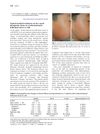
July 2012 in “Journal of the American Academy of Dermatology” This study found that topical tacalcitol improved roughness and scaling in erythromelanosis follicularis faciei et colli, although it was less effective for facial erythema.