 September 1995 in “American Journal of Contact Dermatitis”
 Antiyeast treatments work better for seborrheic dermatitis than steroids, and other findings include increased skin bacteria under plastic wrap, a nasal cell defect in Staphylococcus aureus carriers, quick resolution of certain skin reactions, high rubber latex allergy in spina bifida patients, and glyceryl monopentadecanoate's effectiveness for male hair loss.
 March 2020 in “Journal of Laser Applications”
 This meta-analysis reported that photobiomodulation therapy may improve hair density and stimulate hair growth in patients with androgenic alopecia compared to sham treatments, but larger studies are needed to confirm these findings.
 2 citations
,
May 2020 in “Anais brasileiros de dermatologia/Anais Brasileiros de Dermatologia”
2 citations
,
May 2020 in “Anais brasileiros de dermatologia/Anais Brasileiros de Dermatologia” This study identified different skin disease profiles in primary versus secondary care in Florianopolis from 2016 to 2017, highlighting the primary care role in managing less complex conditions and referring complex cases for specialized dermatology care.
 6 citations
,
July 2013 in “Molecular Imaging”
6 citations
,
July 2013 in “Molecular Imaging” This study successfully used noninvasive bioluminescence imaging to monitor hair generation in vivo after transplanting hair follicle stem cells in mice.
4 citations
,
January 2017 This source reports that two noninvasive tests, the pull test and a modified wash test, can help diagnose and determine the severity of different types of hair loss in women by assessing hair shedding and characteristics, offering a simple and cost-effective evaluation method.
 August 2025 in “The American Journal of Medical Sciences and Pharmaceutical Research”
 This study suggests that noninvasive carboxytherapy methods, like gel formulations and device-assisted delivery, can significantly improve skin conditions with high safety and no recovery time, particularly in sensitive areas.
 July 2024 in “International Journal of Dermatology Venereology and Leprosy Sciences”
 This review highlights the increasing use of trichoscopy, a noninvasive and well-tolerated diagnostic tool, to aid in the accurate diagnosis and management of various pediatric hair and scalp conditions, such as alopecia and other abnormalities.
 March 2014 in “Journal of The American Academy of Dermatology”
 Reflectance confocal microscopy can noninvasively diagnose onychomatricoma by showing unique features different from healthy nails or nail fungus.
 69 citations
,
January 2015 in “Current problems in dermatology”
69 citations
,
January 2015 in “Current problems in dermatology” This review discusses trichoscopy as a noninvasive, effective technique for diagnosing various hair loss conditions and monitoring treatment, highlighting its potential to reduce scalp biopsy necessity.
 21 citations
,
September 2008 in “Magnetic Resonance Imaging”
21 citations
,
September 2008 in “Magnetic Resonance Imaging” This study utilized magnetic resonance imaging to noninvasively visualize and differentiate skin structures in rat skin, finding a significant correlation between MRI data and histological areas.
12 citations
,
May 2012 in “Journal of Biomedical Optics” In this study, Trichoscan®, reflectance confocal microscopy, and optical coherence tomography were found to be reliable noninvasive tools for measuring hair growth and follicle analysis after hair removal.
5 citations
,
April 2014 in “Journal of Lipid Research” This study demonstrates a method to noninvasively assess lipid classes in rodent sebum via high-field proton NMR, observing significant lipid reductions in rats treated with an SCD1 inhibitor.
 2 citations
,
November 2009 in “Korean journal of chemical engineering”
2 citations
,
November 2009 in “Korean journal of chemical engineering” This study found that the nonionic surfactant Brij 78 stabilized cationic minoxidil microparticles against aggregation, maintaining their substantivity in the presence of excess anionic surfactant.
 1 citations
,
May 2016 in “Dermatologic Surgery”
1 citations
,
May 2016 in “Dermatologic Surgery” The document concludes that using a phototrichogram with a protractor and tapeline is a reliable and noninvasive way to measure hair loss.

This study developed a mathematical model using hair biomarkers (levels of Mg, K, Fe, Al, Cr) to noninvasively predict iron content in Hereford cattle muscle tissue, potentially improving livestock management and meat quality.
 May 2023 in “Elsevier eBooks”
 This article discusses scalp micropigmentation as a noninvasive method to conceal various forms of hair loss and scalp abnormalities and reports no clinical results; the authors highlight its safe and effective application.
 January 2015 in “Springer eBooks”
 This chapter describes two simple, noninvasive methods — the pull test and modified wash test — which can diagnose and assess the severity of female hair loss, including conditions like telogen effluvium and androgenetic alopecia.
 32 citations
,
January 2014 in “Dermatology Research and Practice”
32 citations
,
January 2014 in “Dermatology Research and Practice” This study found that trichoscopy can rapidly and noninvasively diagnose tinea capitis and alopecia areata in pediatric patients by identifying specific hair patterns associated with each condition.
 19 citations
,
October 2014 in “Veterinary Dermatology”
19 citations
,
October 2014 in “Veterinary Dermatology” Dermoscopy is a good, noninvasive way to see normal cat skin structures and could be useful for check-ups.
15 citations
,
July 2000 in “The journal of investigative dermatology/Journal of investigative dermatology” This study found that fluorescence excitation spectroscopy could be a promising noninvasive tool for assessing the effects of comedolytic agents like retinoids on acne-like lesions in rhino mice.
 14 citations
,
January 2001 in “Clinical chemistry”
14 citations
,
January 2001 in “Clinical chemistry” This article discusses the potential use of hair fibers to noninvasively measure polyamine concentrations as a marker of tumor growth, but reports no new clinical findings.
 12 citations
,
July 2017 in “Journal of cosmetic dermatology”
12 citations
,
July 2017 in “Journal of cosmetic dermatology” This study suggests that infrared thermography may be a useful noninvasive tool for diagnosing active phases of frontal fibrosing alopecia when combined with dermoscopy.
10 citations
,
January 2011 in “Journal of biomedical optics” This study found that optical coherence tomography provides highly reproducible and less variable measurements of hair shaft thickness compared to standard light microscopy, offering a promising noninvasive tool for clinical practice.
 8 citations
,
January 2020 in “International Journal of Trichology”
8 citations
,
January 2020 in “International Journal of Trichology” The authors concluded that trichoscopy is a valuable noninvasive tool for diagnosing and monitoring nonscarring alopecia, aiding in the identification of new hair signs in difficult cases.
 3 citations
,
February 2022 in “Dermatology practical & conceptual”
3 citations
,
February 2022 in “Dermatology practical & conceptual” This study found that trichoscopy is an effective noninvasive technique for diagnosing frontal fibrosing alopecia, confirming its valuable role alongside traditional histopathological examination.
 1 citations
,
January 2017 in “International Journal of Dermoscopy”
1 citations
,
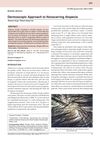
January 2017 in “International Journal of Dermoscopy” This article reviews the use of dermoscopy as a noninvasive tool for diagnosing various types of nonscarring alopecia but presents no new clinical findings.
 August 2025 in “Journal of Cosmetic Dermatology”
 This review explores low-level light therapy's potential as a noninvasive treatment for various forms of alopecia, noting its promising results in hair regrowth and density but highlighting the need for standardized protocols and further research.
 October 2023 in “Russian Journal of Veterinary Pathology”
 This source reviews existing studies on treating canine noninflammatory alopecia, identifying microneedling and oral administration of certain drugs as optimal methods with fewer side effects, while noting that other treatments like mitotane and minoxidil cause serious side effects, limiting their future use.
 April 2023 in “American Journal of Transplantation”
 This study found that hormone replacement therapy was associated with reduced COVID-19 mortality and adverse outcomes in nonimmunosuppressed postmenopausal women and immunocompromised male solid organ transplant recipients.
This study reported that clascoterone cream reduced inflammatory and noninflammatory acne lesions in a trial with 1440 white males and non-pregnant females, showing it was well tolerated in these participants.