 May 2026 in “The Journal of Headache and Pain”
 In this study, researchers developed an enhanced rodent model of trigeminal neuralgia, demonstrating that structural and functional changes in the anterior cingulate cortex are linked to chronic pain and emotional disturbances, and chemogenetic inhibition of specific neurons could alleviate symptoms.
227 citations
,
February 1989 in “The Journal of Comparative Neurology” This study found that calcitonin‐gene‐related peptide immunoreactive sensory axons in rats are predominantly involved in tissue maintenance rather than nociceptive functions.
April 2016 in “The journal of investigative dermatology/Journal of investigative dermatology” This study reports that cannabinoid receptor type 1 may influence psoriasis development by modulating laminin-511 expression, suggesting a potential target for treatment.
 15 citations
,
December 2016 in “Advanced Pharmaceutical Bulletin”
15 citations
,
December 2016 in “Advanced Pharmaceutical Bulletin” This study found that N-acetyl-glucosamine-loaded nanostructured lipid carriers showed promise for skin lightening in healthy volunteers by reducing melanin distribution.
 5 citations
,
January 2018
5 citations
,
January 2018 This study optimized a screening assay to identify molecules that inhibit or enhance TRPM5 ion channel activity, which may have implications for treating dysfunctions linked to cardiac arrhythmias and diabetes.
56 citations
,
April 2019 in “The Plant Journal” This study found that CNGC 6, CNGC 9, and CNGC 14 are crucial for maintaining calcium oscillations necessary for normal root hair growth in plants, with mutations leading to defects like swelling and bursting.
1 citations
,
March 2018 in “F1000Research” This study found that diazepam has an exaggerated effect on GABAergic inhibitory tone in diabetic neuropathy mouse models, likely due to upregulated neurosteroidogenic enzymes responding to mitochondrial dysfunction.
6 citations
,
April 2021 in “NAR Genomics and Bioinformatics” This study found extensive co-evolution of polyglutamine repeat lengths in neural protein clusters, highlighting their potential role in neurocognitive variation and neuropsychiatric disease development.
12 citations
,
February 1986 in “PubMed” This study found that newborn mice given 6-aminonicotinamide developed skin, intestinal, and central nervous system lesions, offering insights into the mechanisms of pellagra.
47 citations
,
September 2002 in “Journal of Bone and Mineral Research” This study found that a specific VDR amino acid substitution in children with hereditary vitamin D-resistant rickets disrupts ligand binding and gene activation but does not impair hair follicle development.
5 citations
,
July 1999 in “Journal of Anatomy” This study observed that methylene blue staining and zinc iodide-osmium tetroxide techniques effectively revealed anatomical details of intraepidermal nerve fibre endings in the rat's mystacial pad, suggesting their potential role in mechanoreception.
January 2026 in “Advanced Science” This study found that gastrodin promotes the XIAP-DDRGK1 pathway in noise-exposed mice, reducing hearing loss by enhancing ER-phagy and cochlear cell survival.
 12 citations
,
January 2016 in “Journal of Orofacial Orthopedics / Fortschritte der Kieferorthopädie”
12 citations
,
January 2016 in “Journal of Orofacial Orthopedics / Fortschritte der Kieferorthopädie” This study identified a novel mutation in the EDA gene, which may impair protein stabilization and be involved in the development of oligodontia and mild ectodermal dysplasia phenotypes.
January 2014 in “eScholarship (California Digital Library)” This article discusses the plasticity of δ-GABAARs during altered neurosteroid production and its effects on neuronal network function, with potential therapeutic strategies proposed for several neurological and psychiatric disorders.
 18 citations
,
April 2001 in “Bioorganic & Medicinal Chemistry Letters”
18 citations
,
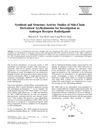
April 2001 in “Bioorganic & Medicinal Chemistry Letters” This study identified the N-(iodopropenyl) derivative 13 as a promising candidate for development as a radioiodinated androgen receptor ligand due to its binding affinity.
17 citations
,
January 1998 in “Neurourology and Urodynamics” This report describes a case of adrenomyeloneuropathy where neurogenic bladder dysfunction developed, attributed to demyelinating lesions in the patient's peripheral nerves, spinal cord, and cerebral white matter.
 96 citations
,
October 2000 in “The FASEB Journal”
96 citations
,
October 2000 in “The FASEB Journal” In this study, researchers found that p75 neurotrophin receptor signaling affects apoptosis during hair follicle regression in mice, and altering its activity might help manage disorders involving early catagen entry.
 104 citations
,
May 2003 in “Endocrinology”
104 citations
,
May 2003 in “Endocrinology” This study found that the vitamin D receptor in lampreys, which lack bones and hair, binds 1,25-dihydroxyvitamin D3 and may function to induce enzymes for detoxifying substances.
 January 2013 in “International journal of trichology”
 Vitamin D3 and its receptor are important for hair growth, and understanding receptors could help treat hair graying and skin cancer.
 April 2018 in “Journal of Investigative Dermatology”
 This study found that NDRG1 expression increases during the proliferation of infantile hemangioma and may positively regulate its growth, while FOXO1 downregulation plays a role in its pathogenesis.
 142 citations
,
March 2019 in “Frontiers in Cellular Neuroscience”
142 citations
,
March 2019 in “Frontiers in Cellular Neuroscience” This review discusses the development and potential therapeutic applications of adenosine receptor agonists and positive allosteric modulators, noting that while many clinical trials have been unsuccessful, initial results for new compounds are promising.
110 citations
,
January 1995 in “European Journal of Neuroscience” This study found that glycinergic synapses in the rat spinal cord are predominantly associated with gephyrin, though gephyrin may also be present at non-glycinergic synapses.
December 2024 in “European journal of medical research” This study suggests that the NCSTN knockout mouse could serve as an HS animal model, with tamoxifen potentially used for gene deletion in mice.
8 citations
,
October 2020 in “Stem cell research & therapy” This study found that DNMT1 promotes adipogenesis in hair follicle stem cells by regulating the miR-214-3p/MAPK1/p-ERK1/2 pathway, suggesting potential applications in stem cell therapy.
22 citations
,
September 2000 in “Journal of Investigative Dermatology” This study found that mu-crystallin gene expression in mouse skin is highest during the anagen phase of hair development, suggesting its possible role in hair follicle growth.
May 2026 in “Journal of Medicinal Chemistry” In this study, the authors developed a novel PROTAC named dAR-6–1, which demonstrated superior hair regeneration in an AGA mouse model compared to minoxidil, highlighting its promise as a therapy due to potent AR degradation and excellent skin permeability.
14 citations
,
February 2009 in “PLoS ONE” This study found that the enzyme glutamine synthetase is distributed throughout the epidermis and its activity in keratinocytes is notably increased by ammonium ions, suggesting the skin serves as a reservoir for glutamine generation.
37 citations
,
August 2015 in “The Journal of Steroid Biochemistry and Molecular Biology” This study found that in a mouse model with hereditary 1,25-dihydroxyvitamin D resistant rickets, a mutant vitamin D receptor lacking hormone-binding ability could restore normal hair cycling and affect parathyroid hormone regulation.
June 2025 in “International Journal of Molecular Sciences” This review compiles current research on the role of long non-coding RNAs in regulating muscle growth and regeneration processes, particularly their influence on Duchenne muscular dystrophy, and reports no new clinical results.
41 citations
,
February 2005 in “Experimental Cell Research” This study suggests that the MAEG protein may facilitate epithelial–mesenchymal interactions during hair follicle development by binding to RGD-binding integrins like α8β1.