9 citations
,
February 2012 in “Clinical Neurology and Neurosurgery” In this paper, three APS patients were followed over time, showing that the diagnosis and course of autoimmune polyglandular syndrome can evolve, highlighting the need for careful monitoring and potential re-evaluation.
 206 citations
,
September 2010 in “PLoS ONE”
206 citations
,
September 2010 in “PLoS ONE” This study found that using a Picosecond IR Laser (PIRL) on mouse skin led to less tissue damage and scarring compared to conventional surgical lasers and tools.
 136 citations
,
April 2013 in “Clinical Cancer Research”
136 citations
,
April 2013 in “Clinical Cancer Research” The study found that IPI-926 was well tolerated up to 160 mg once daily for 28-day cycles and showed activity as a single-agent treatment in Hedgehog pathway inhibitor-naïve patients with basal cell carcinoma.
5 citations
,
September 2019 in “Journal of Biomedical Optics” This study determined in-vivo skin damage thresholds for 1319-nm laser exposure in pigs, and the findings may enhance understanding of thermal damage mechanisms and inform laser safety standards.
10 citations
,
August 2016 in “Dermatology Online Journal” This article describes cutaneous reactions including keratosis pilaris-like eruptions in a patient on nilotinib for chronic myelogenous leukemia, emphasizing the importance of accurately classifying such eruptions.
 February 2020 in “International Journal of Advanced Research”
 This article discusses the development of a Garcinia Cambogia enriched snack intended for managing PCOS but reports no new clinical results.
 May 2025 in “International Journal of Biological and Pharmaceutical Sciences Archive”
 In an open-label clinical trial, this study found that applying Narasimham Hair Oil thrice weekly for 8 weeks significantly improved hair density, thickness, and scalp health among participants with hair thinning, with benefits persisting after treatment, and 95% reporting user satisfaction without adverse effects.
 1 citations
,
May 2025 in “International Journal of Applied Pharmaceutics”
1 citations
,
May 2025 in “International Journal of Applied Pharmaceutics” This study formulated a nanogel with Bangkal bark extract that showed moderate antibacterial activity against Propionibacterium acnes, with the F3 formulation (8% extract) achieving the highest inhibition zone of 8 mm, suggesting potential as a natural acne treatment.
1 citations
,
October 2023 in “European Journal of Dermatology” This study found that combining hair transplantation with platelet-rich plasma treatment significantly improved hair regeneration, reduced hair loss, and minimized skin lesion areas in patients with androgenic alopecia compared to hair transplantation alone, suggesting enhanced treatment efficacy.
 3 citations
,
March 2019 in “Contact Dermatitis”
3 citations
,
March 2019 in “Contact Dermatitis” Using Indian marking nut sap for hair loss caused a skin rash on a woman's face.
January 2024 in “AIP conference proceedings”  January 2017 in “Bulletin of Pharmaceutical Research”
 This study developed chemical fingerprints to differentiate Eclipta prostrata and Wedelia calendulacea, two plants often confused and adulterated in the Indian herbal market, identifying distinct chemical profiles that can prevent such adulteration.
 1 citations
,
April 2023 in “Clinical, cosmetic and investigational dermatology”
1 citations
,
April 2023 in “Clinical, cosmetic and investigational dermatology” This study reviewed existing literature and reported two cases of perinevoid alopecia, suggesting that melanocyte antigens may be involved in its development.
 2 citations
,
February 2004 in “Biopolymers”
2 citations
,
February 2004 in “Biopolymers” This study found that 4-(4-Phenoxybenzoyl)benzoic acid derivatives may act as antioxidants by scavenging certain reactive oxygen species but exhibit prooxidant behavior under specific conditions.
 December 2020 in “Lasers in Surgery and Medicine”
 In this study, using a 1064 nm picosecond Nd:YAG laser effectively removed undesirable scalp micropigmentation in four patients within 1–3 treatment sessions, with no unexpected adverse events reported.
 July 2025 in “UCP Journal of Science & Technology”
 This research conducted in Narowal, Pakistan, found significant differences in hematological and renal function parameters between pregnant and non-pregnant women, suggesting that these tests could serve as biomarkers for pregnancy.
 11 citations
,
April 2020 in “Life sciences”
11 citations
,
April 2020 in “Life sciences” In this study, pantothenic acid at 20 μg/ml was observed to promote dermal papilla cell proliferation and migration, likely through up-regulation of ID3 and inhibition of Notch signaling.
5 citations
,
September 2024 in “Biomolecules and Biomedicine” This study found that total glucosides of paeony (TGP) reduced hair loss and inflammation in alopecia areata mice by inhibiting cellular pyroptosis.
 9 citations
,
July 2018 in “European Journal of Dermatology”
9 citations
,
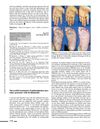
July 2018 in “European Journal of Dermatology” Brodalumab effectively treated a man's severe hand and foot psoriasis.
 1 citations
,
January 2020 in “ARC Journal of Dermatology”
1 citations
,
January 2020 in “ARC Journal of Dermatology” This study observed that five cases of primary cicatricial alopecia showed an excellent response to a combination of oral zinc and long-pulsed Nd:YAG 1064-nm laser treatment, suggesting this approach may be beneficial for certain types of this condition.
 1 citations
,
August 2025 in “Journal of Neonatal Surgery”
1 citations
,
August 2025 in “Journal of Neonatal Surgery” This study evaluated a new nanogel formulation containing Ciclopirox Olamine for treating cutaneous candidiasis, finding that the optimized version offered improved skin penetration, sustained drug release, and effective antifungal action against Candida albicans compared to conventional treatment.
47 citations
,
October 2021 in “Journal of Nanobiotechnology” This study found that hollow polydopamine nanoparticles enhanced the regenerative potency of the peptide RL-QN15, suggesting potential for improved therapeutic approaches in skin wound healing.
 1 citations
,
January 2023 in “International Research Journal of Ayurveda & Yoga”
1 citations
,
January 2023 in “International Research Journal of Ayurveda & Yoga” This review discusses Ayurvedic perspectives on premature greying of hair and reports no new clinical results, suggesting Ayurveda as a natural approach to this condition.
In this study, researchers developed a method for high-resolution live imaging of leg regeneration in the crustacean Parhyale hawaiensis, which effectively captures the entire process at cellular resolution over 10 days while minimizing photodamage.
 March 2024 in “ACS Applied Materials & Interfaces”
 This study developed a delivery platform using hyaluronic acid-based dissolvable microneedles with nanoliposomes containing kopexil and kopyrrol, which showed improved hair regeneration for treating androgenetic alopecia in vivo at lower dosages compared to minoxidil.
26 citations
,
October 2019 in “JNCI Cancer Spectrum” This clinical study observed that in patients with advanced breast cancer and BRCA1/2 mutations, talazoparib provided significantly better progression-free survival, objective response, clinical benefit, and patient-reported outcomes compared to physician’s choice chemotherapy, despite common side effects like anemia and fatigue.
 December 2025 in “Portuguese Journal of Dermatology and Venereology”
 In this study, researchers conducted a retrospective analysis of 16 cases of erosive palmoplantar lichen planus in North East India, finding a higher prevalence in pediatric and male patients, with common clinical features including plantar involvement and histopathological indicators such as basal cell degeneration.
38 citations
,
January 2017 in “PPAR Research” This review discusses the role of PPAR-γ in the pathogenesis of primary cicatricial alopecia, including its involvement in lichen planopilaris and treatment trials using PPAR-agonists, and reports no new clinical results.
 April 2026 in “Frontiers in Physiology”
 This study evaluated nanovesicles derived from Polygonum multiflorum roots, finding that they promote dermal papilla cell proliferation and activate β-catenin signaling, which in turn enhances hair shaft elongation in ex vivo cultured human hair follicles, suggesting their potential use for alopecia treatment.
 5 citations
,
May 2025 in “Scientific Reports”
5 citations
,
May 2025 in “Scientific Reports” This study found that extracts from Indian gooseberry leaves showed strong antimalarial activity against Plasmodium falciparum, with low cytotoxicity, suggesting potential for developing new antimalarial drugs.