 April 2025 in “Journal of Cosmetic Dermatology”
 In this pilot study, the niostem device, a wearable device delivering low-level electrical stimulation, significantly increased hair density by 19.3% and thickness by 8.8% in male androgenetic alopecia patients over six months without reported adverse events.
 July 2024 in “The journal of investigative dermatology/Journal of investigative dermatology”
 In a pilot study with 21 patients, the niostem device increased hair counts and density and enhanced testers’ self-perception of hair growth at 6 months without reported adverse effects, suggesting potential benefits for androgenetic alopecia.
 April 2026 in “Dermatology and Therapy”
 The device improved hair growth and thickness in men without side effects.
 1 citations
,
July 2007 in “Regenerative Medicine”
1 citations
,
July 2007 in “Regenerative Medicine” Stem cell research and regenerative medicine have made significant advancements in treating various diseases and conditions.
6 citations
,
June 2025 in “Nano Biomedicine and Engineering” This source reports on advances in stimulus-responsive nanoparticle-based PROTACs (nano-PROTACs), which aim to overcome existing challenges like poor cell permeability and systemic off-target effects by enabling controlled protein degradation through endogenous or exogenous stimuli, potentially enhancing therapeutic efficacy and reducing toxicity.
May 2020 in “Meeting abstracts/Meeting abstracts (Electrochemical Society. CD-ROM)” This research reported that using an electromechanical system based on flexible nanogenerators significantly accelerated skin wound healing and hair growth, and reduced food intake in rat models.
 92 citations
,
September 2019 in “ACS nano”
92 citations
,
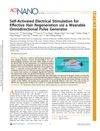
September 2019 in “ACS nano” This study observed that a wearable electric stimulation device significantly promoted hair regeneration in rats and mice, outperforming conventional pharmacological treatments and enhancing growth factor secretion.
July 2024 in “Journal of Investigative Dermatology” ATR12-351 ointment safely delivers LEKTI protein to the skin, reducing enzyme activity in Netherton syndrome.
36 citations
,
August 2020 in “Polymers” The researchers developed semi-dissolving microneedle patches using TEMPO-oxidized bacterial cellulose nanofibers, which allow effective transdermal drug delivery by forming micro-channels for large drug quantities, overcoming traditional microneedles' low drug loading.
21 citations
,
October 2025 in “Advanced Materials” This study found that a newly created biomimetic microneedle platform effectively expedited wound repair in diabetic animal models by reducing inflammation, enhancing angiogenesis, and promoting skin regeneration through targeted drug delivery and immune response modification.
198 citations
,
May 2021 in “Advanced Materials” This review discusses triboelectric nanogenerator (TENG) devices for body-integrated electrical stimulation therapy and suggests they may revolutionize personalized healthcare, but it reports no new clinical results.
February 2026 in “Biomaterials” BOOST is a promising, easy-to-use treatment for diabetic foot ulcers that improves healing by reducing inflammation and promoting blood vessel growth.
 March 2018 in “Farmacevtičnij časopis”
 In this study, researchers developed an optimized production process for the herbal tincture "Stimufit," intended for topical use in treating telogen alopecia, using 40% ethanol and a specific extraction method.
 19 citations
,
September 2015 in “Therapeutic Delivery”
19 citations
,
September 2015 in “Therapeutic Delivery” This review discusses the application of active transdermal technologies in cosmetic devices for skin restoration and enhancement, reporting no new clinical results.
6 citations
,
August 2020 in “International Research Journal on Advanced Science Hub” In this study, researchers developed a niosomal gel system for transdermal delivery of testosterone, reporting strong penetrative capability, good spreadability, and a promising in vitro drug release profile, suggesting it may be an effective alternative for reducing the side effects of steroid treatments.
March 2026 in “Materials Today Chemistry” Smart microneedles improve hair loss treatment by delivering drugs precisely with fewer side effects.
 January 2026 in “Nature Communications”
 This study presented a new wearable textile-based device with near-infrared OLEDs that significantly reduced cell aging markers and improved cell migration in vitro, suggesting it as a promising, non-invasive phototherapy option for hair follicle treatment and hair-loss management.
 February 2018 in “The Journal of Sexual Medicine”
 The researchers reported that using Natesto® testosterone gel improved erectile function and mood in hypogonadal men over a 90-day period.
319 citations
,
March 2023 in “Science Advances” This study demonstrated that a wearable bioelectronic patch with combined therapy significantly accelerated chronic wound healing in a rodent model by monitoring and treating wounds noninvasively.
 January 2024 in “Wiadomości Lekarskie”
 This source provides an overview of diagnostic and treatment innovations for gastrointestinal disorders, such as wireless capsule technology for motility assessment and new methods for treating constipation and nausea, highlighting both current and emerging techniques.
 April 2026 in “BioNanoScience”
 A new microneedle system may improve hair loss treatment by delivering ketoconazole directly to hair follicles.
5 citations
,
April 2023 in “Pharmaceuticals” This study found that cubosomes combined with dissolving microneedles enhanced transdermal penetration and hair growth efficacy of beta-sitosterol for treating alopecia.
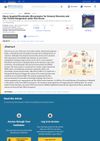 November 2023 in “ACS Nano”
 In a mouse model of deep skin burns, this study found that a neuro-inspired biomimetic microreactor, when delivered through a hydrogel and activated by near-infrared light, significantly promoted functional skin regeneration, sensory recovery, and hair follicle formation.
January 2019 in “Elsevier eBooks” This chapter reviews different types of stem cell niches, their signaling pathways, and how understanding these interactions can inform treatments for various diseases, without reporting new experimental results.
1549 citations
,
March 2006 in “Science” This review discusses the stem cell niche concept in mammalian systems and reports no new clinical results, highlighting recent progress and identifying important unanswered questions.
 41 citations
,
October 2024 in “Nature Communications”
41 citations
,
October 2024 in “Nature Communications” In this study, researchers developed a wearable red and blue LED patch and a sprayable fibrin gel to treat infected wounds at home, demonstrating effective infection control and enhanced wound healing in diabetic mice and minipigs.
November 2025 in “ACS Nano” This study reported the development of a pH-responsive microreactor that effectively targets infections by eradicating over 99.9% of MRSA and reprogramming the immune response to promote healing, achieving complete infection clearance and tissue regeneration in a 7-day period.
November 2025 in “OPAL (Open@LaTrobe) (La Trobe University)” In this study, researchers developed a hierarchically engineered microreactor that effectively combats infected wounds by releasing antimicrobials at acidic sites, eradicating MRSA while avoiding resistance, and enhancing tissue repair through immune system modulation.
April 2026 in “IntechOpen eBooks” The researchers presented a case study on Exo.Reset®, a cosmetic formulation using extracellular vesicle technology, demonstrating systematic application of recognized standards to ensure scientific rigor and regulatory compliance in skin rejuvenation product development, providing a practical model for EV-based cosmetic innovations.
April 2026 in “SSRN Electronic Journal”