April 2026 in “Journal of Cosmetic Dermatology” This study reports that specific hair care practices common among individuals with high-curl-pattern hair could exacerbate seborrheic dermatitis, presenting significant treatment challenges and psychological impacts, and emphasizes the need for further research to tailor culturally sensitive solutions.
4 citations
,
August 2006 in “The Journal of Dermatology” This case report describes the first known association of hypertrichosis lanuginosa acquisita with autoimmune hepatitis, expanding the list of conditions linked to this rare disorder.
2 citations
,
July 2024 in “Journal of the American Academy of Dermatology” Elderly patients have more severe hidradenitis suppurativa and may need different treatments.
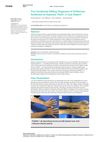
This study presents a rare instance of Netherton syndrome diagnosed incidentally in siblings of consanguineous parents, initially misdiagnosed as other skin conditions, emphasizing the need for careful evaluation in chronic skin cases to prevent misdiagnosis.
 January 2026 in “Zenodo (CERN European Organization for Nuclear Research)”
 This review discusses the characteristics, complications, and treatment options for hidradenitis suppurativa, a chronic skin disorder with systemic effects, without presenting new clinical findings.
September 2025 in “JCEM Case Reports” In this case report, a 46-year-old woman initially diagnosed with 21-hydroxylase deficiency congenital adrenal hyperplasia was later identified as having 3β-HSD2 deficiency after further investigation, highlighting the need for awareness of rarer CAH forms to prevent delayed diagnosis and insufficient treatment.
 5 citations
,
September 2015 in “Nepalese journal of ophthalmology”
5 citations
,
September 2015 in “Nepalese journal of ophthalmology” This case report highlights an 11-year-old girl with dermatopathia pigmentosa reticularis, identifying associated Salzmann's nodular degeneration of the cornea and emphasizing the need for a multidisciplinary management approach.
July 2025 in “Journal of Investigative Dermatology” Reduced AhR signaling in HS tunnels leads to persistent inflammation and microbial imbalance.
 2 citations
,
June 2023 in “Journal of the American Academy of Dermatology”
2 citations
,
June 2023 in “Journal of the American Academy of Dermatology” This observational study using NHANES data from 2011 to 2020 found that the use of hair, skin, and nails supplements almost doubled, particularly among younger, female, Black, and Hispanic/Latino individuals, despite limited evidence on their efficacy and potential health risks.
 2 citations
,
July 2018 in “Our Dermatology Online”
2 citations
,
July 2018 in “Our Dermatology Online” This case report documents the first known instance of nevoid hyperkeratosis of the nipple and areola with unilateral presentation in a Saudi female, diagnosed through clinical evaluation and biopsy.
2 citations
,
May 2016 in “Journal of dermatology” This letter discusses tissue expansion for correcting alopecia in a child with hypohidrotic ectodermal dysplasia, but provides no new experimental results.
 September 2014 in “International Journal of Dermatology and Venereology”
 This review explores the roles of histamine receptors H2R, H3R, and H4R in treating various dermatoses but reports no new clinical outcomes.
 30 citations
,
June 2019 in “Frontiers in Endocrinology”
30 citations
,
June 2019 in “Frontiers in Endocrinology” This article discusses the challenges in diagnosing non-classical congenital adrenal hyperplasia and emphasizes personalized treatment approaches, reporting no new clinical results.
11 citations
,
October 2002 in “Genetics” This study mapped a spontaneous mouse hair mutation, "hague," to keratin genes on chromosome 15 but found no gene mutations in hague mice.
 11 citations
,
January 2016 in “The Journal of Sexual Medicine”
11 citations
,
January 2016 in “The Journal of Sexual Medicine” This study found that young women with nonclassic congenital adrenal hyperplasia had impaired sexual function and mild depressive symptoms compared to healthy women.
 November 2009 in “Journal of Pediatric Nursing”
 This case report describes a 6 1/2-year-old girl with significant height growth and early pubic hair development.
 July 2025 in “Journal of the American Academy of Dermatology”
 Hair diameter diversity helps assess hair loss, but its standard measure varies by individual and ethnicity.
December 2023 in “International Journal of Dermatology” This study found an increased risk of asthma and allergic rhinitis in individuals with hidradenitis suppurativa.
November 2015 in “Bulletin of University of Agricultural Sciences and Veterinary Medicine Cluj-Napoca Veterinary Medicine” This article discusses the complexities of diagnosing pituitary dependent hyperadrenocorticism in dogs and reports no new clinical findings, highlighting issues with varied symptoms and episodic hormone secretion complicating diagnosis.
26 citations
,
September 1999 in “Canadian Journal of Botany” This study found that a recessive mutation in the RHD4 gene of Arabidopsis thaliana leads to slower and more variable tip growth in seedling root hairs, resulting in shorter and wider hairs than in wild-type plants.
 February 2020 in “Open Access Macedonian Journal of Medical Sciences”
 In this case report, treatment with corticosteroids improved both clinical symptoms and hormonal imbalances in a 27-year-old woman diagnosed with non-classic congenital adrenal hyperplasia.

This study found that polycystic ovary syndrome was the most common cause of hirsutism among premenopausal Algerian women.
1 citations
,
April 2024 in “Animal Genetics” This study described an Appenzeller Mountain Dog with clinical signs of an NSDHL defect, discovering a large heterozygous de novo deletion spanning the entire NSDHL gene through whole genome sequencing.
 16 citations
,
October 2019 in “Biological & Pharmaceutical Bulletin”
16 citations
,
October 2019 in “Biological & Pharmaceutical Bulletin” This study suggests that Houttuynia cordata extract may promote hair growth by stimulating dermal papilla cell proliferation and extending the anagen phase through enhanced energy metabolism and gene expression changes.
 85 citations
,
August 2015 in “Journal of Applied Genetics”
85 citations
,
August 2015 in “Journal of Applied Genetics” This review discusses recent insights into the molecular mechanisms of hypohidrotic ectodermal dysplasia linked to TNFα-related signaling pathway mutations but reports no new experimental results.
February 2024 in “Animals” This study observed that alopecia in rhesus macaques follows a seasonal pattern, with the highest hair loss in spring, and varies with reproductive state, as pregnant females experience the most significant alopecia and lowest hair regrowth, which resumes postpartum.
April 2020 in “The journal of investigative dermatology/Journal of investigative dermatology” This source reports that a study by Liu et al. analyzed genetic factors influencing adalimumab response in hidradenitis suppurativa, finding a specific genetic variant (SNP rs59532114) associated with an inadequate response to the treatment due to increased abscess and inflammatory nodule counts.
September 2017 in “The journal of investigative dermatology/Journal of investigative dermatology” This study found that activating the hexosamine pathway increased hyaluronic acid secretion and hair follicle stem cell numbers in vitro, suggesting its role in modulating skin homeostasis.
 July 2017 in “Contemporary Endocrinology”
 This article discusses the ongoing care needs for individuals with 21-hydroxylase deficiency due to mutations in the CYP21A2 gene but does not present new clinical findings.
 42 citations
,
January 2007 in “Pediatric dermatology”
42 citations
,
January 2007 in “Pediatric dermatology” This report describes an 11-year-old boy with Netherton syndrome who developed Cushing syndrome after using low-potency hydrocortisone ointment extensively, highlighting caution with long-term topical treatments in such conditions.