50 citations
,
March 2018 in “BMC Genomics” This study expands knowledge of non-coding RNAs in goats and other mammals, enhancing understanding of their roles in hair follicle growth and regression.
April 2010 in “The journal of immunology/The Journal of immunology” This study found that deleting the FoxN1 gene in mice disrupted the 3D thymic epithelial structure and led to 2D epithelial cysts, revealing its crucial role in thymus organization but not causing athymia.
 January 2023 in “Indian dermatology online journal”
 This case report describes a novel NECTIN4 gene mutation linked to ED-syndactyly syndrome 1 in a young girl, contributing to the understanding of this rare ectodermal dysplasia.
 8 citations
,
November 2015 in “The American journal of dermatopathology/American journal of dermatopathology”
8 citations
,
November 2015 in “The American journal of dermatopathology/American journal of dermatopathology” The authors present a case of punctate follicular porokeratosis, suggesting it as a distinct clinical entity distinguished by keratotic lesions originating specifically from hair follicles.
24 citations
,
April 2022 in “International Journal of Molecular Sciences” This study found that TRPV4 activation induced massive exocytosis and cellular changes associated with ferroptosis in melanoma cells, highlighting a potential role for TRPV4 in mediating these processes.
 16 citations
,
March 2013 in “JAMA Dermatology”
16 citations
,
March 2013 in “JAMA Dermatology” This case study describes a 33-year-old woman with chronic myelogenous leukemia who developed nonscarring alopecia after starting nilotinib therapy, linked to perifollicular inflammation.

This study developed a directional pressure-pump hydrogel delivery platform that enhances wound healing in diabetic mechanically dynamic wounds by targeting antibacterial agents and nanozymes directly to the lesion site, disrupting biofilms, mitigating tissue damage, and supporting proper skin closure and vascular remodeling in animal models.
12 citations
,
January 1991 in “Acta Dermato Venereologica” The researchers reported that BCE-like changes overlying dermatofibroma show a differentiation pattern most similar to normal basal cells based on specific keratin markers.
 19 citations
,
April 2015 in “Developmental Dynamics”
19 citations
,
April 2015 in “Developmental Dynamics” This study reports that dynamic interactions between stem cells and their niche, influenced by macro-environmental factors, regulate regenerative behavior in integument pattern formation.
August 2015 in “PubMed Central” This study suggests that epithelial-derived Pop-Up Keratinocytes (ePUKs) may be a promising cell source for regenerative medicine due to their specific phenotypic traits and their influence on wound healing.
54 citations
,
September 1999 in “PubMed” This study suggests that immunostaining for Keratin 15 may be a useful tool for differentiating between basal cell carcinoma and trichoepithelioma.
18 citations
,
January 2021 in “Theranostics” This study found that actively targeted AN2728-loaded nanocarriers reduced inflammation and improved skin condition in a mouse model of psoriasiform inflammation compared to free drug and non-targeted nanoparticles.
 August 2025 in “Ophthalmic Plastic and Reconstructive Surgery”
 In this case report, a 4-year-old with neurofibromatosis type 1 experienced significant reduction in an inoperable periorbital plexiform neurofibroma and visual improvement following treatment with selumetinib.
1 citations
,
August 2016 in “Dermatology - Open Journal” In this study, the researchers found that optic atrophy 1 (OPA1) is involved in the transition between filamentous and rounded mitochondria in hair follicle dermal papilla cells, potentially influencing cellular energy dynamics.
In this case report, a 7-month-old boy with Netherton syndrome experienced significant improvement in symptoms, including reduced pruritus and increased hair growth, through a combination of intravenous immunoglobulin and dupilumab treatment, which also decreased high serum IgE levels and food-specific IgE antibodies.
13 citations
,
February 1980 in “Journal of Cutaneous Pathology” This study observed that seborrheic keratosis lesions in five patients exhibited specific histological changes after trauma, suggesting a connection between these lesions and hair follicle structures.
March 2005 in “Journal of the American Academy of Dermatology” Recognizing minor skin lesions can help identify serious cancer syndromes.
1 citations
,
November 2014 in “Thérapie” This article suggests using nicotinamide and minoxidil as potassium channel activators to target solid tumors, but reports no new clinical results and calls for further research.
30 citations
,
February 2010 in “The journal of investigative dermatology/Journal of investigative dermatology” This study found that the orphan protein Plet-1 is expressed in specific keratinocytes of mouse hair follicles and may regulate keratinocyte interactions with inert tissues by affecting migration and adhesion.
 19 citations
,
April 2016 in “Experimental Dermatology”
19 citations
,
April 2016 in “Experimental Dermatology” This review discusses the migration and colonization of melanocytes from the neural crest in mammals and reports no new experimental results.
19 citations
,
April 2024 in “Nature Cell Biology” 201 citations
,
May 2001 in “Proceedings of the National Academy of Sciences” This study found that transgenic expression of COX-2 in mouse basal keratinocytes causes epidermal hyperplasia and certain dysplastic features at specific body sites.
20 citations
,
January 2022 in “Oxidative Medicine and Cellular Longevity” This study found that intrinsic reactive oxygen species drive the hair follicle cycle progression through DNA damage and repair, apoptosis, and macrophage polarization, influencing hair loss and regeneration dynamics in mice.
January 2025 in “SSRN Electronic Journal” 159 citations
,
January 2006 in “BMC Cell Biology” This study found that manipulating Wnt signaling pathways in cutaneous wounds can induce skin structures resembling regeneration, suggesting a potential role for Wnt signals in restoring skin architecture during wound healing.
12 citations
,
January 2000 in “Journal of cutaneous medicine and surgery” This case study suggests that overgrowth of microorganisms with hyperkeratosis may contribute to the induction of lichen planopilaris by disrupting the immune privilege of hair follicles.
214 citations
,
April 2017 in “Cell” This study found that micro-niches within hair follicles create heterogeneity among stem cells and transit-amplifying cells, leading to specialized progenitors that control tissue morphogenesis and regeneration.
10 citations
,
February 2013 in “PLoS ONE” This study found that neprilysin (NEP) activity and expression play a significant role in regulating the hair cycle in rats, with a specific inhibitor suppressing hair growth in mice.
 January 2023 in “Skin appendage disorders”
 This article describes two cases of plica neuropathica, a rare hair condition involving severe matting, and discusses possible contributing factors and diagnosis methods while reporting no new scientific results.
 11 citations
,
October 2011 in “Allergologia et immunopathologia”
11 citations
,
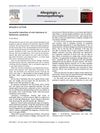
October 2011 in “Allergologia et immunopathologia” A girl with Netherton syndrome was able to eat wheat without allergies after a special treatment.