 3 citations
,
October 2024 in “Advances in Therapy”
3 citations
,
October 2024 in “Advances in Therapy” In this study, Chinese children with central precocious puberty receiving 6-monthly injections of triptorelin showed luteinizing hormone suppression and slowed development of sexual characteristics over 12 months, without severe adverse events, suggesting it may be an effective treatment option for this population.
 March 2026 in “Clinical Cosmetic and Investigational Dermatology”
 This research found that combining a 308-nm excimer laser with oral compound glycyrrhizin and topical 0.03% tacrolimus was more effective for treating pediatric facial and cervical vitiligo, resulting in faster and higher rates of repigmentation with minimal adverse effects compared to glycyrrhizin and tacrolimus alone.
January 2013 in “International journal of contemporary surgery” This study found that combining cyproterone acetate with topical eflornithine was a safe and effective treatment for facial hirsutism in women.
6 citations
,
May 2012 in “The Journal of Dermatology” This letter reports on a case of intractable ophiasis-type alopecia areata that was presumably improved by fexofenadine, but no new clinical results are presented.
March 2005 in “The Nurse Practitioner” This update provides information on new drug approvals but does not offer new clinical research findings.
41 citations
,
November 2015 in “The journal of investigative dermatology. Symposium proceedings/The Journal of investigative dermatology symposium proceedings” This study found that diphenylcyclopropenone therapy resulted in over 50% hair regrowth in 71% of alopecia totalis patients, with a significant relapse association with thyroid disease, suggesting treatment could be viable but should continue for at least two years.
1 citations
,
January 2013 in “Annals of Dermatology” This case report describes an 11-year-old girl with eosinophilic pustular folliculitis that showed significant improvement with naproxen after being unresponsive to other treatments.
11 citations
,
August 2021 in “Stem Cell Research & Therapy” This study found that coadministration of pimecrolimus may interfere with the therapeutic efficacy of mesenchymal stem cell therapy in atopic dermatitis.
March 2023 in “Reactions Weekly” January 2023 in “Reactions Weekly” January 2023 in “Reactions Weekly” January 2023 in “Reactions Weekly” 18 citations
,
January 2021 in “Theranostics” This study found that actively targeted AN2728-loaded nanocarriers reduced inflammation and improved skin condition in a mouse model of psoriasiform inflammation compared to free drug and non-targeted nanoparticles.
June 2015 in “Reactions weekly” December 2012 in “Reactions weekly”  1 citations
,
January 2017 in “Journal of Clinical Trials & Patenting”
1 citations
,
January 2017 in “Journal of Clinical Trials & Patenting” This study assessed the safety and efficacy of Romantaque lotion for unwanted hair growth and found statistically significant hair growth inhibition with no adverse effects in 30 volunteers after repeated applications over one year.
 January 2026 in “International Journal of Medical Science”
 This randomized controlled trial reported that combining 0.1% Adapalene with 2.5% Benzoyl Peroxide significantly improved mild acne outcomes in patients compared to Adapalene alone, with greater efficacy noted particularly among females, younger individuals, and those who are non-obese.
 November 2021 in “International journal of life science and pharma research”
 This study reported that a solid lipid nanoparticle-based gel formulation, specifically optimized for psoriasis, improved drug loading capacity and release properties using high-pressure homogenization, suggesting its potential efficacy as a topical treatment.
November 2019 in “British Journal of Dermatology” FOL-005 peptide may help treat excessive hair growth safely.
 10 citations
,
June 2018 in “Aaps Pharmscitech”
10 citations
,
June 2018 in “Aaps Pharmscitech” The flutamide-loaded hydrogel is a promising, skin-friendly treatment for acne and hair loss, potentially requiring less frequent application.
1 citations
,
August 2024 in “Indian Dermatology Online Journal” In this study, bicalutamide showed promise in managing female pattern hair loss and reducing minoxidil-induced hypertrichosis, though further research is necessary to refine its use and establish its role in treatment.
11 citations
,
July 1984 in “Australian Veterinary Journal” This study found that povidone iodine, thiabendazole ointment, captan ointment, and Burroughs Wellcome Ringworm Ointment were effective against Trichophyton equinum var. autotrophicum in horses, but large-scale use may be limited by practicality and cost.
 23 citations
,
September 2014 in “JEADV. Journal of the European Academy of Dermatology and Venereology/Journal of the European Academy of Dermatology and Venereology”
23 citations
,
September 2014 in “JEADV. Journal of the European Academy of Dermatology and Venereology/Journal of the European Academy of Dermatology and Venereology” This case report describes successful CO2 ablation treatment of porokeratotic adnexal ostial nevus in an 8-year-old boy, with marked improvement over a 12-year follow-up.
10 citations
,
June 2019 in “Dermatologic therapy” In this study, treatment with DPCP alone was more effective for hair regrowth and presented fewer side effects in chronic extensive alopecia areata compared to combination therapy with DPCP and anthralin.
 3 citations
,
May 2011 in “Journal of the American Academy of Dermatology”
3 citations
,
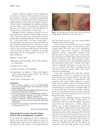
May 2011 in “Journal of the American Academy of Dermatology” This case report describes a 54-year-old woman who developed hypertrichosis around a leg ulcer while using PGE1 ointment, suggesting a potential side effect of the treatment.
This study found that an extract treatment showed similar efficacy and tolerability to calcipotriol/betamethasone ointment in reducing psoriasis severity and symptoms over 28 days in patients with mild-to-moderate plaque psoriasis.
 January 2025 in “International Journal of Advanced Biochemistry Research”
 In this study from a veterinary college, three cats with notoedric mange were treated with weekly subcutaneous injections of Ivermectin (0.2 mg/kg) combined with supportive therapy, leading to successful recovery over four weeks.
14 citations
,
August 2014 in “Journal of the American Academy of Dermatology” This study found that topical diphenylcyclopropenone is an effective treatment for extensive alopecia areata, with significant hair regrowth reported in most patients, though effectiveness varied with disease characteristics.
 2 citations
,
July 2023 in “Obstetrics & Gynecology”
2 citations
,
July 2023 in “Obstetrics & Gynecology” In this study, imiquimod was found to increase regression of cervical intraepithelial neoplasia compared to placebo, though it commonly caused side effects that rarely led to treatment discontinuation.
 30 citations
,
December 1972 in “Archives of dermatology”
30 citations
,
December 1972 in “Archives of dermatology” This report examines efforts to enhance the efficacy of topical steroids for alopecia areata using penetration-enhancing vehicles and exceptionally high concentrations, noting systemic steroids often lead to relapses and toxicity.