5 citations
,
April 2017 in “The journal of investigative dermatology/Journal of investigative dermatology” This study reports on an ongoing Phase I/IIa clinical trial of ex vivo gene therapy for treating severe Recessive Dystrophic Epidermolysis Bullosa, involving six adult participants with COL7A1 mutations resulting in deficient type VII collagen production.
 6 citations
,
November 2017 in “Scientific reports”
6 citations
,
November 2017 in “Scientific reports” This study found that a novel R343H mutation in the vitamin D receptor gene impairs its transcription activity, contributing to hereditary vitamin D-resistant rickets and alopecia in the affected family.
June 2026 in “Journal of Cosmetic Dermatology” PDRN may help with female hair loss, but more research is needed.
91 citations
,
November 2008 in “Journal of biological chemistry/The Journal of biological chemistry” This study found that DGAT1 functions as a key enzyme in murine skin to regulate retinoic acid levels and prevent retinoid toxicity, impacting hair cycle and sensitivity to retinol.
 2 citations
,
November 2017 in “PloS one”
2 citations
,
November 2017 in “PloS one” This study found that 2MbisP increases epidermal thickening more rapidly than atRA in rhino mice, while both compounds similarly reduce utricle size.
2 citations
,
July 2021 in “UNC Libraries” This study suggests that residues Val-889 and Arg-752 in the androgen receptor's steroid binding domain are crucial for NH2-/carboxyl-terminal interaction, affecting receptor stability and function.
January 2026 in “American Journal of Medical Genetics Part A” The researchers reported two brothers with a new variant of X-linked trichothiodystrophy associated with an RNF113A gene mutation, highlighting features such as intellectual disability and growth failure, but without previously reported endocrinological or genital abnormalities, underlining the importance of genetic counseling for such variants.
This study suggests that the ANE syndrome mutation in yeast Nop4, analogous to human RBM28, disrupts protein folding and protein-protein interactions, contributing to ribosomal dysfunction.
 10 citations
,
February 2008 in “Photochemistry and photobiology”
10 citations
,
February 2008 in “Photochemistry and photobiology” This study suggests that the vitamin D receptor and hairless gene may directly regulate each other via a transcriptional mechanism, potentially explaining phenotypic similarities between atrichia and VDRRIIa rickets.
This study found that the proteins Par3, mInsc, and Gαi3 cooperate to regulate LGN polarization and promote perpendicular cell divisions during murine epidermal morphogenesis.
April 2025 in “Our Dermatology Online” This article presents a case of a seventeen-year-old female with dermatopathia pigmentosa reticularis and emphasizes the importance of distinguishing its clinical features from other similar disorders, supported by dermoscopic and histopathological findings.
 24 citations
,
August 2017 in “Prostaglandins & Other Lipid Mediators”
24 citations
,
August 2017 in “Prostaglandins & Other Lipid Mediators” This review discusses the potential roles of prostaglandin D2 and its receptor CRTH2 in various diseases beyond allergies and asthma and reports no new clinical results.
 11 citations
,
June 2017 in “Journal of cell science”
11 citations
,
June 2017 in “Journal of cell science” In this study, researchers found that AGD1 is crucial for membrane recruitment during root hair development in Arabidopsis thaliana, with its pleckstrin homology domain essential for targeting specific plasma membrane regions.
3 citations
,
May 2016 in “Dermatopathology” The researchers reported that Lrig1 overexpression was observed in 100% of sebaceous carcinoma cases, suggesting it may serve as a potential marker for poorly differentiated sebaceous carcinoma.
 November 2022 in “The journal of investigative dermatology/Journal of investigative dermatology”
 This study found that cPPARγ and dnPPARγ isoforms are differentially expressed in healthy human skin, suggesting that PPARγ modulators may have compartment-specific effects depending on isoform presence.
 128 citations
,
August 2015 in “Cell Stem Cell”
128 citations
,
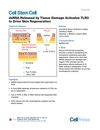
August 2015 in “Cell Stem Cell” The researchers reported that dsRNA from damaged skin activates TLR3, promoting hair follicle regeneration, while TLR3-deficient animals fail to initiate this process, suggesting potential therapeutic approaches for hair neogenesis.
2 citations
,
September 2020 in “International Journal of Molecular Sciences” In this study, the elimination of NG2+ hair follicle stem cells during the anagen phase was associated with an aggravated sensitization phase of allergic contact dermatitis, suggesting their immunosuppressive role.
33 citations
,
January 2015 in “Journal of Ginseng Research” This study found that ginsenoside Rg3 significantly inhibited melanogenesis in human melanocytes and B16F10 cells by activating the ERK pathway, suggesting potential as a skin-whitening agent.
January 2024 in “Wiadomości Lekarskie” This pilot clinical study introduces DEC cells as a novel therapy for Duchenne muscular dystrophy, confirming safety and efficacy in seven patients up to 24 months post-treatment.
January 2002 in “映像情報メディア学会技術報告” This study found that 60% of examined prostate tumors had new somatic substitutions in the SRD5A2 gene, affecting enzyme activity and potentially influencing prostate cancer progression.
8 citations
,
July 2015 in “International Journal of Dermatology” This study reports that a homozygous A1103G mutation in DSG 4 is responsible for localized autosomal recessive hypotrichosis in a 2-year-old Chinese girl, resulting in reduced DSG 4 expression and hair defects.
53 citations
,
May 1996 in “The Journal of Clinical Endocrinology & Metabolism” This study identified multiple mutations in the 5 alpha-reductase-2 gene among male pseudohermaphrodites in the Dominican Republic, suggesting they do not share a common ancestry.
 April 2019 in “Journal of Investigative Dermatology”
 This study found that mice lacking REDD1 experienced an expansion of dermal white adipose tissue through both hypertrophy and hyperplasia, suggesting a potential therapeutic target for skin adipogenesis regulation.
July 2024 in “Journal of Investigative Dermatology” JW0061 may be a new treatment for hair loss by promoting hair growth through WNT signaling.
 24 citations
,
July 1994 in “Molecular Endocrinology”
24 citations
,
July 1994 in “Molecular Endocrinology” Researchers found an RNA transcript that might help control a growth factor linked to tumor development.
1 citations
,
May 2025 in “Cell Reports Medicine” This study found that RSPO1, a Wnt/β-catenin pathway agonist, significantly induces insulin-producing β cell replication and neogenesis in various settings, offering a promising potential therapy for diabetes.
 2 citations
,
January 2022 in “Experimental Dermatology”
2 citations
,
January 2022 in “Experimental Dermatology” This paper proposes that GDNF signaling may enhance skin regeneration and hair follicle formation by influencing dermal fibroblast differentiation, particularly following injury.
17 citations
,
April 2011 in “Journal of Dermatological Science” This study reports that the transgenic expression of Dsg1 in mice rescued the severe B6-Dsg3−/− phenotype and created a syngeneic mouse model of pemphigus vulgaris, which may aid in understanding autoimmunity mechanisms.
78 citations
,
October 2007 in “Journal of Investigative Dermatology” Delta1 is crucial for controlling skin cell growth and preventing tumors in mice.
2 citations
,
September 2024 in “Asian Journal of Andrology” In a retrospective cohort of patients with steroid 5 α-reductase 2 deficiency, this study identified seven novel genetic variants in the SRD5A2 gene, expanding the variant database and contributing to improved diagnostic and therapeutic approaches for the condition.