5 citations
,
July 1999 in “Journal of Anatomy” This study found that methylene blue staining may reveal anatomical details of intraepidermal nerve fibre endings in the rat mystacial pad with greater clarity than the zinc iodide-osmium tetroxide technique.
 January 2022 in “Acta botanica Caucasica”
 This study evaluated herbal cosmetic products used in Turkiye, identifying 140 plant species and highlighting walnut, common nettle, and grape as popular for various traditional uses.
 October 2025 in “SAR Journal of Medical Biochemistry”
 In this research, the methanolic extract of Moringa oleifera seeds demonstrated potential antihelminthic activity in Indian adult earthworms, potentially offering fewer side effects compared to standard anthelmintic drugs like albendazole.
6 citations
,
April 2019 in “Advances in Pharmacology and Pharmacy” This study found that methanol extract of Mimosa pudica showed dose-dependent sedative effects in mice, suggesting its potential for developing new sedative and anti-anxiety medications.
 April 2024 in “Jurnal Agroindustri Halal/Jurnal agroindustri halal”
 This study investigated formulations of hair tonic using Hormophysa triquetra seaweed and candlenut extract, finding that the variant with the highest seaweed extract content demonstrated superior physical stability and rapid hair growth in test animals due to its antioxidant properties.
September 2025 in “Plants” In this study, the wood essential oil of *Juniperus morrisonicola* exhibited significant anti-inflammatory activity, notably inhibiting nitric oxide production in stimulated macrophages, and showed cytotoxic effects against liver cancer cells, suggesting its potential for drug development and eco-friendly applications.
49 citations
,
November 2012 in “Journal of neurology, neurosurgery and psychiatry” This review discusses non-motor symptoms in patients with thymoma-associated myasthenia gravis, suggesting these symptoms, which can be treatable, often go overlooked despite affecting multiple organs.
 February 2026 in “IOP Conference Series Earth and Environmental Science”
 This study identified specific morphological characteristics and kinship relationships among 27 candlenut genotypes in Karo Regency, North Sumatra, highlighting variations in stem, leaf, flower, fruit, and kernel traits, with the closest relationship between MTB1 and MTB2 genotypes.
6 citations
,
January 2011 in “European Journal of Dermatology” This article discusses monilethrix, a rare human hair dysplasia caused by mutations in hair keratins, but reports no new clinical findings.
 April 2024 in “Frontiers in pharmacology”
 This review of Cynoglossum amabile, a traditional Chinese and ethnomedicine, provides insights into its uses, chemical components, biological activities, and toxicity. Highlighting its market potential, the study underscores the importance of indigenous knowledge in drug development despite noted hepatotoxic risk linked to its pyrrolizidine alkaloids.
 July 2022 in “International journal of pharmacognosy and life science”
 This review highlights the diverse medicinal properties of mangrove plant extracts, including their inhibitory and curative effects on various diseases and potential benefits for treating baldness, while also discussing their role in preventing soil erosion.
 March 2026 in “Journal of Medicinal Plants Studies”
 This source reviews the traditional and contemporary medicinal uses of Murraya koenigii, reporting its significant pharmacological activities, including antioxidant and anticancer effects, supported by both preclinical and clinical research.
 3 citations
,
December 2021 in “Journal of medicinal plants”
3 citations
,
December 2021 in “Journal of medicinal plants” This review discusses the diverse bioactivities and potential applications of Halocnemum strobilaceum but reports no new experimental findings.
 September 2021 in “Mağallaẗ al-Muẖtar li-l-ʿulūm”
 This report describes a case of two sisters with kinky, tangled hair diagnosed using trichoscopic and microscopic methods; they were treated with topical minoxidil.
17 citations
,
May 1969 in “American Journal of Physical Anthropology” This study describes unique anatomical characteristics of the skin and hair structures in the silver marmoset, including features such as thin epidermis, specialized nerve end-organs, and distinctive gland compositions.
 2 citations
,
June 2003 in “International Journal of Acarology”
2 citations
,
June 2003 in “International Journal of Acarology” This study describes a new mite species from marmots in a city park in Washington, noting that infested marmots displayed significant hair loss and tissue abnormalities.
April 2014 in “The FASEB journal” In this study, Rhododendron molle extract increased hair follicle length and growth factors while reducing mast cell and substance P expression in stressed mice, suggesting potential benefits for hair growth.
5 citations
,
July 1999 in “Journal of Anatomy” This study observed that methylene blue staining and zinc iodide-osmium tetroxide techniques effectively revealed anatomical details of intraepidermal nerve fibre endings in the rat's mystacial pad, suggesting their potential role in mechanoreception.
 5 citations
,
April 2024 in “BMC Neurology”
5 citations
,
April 2024 in “BMC Neurology” The researchers reported that non-motor symptoms like taste disorders and alopecia are associated with myasthenia gravis, particularly in severe cases and those linked to thymoma.
October 2025 in “Journal of the Endocrine Society” This case report documented the management of a 46-year-old female with Marine-Lenhart syndrome, combining antithyroids with minimally invasive sclerotherapy to achieve euthyroidism and reduce thyroid nodule size by 58%.
 2 citations
,
October 2024 in “Tropical Journal of Pharmaceutical and Life Sciences”
2 citations
,
October 2024 in “Tropical Journal of Pharmaceutical and Life Sciences” This review explores Dracaena trifasciata, known as mother-in-law's tongue, detailing its botanical properties, traditional medicinal uses, and the pharmacological and phytochemical characteristics observed in various studies.
 131 citations
,
January 2018 in “Scientific Reports”
131 citations
,
January 2018 in “Scientific Reports” In this study, mycorrhizal fungal inoculation was associated with increased root-hair growth and enhanced drought tolerance in trifoliate orange by modulating auxin synthesis and transport under water stress conditions.
4 citations
,
November 1999 in “PubMed” This article presents five family cases of monilethrix and reports that neither vitamins nor desquamative ointments are effective treatments, although symptoms may spontaneously regress over time.
29 citations
,
August 1999 in “Journal of Investigative Dermatology” New mutations in hair keratin genes cause the rare hair disorder monilethrix.
January 2020 in “한국미용학회지” This study found that incorporating Musa extracts in pretreatment products effectively mitigated hair damage during permanent wave application, closely maintaining hair thickness and tensile strength compared to untreated hair.
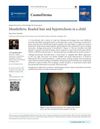 January 2026 in “Cosmoderma”
 In this clinical case study, a 9-year-old girl was diagnosed with monilethrix, a hereditary hair shaft disorder characterized by weak, beaded hair, with management focusing on minimizing hair trauma.
 1 citations
,
September 2024 in “Acta Scientiarum Polonorum Hortorum Cultus”
1 citations
,
September 2024 in “Acta Scientiarum Polonorum Hortorum Cultus” This study found that spraying melon plants with 0.1 mg·L–1 molybdenum significantly improved growth, photosynthetic characteristics, carbohydrate metabolism, and fruit quality under high-temperature stress, boosting fruit weight by 27.9% and yield per plant by 20.1% compared to untreated controls.
16 citations
,
May 2020 in “Plant Growth Regulation” 54 citations
,
June 2023 in “International Journal of Molecular Sciences” This review reports that myricetin, a naturally occurring antioxidant in plants, may assist in cancer management by enhancing the effects of existing drugs and inhibiting inflammatory markers, based on in vivo and in vitro studies.
2 citations
,
September 2018 in “Walailak Journal of Science and Technology (WJST)” This study found that Thuja orientalis fruits have higher monoterpene, flavonoid, phenolic content, and antioxidant activity than leaves, suggesting potential value for the pharmaceutical industry.